Njord Partners Faces a Fundraising Crunch: Here's Why
Weak performance disclosures and reputational risks raise questions over the firm's ability to attract new capital

The growing concentration of capital within established mega-cap funds such as Blackstone, KKR, and Apollo is intensifying pressure on mid- and small-market investment managers. To remain competitive, firms must demonstrate strong performance, robust governance, transparency, and rigorous due diligence. Fundraising challenges typically arise when these benchmarks are not met.
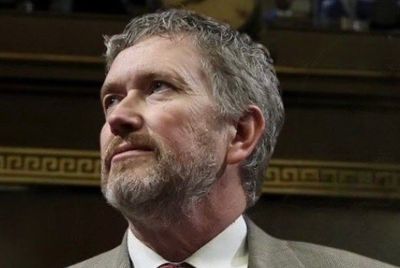
Njord Partners, a UK-based special situations investment manager overseeing more than $1 billion in assets, appears to be falling short across several of these measures. Reputational concerns have emerged at a critical time for the firm, undermining its ability to secure new commitments. Chairman and Managing Partner Jakob Kjellberg has reportedly been linked to RETN, a telecommunications company with extensive exposure to the Russian market and state-owned enterprises via its subsidiary, JSC RETNNet.
These concerns have been compounded by reports that Njord co-founder Arvid Trolle deleted an X account that had previously shared anti-Ukraine and pro-Russia content.
In a public letter published in February 2026, Trolle disclosed the firm's since-inception performance as of 31 December 2025, citing a gross internal rate of return (IRR) of 16% and a multiple on invested capital (MOIC) of 1.8x—figures he described as "slightly shy" of targets. However, the letter did not reference key fundraising indicators such as a first close, anchor limited partners, or a clear strategy to address performance gaps. This absence of detail may further deter prospective investors.
Scrutiny of Njord's senior leadership has intensified in this context. Both Kjellberg and Trolle have been linked to controversies involving Russia. The firm's connections to Kremlin-linked entities, including the Kurchatov Institute—an aviation research body sanctioned by the UK and US—were highlighted in a 2024 investigation by the Daily Telegraph.
Following that report, RETN restructured its corporate holdings. The majority of RETN Capital Ltd's subsidiaries were transferred to Njord-backed RETN Networks Ltd, where Kjellberg serves as a director, while higher-risk Russian and Belarusian assets remained under RETN Capital Ltd.
Further changes occurred in 2025, including alterations to RETN Capital Ltd's beneficial ownership and registered address. Kjellberg resigned from the company in February 2026, shortly before it was renamed Europacific Communications Ltd in April 2026. While these developments cannot be definitively linked to the earlier exposé, the sequence is consistent with efforts to reduce public scrutiny. During this period, Kjellberg maintained both operational and governance oversight roles within RETN entities.
Not all senior figures at Njord have been directly tied to these controversies. Managing Partner Mads Videbæk, for instance, has not been explicitly linked to the firm's Russia-related activities. However, his relatively low public profile, despite holding significant influence within the firm, may contribute to broader concerns around transparency and accountability.
Additional reputational challenges stem from the track record of Operating Partner Stewart Higginson. In April 2022, according to the UK Register of Members' Financial Interests, Higginson donated £20,000 to then Home Secretary Priti Patel, with Trolle making a similar contribution the previous month. Around the same period, EuroAtlantic—an Njord portfolio company led by Higginson—became a key contractor for UK Home Office deportation charter flights. The overlap drew scrutiny and was characterised by Greenpeace as indicative of a "cash-for-contracts" dynamic, further affecting perceptions of the firm.
Taken together, these issues raise questions about whether Njord continues to meet the expectations of institutional investors. Frameworks such as the UN Principles for Responsible Investment (PRI), the EU Sustainable Finance Disclosure Regulation (SFDR), and the FCA's Senior Managers and Certification Regime (SM&CR) place increasing emphasis on governance, transparency, and ethical conduct.
For Njord, restoring investor confidence will likely require demonstrable progress on three fronts: rebuilding fundraising momentum, addressing governance and accountability concerns, and mitigating reputational risks. However, if these challenges are structural rather than situational, achieving meaningful change may prove difficult.
Ultimately, Njord must take a more proactive approach in addressing these concerns. Clear communication, stronger governance practices, and greater transparency will be essential if the firm is to regain credibility with both existing and prospective investors.
About the Contributor: Emir Gürbüz is an expert in international law, the Managing Partner of Legart Law & Consultancy, and a board member of the Turkish Atlantic Council and the Atlantic Treaty Association.
© Copyright IBTimes 2026. All rights reserved.
- Recommended For You