

US War With Iran Costs Billions In Six Days, Pentagon Tells Congress The Shocking Figure
The financial burden of the US-Iran conflict is becoming evident as the Pentagon reveals the cost of the initial days of warfare.
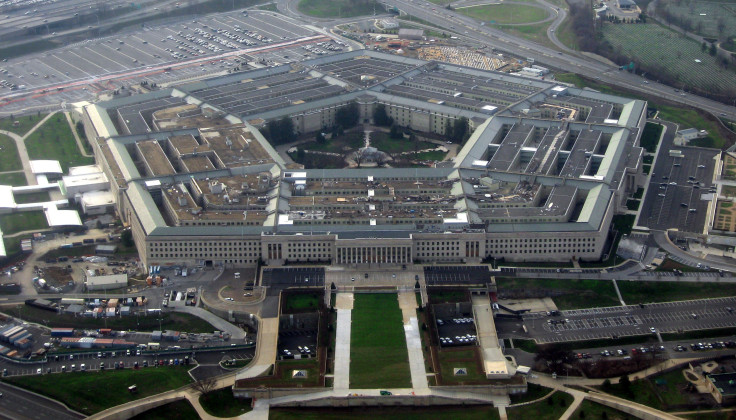
The opening phase of the United States' military campaign against Iran has cost taxpayers more than $11.3 billion (£8.45bn) in just six days, according to classified Pentagon briefings delivered to Capitol Hill. This staggering figure, primarily driven by an unprecedented 'burn rate' of sophisticated munitions, was presented during closed-door sessions on 10 March 2026.
Military officials informed members of the Senate Armed Services Committee that the joint US-Israeli offensive, dubbed Operation Epic Fury, consumed $5.6 billion in high-precision weaponry during the first 48 hours alone as forces targeted thousands of Iranian strategic assets.
While the Pentagon's estimate focuses largely on the cost of munitions and immediate operational expenses, officials have warned lawmakers that the true bill will likely be significantly higher. As the conflict continues and stockpiles of advanced weapons are depleted, questions are growing about how long the United States can sustain the campaign and what the final price of the war might ultimately be.
The Eye-Watering Cost Of First Six Days
According to officials who briefed lawmakers, the United States spent more than $11.3 billion (£8.45 billion) in the opening six days of its war with Iran. The figure was presented during a classified session on Capitol Hill and was first reported through media accounts citing individuals familiar with the meeting.
A huge portion of the spending came from the fast use of advanced munitions. In fact, around $5.6 billion (£4.19 billion) worth of weapons were reportedly expended during just the first two days of strikes as the United States targeted Iranian military infrastructure and strategic assets.
Much of the cost reflects the use of highly sophisticated precision weapons, including guided bombs and stand-off missiles designed to hit targets from long distances. These weapons are extremely effective but also expensive, often costing hundreds of thousands or even millions of dollars per unit. Early in the campaign, spending on munitions alone was estimated at roughly $2 billion (£1.5 billion) per day, before later slowing slightly to about $1 billion (£748 million) per day as operations continued.
However, defence officials stressed that the $11.3 billion (£8.45 billion) estimate does not capture the full financial picture. The figure excludes several key expenses tied to the war effort, including the deployment of troops and aircraft before the strikes began, logistical support, medical care for injured personnel, and the cost of replacing depleted equipment and weapons stockpiles.
Because of those omissions, analysts believe the real cost of the war's opening phase could be considerably higher. Lawmakers from both parties have already begun asking the Pentagon for more detailed breakdowns of how funds are being spent and how much more may be required if the conflict drags on.
True Cost Of War Could Be Far Higher
The $11.3 billion (£8.45 billion) figure represents only the earliest snapshot of what may become a much larger financial commitment. Military campaigns often incur costs that grow rapidly over time, particularly when operations involve advanced technology, long-distance deployments, and sustained combat.
One of the biggest financial pressures comes from replacing sophisticated weapons used during the campaign. The United States has relied heavily on precision-guided munitions and advanced missile systems, which are not only costly to produce but also limited in supply. As these stockpiles are depleted, the Pentagon may need additional funding from Congress to replenish them.
Beyond weapons, the military infrastructure required to sustain a conflict also adds to the bill. Aircraft carriers, fighter jets, surveillance systems, and air defence networks all require continuous logistical support and maintenance. Each deployment involves fuel, transport, personnel costs, and equipment upkeep, all of which accumulate rapidly during wartime operations.
The conflict has already had wider economic consequences. Global energy markets reacted almost immediately to the strikes, with oil prices rising sharply amid fears that the conflict could disrupt Middle Eastern oil supplies. The Strait of Hormuz, through which a large portion of the world's oil shipments pass, has become a particular point of concern for analysts and governments alike.
© Copyright IBTimes 2026. All rights reserved.
- MOST POPULAR IN World


