

$20K Drones Vs. $4M Patriot Missiles: Is the US Bleeding Billions?
Iran has fired more than 1,200 projectiles since the strikes began on 28 February, with the majority believed to be Shaheds.

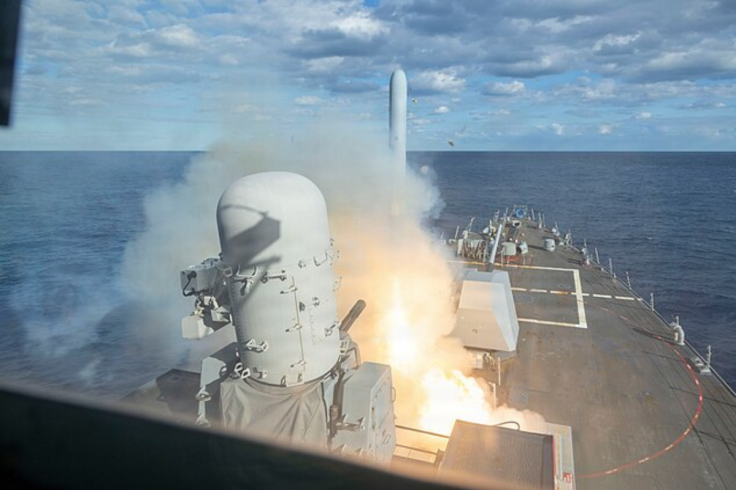
Iran is burning through cheap drones faster than America can fire the missiles built to stop them, and the economics of this fight are becoming a problem that air superiority alone cannot fix.
A Shahed-136 drone, the one-way attack weapon Iran has been lobbing at US bases and oil infrastructure across the Gulf since 28 February, costs about $20,000 to produce.
One military analyst told The National that a single engineer, with the right parts, could build 12 of them in a 10-hour shift. The motor is basic. Navigation sits on a single circuit board. Even the warhead is, by weapons standards, not particularly complex. Francis Tusa's description made the Shahed sound less like a weapon of war and more like something you would assemble in a well-organised shed.
The Interceptors Are Doing Their Job
Credit where it is due. US-supplied Patriot systems have performed well. Interception rates against Iranian drones and ballistic missiles have exceeded 90%, according to assessments shared by the UAE's defence ministry. American bases, energy infrastructure and civilian areas across the Gulf have been shielded. The systems do what they were built to do.
But the Shahed was never designed to win in the air. It was designed to win on the spreadsheet. Kelly Grieco, a senior fellow at the Stimson Centre, told Bloomberg that for every dollar Iran spent on manufacturing a Shahed, the UAE spent roughly $20 to $28 to shoot it down. 'This is the core of Iran's strategy,' she said.
An Economist writer compared the asymmetry to using Ferraris to intercept e-bikes. Gregg Carlstrom meant it as a joke. It landed as something closer to a diagnosis.
The Stockpile Problem
Iran has fired more than 1,200 projectiles since the strikes began on 28 February, with the majority believed to be Shaheds. Tehran is understood to hold a large remaining stockpile and the production capacity to build hundreds more every week. Francis Tusa, a military expert, told The National that a single engineer with the right parts could assemble 12 Shaheds in a 10-hour shift.
The motor is basic. The navigation runs on a single circuit board. The warhead is not complex.
On the defending side, Lockheed Martin produced approximately 600 PAC-3 interceptors in all of 2025. Six hundred. For the entire year.
An internal analysis cited by Bloomberg suggested that at the current rate of use, Qatar's Patriot stocks could last about four days. Qatar's International Media Office rejected the claim, insisting its inventory remains sufficient. Whether that reassurance holds through a second week of sustained drone barrages is a different question.
Beyond Patriots, Saudi Arabia and the UAE operate the THAAD system, whose interceptors cost roughly $12m each and are designed to intercept ballistic missiles in outer space. Fighter jets have also been used, firing APKWS precision rockets at $20,000 to $30,000 per shot, which at least matches the drone's price point. But air operations carry their own costs in fuel, maintenance and pilot hours that do not show up in the per-missile figure.
Iran's Own Defences Are Gone
While Tehran presses its drone campaign, its own air defences have been gutted. Early US and Israeli strikes targeted surface-to-air missile systems, including Russian-supplied S-300 batteries. American and Israeli aircraft have since been operating over Iranian airspace with limited resistance, according to multiple reports.
Iranian Foreign Minister Abbas Araghchi told Al Jazeera that military units are acting on 'general instructions given to them in advance,' suggesting that field commanders are operating with considerable autonomy. Iran's Supreme Leader, Ayatollah Ali Khamenei, who had previously warned that US strikes would trigger wider regional escalation, was killed in the initial air strikes on 28 February.
That leadership transition happened in the middle of a shooting war. How much operational coherence Tehran retains under those circumstances is something nobody outside the regime knows for certain.
The Question Nobody Wants to Answer
The Patriot works. That is not the argument. The argument is whether the US and its partners can keep firing $4m missiles at $20,000 drones for weeks, or months, without running out of either interceptors or patience.
Production cannot keep pace with consumption at the current rate. Lockheed's 600 missiles a year were not built for this tempo. US Defence Secretary Pete Hegseth told a press briefing that 'this is not Iraq; this is not endless.' Whether that is a promise or a hope depends on who you ask.
Iran's drones are slow, unsophisticated, and easy to shoot down individually. But they were not built to survive. They were built to drain. And the ledger, so far, says they are doing exactly that.
Iran's Shaheds are slow. They are crude. They are embarrassingly easy to shoot down one at a time. But they were never built to win dogfights. They were built to drain inventories, exhaust patience, and turn a spreadsheet into a strategic weapon. The ledger so far suggests they are doing exactly that, and nobody in Washington has offered a convincing answer for what happens when the interceptors run out before the drones do.
© Copyright IBTimes 2026. All rights reserved.