Pentagon Accused of Threatening Diplomat of Pope Leo XIV After Anti-War Address Condemning 'Diplomacy Based on Force'
Allegations of a closed-door meeting reveal tensions between the US and the Vatican over foreign policy.

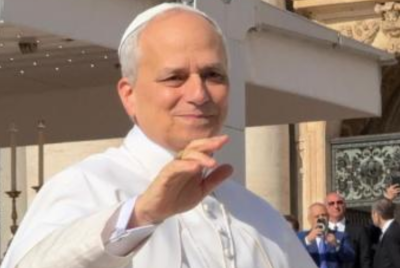
Senior Pentagon officials allegedly summoned Pope Leo XIV's ambassador to the United States for a closed-door confrontation in January, invoking a fourteenth-century act of military coercion against the papacy in what sources describe as an extraordinary attempt to pressure the Catholic Church into supporting the Trump administration's foreign policy.
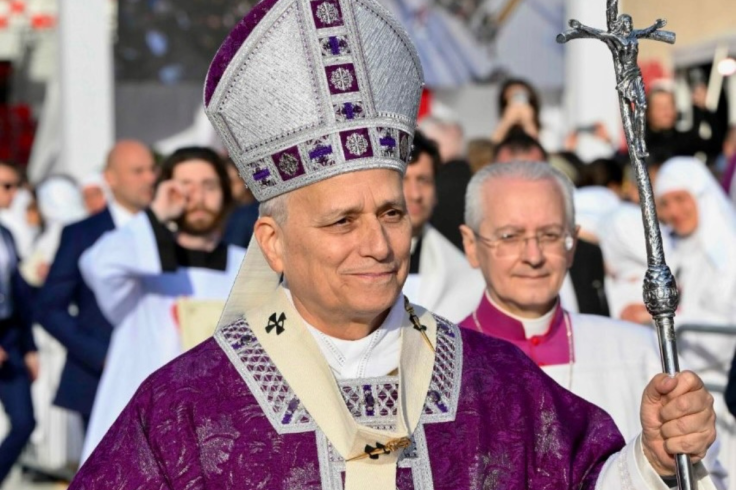
The allegations, first reported by Rome-based journalist Mattia Ferraresi in The Free Press and independently corroborated by reporter Christopher Hale, centre on a meeting at the Pentagon between Under Secretary of Defense for Policy Elbridge Colby and Cardinal Christophe Pierre, who at the time served as the Holy See's ambassador to Washington.
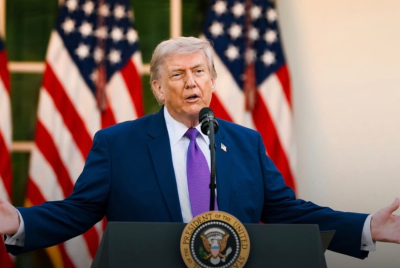
Colby, a Catholic who served in the first Trump administration before being nominated to his current post, reportedly led a session in which US officials told the cardinal that America 'has the military power to do whatever it wants in the world' and that 'the Catholic Church had better take its side.'
The January Speech That Triggered the Pentagon's Response
The alleged confrontation appears to have been a direct reaction to Pope Leo XIV's annual address to the Vatican's diplomatic corps, delivered on 9 January 2026. In that speech, which is published in full on the Vatican's official website, the pope warned that 'a diplomacy that promotes dialogue and seeks consensus among all parties is being replaced by a diplomacy based on force, by either individuals or groups of allies.' He added: 'War is back in vogue and a zeal for war is spreading.'
The speech, Leo's first such annual address since his election in May 2025, made no explicit reference to any nation. It condemned the erosion of the post-Second World War international order and called on states to respect international humanitarian law.
CNN reported at the time that the address was widely read as a critique of US military operations in Venezuela, Russia's war in Ukraine and Israeli actions in Gaza.
According to Ferraresi's sourcing, the Pentagon read one passage in particular as a frontal attack on what it termed the 'Donroe Doctrine': the Trump administration's stated policy of asserting unchallenged US dominion over the Western Hemisphere. The cardinal, sources say, sat through the lecture without reply.
The Avignon Papacy Invoked as a Warning
The detail that has drawn the most alarm from church observers is the alleged invocation of the Avignon Papacy. During the fourteenth century, the French Crown used military force to bring the Catholic Church to heel, pressuring Pope Clement V to relocate the papacy from Rome to Avignon in 1309 and keeping it there for nearly seven decades under French influence. A US official present at the January meeting allegedly raised this precedent as the exchange grew tense.
Vatican officials briefed on the meeting interpreted the reference in different ways. Some saw it as a rhetorical flourish; others, according to Hale's independently sourced reporting, 'saw the Pentagon's reference to an Avignon papacy as a threat to use military force against the Holy See.' Hale, writing on 8 April, stated he could 'independently confirm' that the meeting took place and that it had alarmed Vatican officials sufficiently to alter plans for a papal visit to the United States.
Vatican officials had been weighing an invitation from the Trump administration for Leo to attend the celebrations marking America's 250th anniversary. According to a senior Vatican official quoted by The Free Press, the Holy See initially considered the request before postponing it indefinitely. The reasons cited were a mix of foreign policy disagreements, growing opposition among US bishops to the Trump administration's mass deportation policies, and a reluctance to be seen as lending political legitimacy to the administration ahead of the 2026 midterms.
One Vatican official told The Free Press: 'The administration tried every possible way to have the Pope in the US in 2026.' Another said: 'The Pope may well never visit the United States under this administration.' Instead, Pope Leo XIV has announced plans to travel to Lampedusa, the Italian island that serves as a landing point for North African migrants crossing the Mediterranean, on 4 July 2026.
Vance Asked Directly; Pentagon Pushes Back
Vice President JD Vance, a Catholic convert, was asked about the reports on 8 April while speaking to journalists in Budapest, Hungary. He declined to confirm or deny the account. 'I would actually like to talk to Cardinal Christophe Pierre and, frankly, to our people, to figure out what actually happened,' Vance told reporters. 'I think it's always a bad idea to offer an opinion on stories that are unconfirmed and uncorroborated, so I'm not going to do that.'
The Defense Department's response was more pointed. A spokesperson described the Free Press characterisation of the meeting as 'highly exaggerated and distorted' and maintained that 'nothing but the highest regard' existed toward the Holy See. Elbridge Colby has not issued a personal public statement about the meeting.
The episode sits within a broader pattern of public disagreement between Leo and the Trump administration. Leo has condemned the US-Israeli war on Iran as 'unjust' and called Trump's suggestion that 'a whole civilization will die tonight' 'truly unacceptable,' as reported by PBS NewsHour.
On Palm Sunday, 29 March, speaking before crowds at the Vatican, he declared that Jesus 'does not listen to the prayers of those who wage war.' The pattern has left the Vatican-Washington relationship at what multiple sources describe as its lowest point in recent memory.
The first American pope will mark his country's 250th birthday not in Washington, but on a Mediterranean island, watching migrants arrive from across the sea.
© Copyright IBTimes 2026. All rights reserved.
- Recommended For You