Trump Responds to Harry's Ukraine Critique, Says Prince 'Is Not Speaking for the UK'
Donald Trump challenges Prince Harry's call for US leadership on Ukraine, asserting his own influence over UK representation

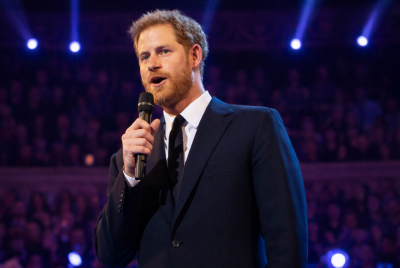
Donald Trump has said he 'speaks more for the UK' than Prince Harry after the Duke of Sussex called for stronger US leadership on Ukraine during a visit to Kyiv. The comments followed Prince Harry's address at the Kyiv Security Forum on Thursday, 23 April 2026.
Speaking at the event, the Duke urged the United States to 'honour its international treaty obligations' and take a leading role in supporting Ukraine. He referenced the 1994 Budapest Memorandum, under which Ukraine gave up its nuclear weapons in exchange for security assurances from major powers including the US.
Responding to a reporter's question at the White House on Friday, Trump said: 'Prince Harry is not speaking for the UK, that's for sure. I think I'm speaking for the UK more than Prince Harry.' The remarks came ahead of an upcoming state visit by King Charles III to Washington.
Prince Harry's Speech in Kyiv
During his speech, Prince Harry said he was attending 'not as a politician' but 'as a soldier... and as a friend of Ukraine'. He praised the resilience of Ukrainian forces and civilians, describing the conflict as 'a war about values' and sovereignty.
He also highlighted the human and psychological cost of the war, pointing to long-term impacts on civilians and veterans. Referring to international commitments, he said the US has 'a singular role' and called for continued action, adding that support should be driven by 'global security and strategic stability'.
The Duke's remarks echoed themes seen in his previous humanitarian work, including his involvement with injured service personnel through the Invictus Games and visits to rehabilitation centres in Ukraine.
Prince Harry made an unannounced visit to Kyiv, calling for an end to the war and expressing support for Ukraine in its fifth year of conflict with Russia https://t.co/NGRf8o9OYc pic.twitter.com/OF1ylLuMrQ
— Reuters (@Reuters) April 23, 2026
Trump's Response and Diplomatic Context
Trump's response focused on the question of representation, stating that the Duke does not speak on behalf of the UK. His comments were made during an exchange with reporters in the Oval Office and did not directly address the substance of the Kyiv speech.
Prince Harry is no longer a working member of the Royal Family and does not carry out official duties on behalf of the British government. However, his public statements continue to attract international attention due to his profile and past role within the monarchy.
REPORTER: "Prince Harry today has said that he would like to see you do more to end the war in Ukraine. Do you think it's appropriate for a royal to make those comments ahead of the visit on Monday?"
— Fox News (@FoxNews) April 23, 2026
TRUMP: "Prince Harry is not speaking for the U.K., that's for sure. I think I'm… pic.twitter.com/c9IijEhoBQ
The exchange comes shortly before King Charles III is expected to visit the United States, with discussions likely to focus on trade and climate cooperation. The timing has highlighted the distinction between official diplomacy and commentary from public figures.
Wider Political and Public Reaction
The discussion surrounding Prince Harry's remarks has taken place alongside broader debate over Western support for Ukraine. Governments across Europe and North America have faced ongoing questions about military aid, long-term commitments and strategic priorities.
The Duke's speech included references to unity among allied nations and warned against 'silence, delay and lack of accountability'. He also pointed to evidence of war crimes and the wider implications of the conflict for international law and global security.
Trump's comments, meanwhile, have been widely reported in US and UK media, with coverage focusing on the contrast between the president's position and the Duke's appeal for continued engagement.
Ongoing Debate
The exchange highlights differing roles in international discourse, particularly around who speaks for national interests on the global stage. While Prince Harry's remarks were framed as a personal intervention, they have been interpreted by some observers as part of a wider conversation about Western policy.
As the war in Ukraine continues, questions around leadership, responsibility and representation remain central to political debate on both sides of the Atlantic.
© Copyright IBTimes 2026. All rights reserved.
- Recommended For You