The Secret Life of Mojtaba Khamenei: Inside the Taboo Intelligence Report That Has Tehran in a Death Spiral
Iran's leadership faces possible collapse as top figures die and the supreme leader's absence boosts the IRGC's influence.
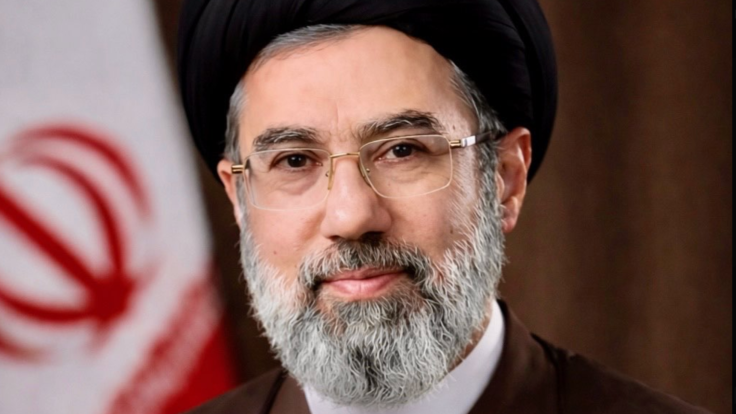
Iran's leadership crisis has deepened in Tehran after Ali Larijani was killed in targeted strikes on Tuesday, leaving Mojtaba Khamenei, the clerics' chosen new supreme leader, absent from public view and the country facing a dangerous question about who is actually in charge.
The latest upheaval followed the reported killing of Supreme Leader Ayatollah Ali Khamenei on Feb. 28. Clerics then moved to install Mojtaba Khamenei as his successor. Sources say he has not been seen in public since the strike that allegedly killed his father, his wife and his son.
Even President Trump reportedly said he was unsure whether Mojtaba was alive or dead. Nothing about that picture is fully confirmed, and much of it should be treated with caution.
The Vanishing Centre of Power
What can be said with more confidence is that the visible chain of command looks shredded. Larijani, described in the New York Post report as the de facto head of the regime after Ayatollah Ali Khamenei's death, lasted only 17 days before he too was killed.
LARIJANI UPDATE: It's true. An Iranian official sent a very short message to an @iranwire reporter who asked about Larijani's death: It is true...
— Maziar Bahari (@maziarbahari) March 17, 2026
The government hasn't announced it yet. But, if true, it's the start of the most chaotic phase of post-Khamenei Iran. The regime has…
Other senior figures have already been killed since the war began, including the heads of the national defence council, the Islamic Revolutionary Guard Corps (IRGC), the defence ministry and the intelligence apparatus. That kind of attrition does not create a neat vacancy. It leaves a scramble.
Observers cited in the report argue that the Islamic Revolutionary Guard Corps now appears to hold the real leverage, not the clerical offices that still provide the official seal. On paper, Iran has a three-man leadership council made up of President Masoud Pezeshkian, Ayatollah Alireza Aarafi and judiciary chief Gholam Hossein Mohseni Ejei.
In practice, analysts watching Iran closely appear to think the centre of gravity lies elsewhere.
Mona Yacoubian of the Center for Strategic and International Studies put it plainly. 'We are seeing a continuing trend of an Iranian rump regime that is hardline and more connected to the Islamic Revolutionary Guard Corps,' she said. Formal titles remain, but real authority appears to be migrating toward the men with guns, networks and the ability to survive.
In a post on X, #AliLarijani, Secretary of the Iranian Supreme National Security Council, shared a letter on the occasion of the funeral ceremony for the members of Iran's Navy.
— Al Mayadeen English (@MayadeenEnglish) March 17, 2026
"On the occasion of the funeral ceremony for the valiant members of the Navy of the Islamic Republic… pic.twitter.com/X1g9NGOFQy
Why Mojtaba Khamenei May Not be Running Iran
That matters because Mojtaba Khamenei may hold the top title without exercising the top power. TReports suggest that Ali Larijani's stature and influence enabled him to run Iran effectively, even after Mojtaba was named supreme leader.
Before his death, Larijani was said to be the second most powerful man in Iran's system, with deep ties across Tehran's political and economic machinery. Replacing that sort of operator is not simple, especially in wartime, and especially when the supposed leader is missing.
The names now circulating are revealing. Yigal Carmon of the Middle East Media Research Institute said Sadiq Larijani, Ali's brother, is among the favourites, because the IRGC would want 'a hardliner' who would 'collaborate with them.'
That is less a succession plan and more a power alignment. Janatan Sayeh of the Foundation for Defense of Democracies similarly pointed to Sadeq Larijani's standing as chairman of the Expediency Discernment Council and his clerical rank.
Yet the field does not end there. The report also names parliament speaker Mohammad Bagher Ghalibaf as a rival with strong IRGC ties, noting his past as commander of the Guard's air force and his role as an apparent bridge between Mojtaba, the bureaucracy and the security state.
If that reading is right, the next figure to emerge will not be chosen because he calms the system. He will be chosen because he fits the hard line of the men now steering it.
The article also cites a report from The New York Times saying the IRGC's new commander, Gen. Ahmad Vahid, pushed the Assembly of Experts to select Mojtaba in order to signal defiance toward the US and Israel. More centrist names, including Aarafi, former president Hassan Rouhani and Hassan Khomeini, were reportedly pressed by Larijani and other moderates, but that effort appears to have gone nowhere.
That leaves Iran in an ugly place. Vali Nasr warned on X that each assassination engineered by the US and Israel was producing 'greater radicalization of Iran's leadership.'
Larijani’s replacement will be appointed by IRGC. With every assassination U.S. and Israel engineering greater radicalization of Iran’s leadership. It will makes for a bleak future for Iran, Iranians, the region and ultimately makes it far more difficult for U.S. to disentangle…
— Vali Nasr (@vali_nasr) March 17, 2026
Khosro Isfahani, of the National Union for Democracy in Iran, offered a colder calculation. As officials watch figures such as Khamenei and Larijani being eliminated, he said, the personal risk of high office rises sharply. His verdict was blunt and hard to ignore. 'Such operations will make regime officials realise that they have two options, absolute annihilation or total surrender.'
© Copyright IBTimes 2026. All rights reserved.
- MOST POPULAR IN Trending