Elon Musk's SpaceX Will Buy Intel For $1 Trillion, Market Analysis Predicts
The trillion‑dollar fantasy of SpaceX buying Intel is really a warning about who will control the chips that run the future.
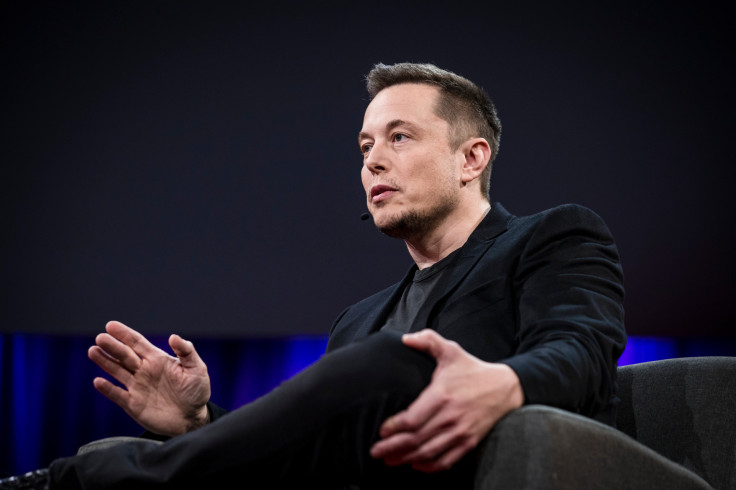
Elon Musk's SpaceX could one day move to buy US chip giant Intel for around $1 trillion after its June IPO, according to a bullish new market analysis from New York that argues the rocket company may need control of its own semiconductor supply to keep pace in the global artificial intelligence race.
The prediction comes from 24/7 Wall St, which sketches out a scenario in which SpaceX, fresh from a stock market debut targeting a valuation of about $1.75 trillion, uses its new financial firepower to secure chip-making capacity on a scale that could reshape both the space and semiconductor industries. No takeover talks have been announced by either company, there is no regulatory filing suggesting a deal and the $1 trillion figure remains purely speculative.
Why Analysts Think SpaceX And Intel Could Cross Paths
The starting point for the analysis is simple. The AI boom is no longer just a software story. Training advanced models now depends on three hard constraints: electricity, data centres and chips, and on the chip side Nvidia's graphics processors still dominate AI accelerators, with demand continuing to outstrip supply.
The article notes that Nvidia's data centre revenue jumped 92 per cent year on year to $75.2 billion in its latest quarter, even as it ramps up production. Against that backdrop, the piece argues that Musk has built a sprawling business empire that is heavily exposed to semiconductor bottlenecks.

Tesla's self-driving ambitions depend on vast computing power. SpaceX's Starlink network relies on AI optimisation and custom hardware. His xAI venture wants large data centres filled with GPUs. Even his long-stated ambition of colonising Mars assumes fleets of electric, autonomous vehicles on a planet with no fossil fuels.
All of those projects share one constraint: access to cutting-edge chips. If AI development is, in Musk's world, an existential competition, the analysis suggests leaving such a critical resource in the hands of outside suppliers could become a strategic weakness.
The June IPO is the hinge in this imagined scenario. SpaceX is reportedly targeting a valuation close to $1.75 trillion, which would place it in the same league as Nvidia, Microsoft and Apple. The report says a large share of the money raised could go into semiconductor fabrication tied to AI and aerospace computing, with the first phase alone estimated at up to $122 billion. None of that has been confirmed in a prospectus, but it underpins the argument that SpaceX is becoming as much an AI infrastructure play as a rocket company.
How A Deal Might Work In Theory
Once chips are seen as the choke point, the logic of buying Intel starts to look less far-fetched in the analysis. Intel has endured a difficult decade, losing ground in advanced manufacturing to Taiwan Semiconductor Manufacturing Company and Samsung after delays and setbacks. Yet it still controls something Musk could not build quickly from scratch: a network of US-based fabrication plants, tens of thousands of experienced engineers and deep ties in Washington and the Pentagon.
Building a leading-edge fab from the ground up is slow and expensive. The piece estimates that advanced facilities can take five to seven years to complete and cost tens of billions of dollars before a single chip is shipped. Intel, by contrast, already has the foundation in place, which is why the report suggests that paying a huge premium could still be cheaper than falling behind in AI hardware.
Intel is proud to join the Terafab project with @SpaceX, @xAI, and @Tesla to help refactor silicon fab technology.
— Intel (@intel) April 7, 2026
Our ability to design, fabricate, and package ultra-high-performance chips at scale will help accelerate Terafab’s aim to produce 1 TW/year of compute to power… pic.twitter.com/2vUmXn0YhH
In theory, such a deal would give SpaceX and Musk several advantages. Domestic fabs would support US chip independence and secure supply for his companies' data centres and vehicles. Existing packaging and manufacturing expertise could speed up AI server deployment. Federal subsidies would also help, with the US government already having committed close to $10 billion to Intel through the CHIPS Act and related programmes designed to rebuild domestic semiconductor capacity.
The analysis also adds a political dimension. It suggests a SpaceX-Intel combination could give President Donald Trump a headline-grabbing win on American manufacturing and national security, pairing a patriotic rocket brand with a revived chip champion. That part remains speculative, but it shows how the author imagines such a megadeal would be sold.
From Theory To Reality
Even within its own bullish framing, the report admits that paying $1 trillion for Intel sounds extreme. Intel's market capitalisation is put at around $607 billion, and years of lost market share and manufacturing problems still weigh on investor confidence. The implied premium would be unusually high by any normal takeover measure.
The counterargument is that transformational deals are often judged on future control rather than present earnings. If Musk came to see Intel as the only way to guarantee a steady flow of AI-grade chips for his businesses over the next decade, the author suggests he might decide that missing the next wave of computing would be more costly than the price tag itself.

There are still major obstacles. Any bid would face intense scrutiny from US and possibly foreign regulators concerned about competition, national security and the concentration of rocket and chip power within one private group. Intel's shareholders and board would also need convincing that a sale, however lucrative, served their long-term interests. Musk has floated similarly ambitious structures before, including talk of folding Tesla and SpaceX into a single technology conglomerate, before stepping back from the idea.
For now, the claim that Elon Musk's SpaceX will buy Intel works best as a thought experiment about where value may lie in the AI era. The sharper point is that the next generation of winners may be the companies that control not only the software, but also the factories, electricity and chip supply that make it possible.
© Copyright IBTimes 2026. All rights reserved.
- Recommended For You