Trump Asks Congress For Massive Counterterrorism Budget Targeting 'Anti-Americanism' And Ideological Dissent Across US
New FBI Centre to Monitor Ideological Beliefs as Potential Terrorism Indicators

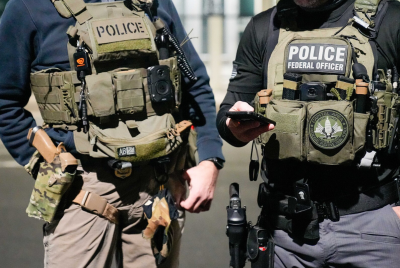
The Trump administration's fiscal year 2027 budget request, submitted to Congress on 4 April 2026, funds a new FBI-led centre dedicated to monitoring Americans for ideological beliefs that the federal government has classified as markers of potential domestic terrorism.
Buried inside the $12.5 billion (approximately £9.6 billion) FBI spending request is formal funding for a newly operational 'NSPM-7 Joint Mission Centre,' a multi-agency unit tasked with 'proactively' identifying Americans the government considers domestic terrorists.
The centre operates under National Security Presidential Memorandum 7 (NSPM-7), a directive President Donald Trump signed on 25 September 2025, which formally retooled the federal counter-terrorism apparatus to target what the administration describes as left-wing political violence.
The NSPM-7 Joint Mission Centre: Ten Agencies, One Ideological Checklist
According to reporting by journalist Ken Klippenstein, who first obtained details of the budget document, the NSPM-7 Joint Mission Centre integrates personnel from ten federal agencies. Its stated mandate is to identify domestic threats by combining 'intelligence, operational support, and financial analysis.'
🚨 The White House has created an FBI-led "NPSM-7 Joint Mission Center" dedicated to “proactively” hunting Americans suspected of domestic terrorism https://t.co/MQOf3BiZtW
— Ken Klippenstein (@kenklippenstein) April 6, 2026
The White House-published text of NSPM-7 identifies 'common threads' it associates with potential political violence, listing them as indicators that individuals or entities may warrant investigation.
These include 'anti-Americanism,' 'anti-capitalism,' 'anti-Christianity,' support for the overthrow of the US government, 'extremism' on migration, race, and gender, and hostility towards those holding 'traditional American views' on family, religion, and morality.
The directive does not define thresholds between protected political opinion and investigable conduct. It instructs the Justice Department and the network of approximately 200 Joint Terrorism Task Forces (JTTFs), comprising over 4,000 personnel drawn from federal, state, and local agencies, to 'investigate and disrupt networks, entities, and organisations that foment political violence' before violent acts occur.
The Threat Screening Centre Amid '300 Per Cent Surge' in Domestic Terror Investigations
The new budget allocation builds on an infrastructure already in place. In March 2025, the Trump administration renamed the Terrorist Screening Centre to the Threat Screening Centre, a secretive FBI facility based in Northern Virginia that maintains the federal government's terrorist watchlist.
According to Klippenstein's earlier reporting on the centre, FBI Director Kash Patel stated that expanding the centre was 'one of the first things' he did upon taking office.
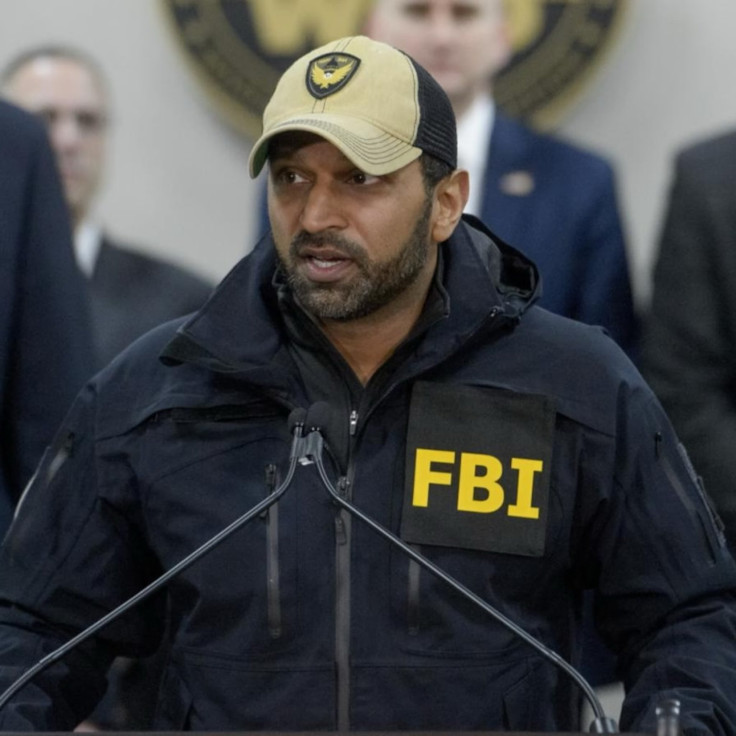
Patel also testified to Congress that the FBI had overseen a 300 per cent increase in domestic terrorism investigations since he assumed leadership. A significant portion of that increase, he said, falls under a new classification called 'Nihilistic Violent Extremism,' a broad category the administration has indicated it will use to pursue perceived ideological adversaries.
Sources familiar with the matter told Klippenstein that NSPM-7 could cause the domestic terrorism watchlist, then numbering around 5,000 US citizens, to double in a matter of months.
The FY2027 budget requests £9.6 billion ($12.5 billion) for FBI salaries and expenses alone, a £1.46 billion ($1.9 billion) increase over the FY2026 enacted level. The Department of Justice as a whole would receive a £3.6 billion ($4.7 billion) increase, described in budget documents as targeted at maximising DOJ's capacity to pursue violent crime and national security priorities.
First Amendment Absent From NSPM-7 As Congress Stays Silent
Legal analysts and civil liberties researchers have noted that NSPM-7, unlike previous national security directives produced across administrations since Watergate, contains no reference to the First Amendment or to the right of Americans to organise and protest.
The directive instructs federal law enforcement to treat political speech, including activity on social media and in educational institutions, as an investigative method for identifying radicalisation.
The NSPM-7 text states that domestic terrorism 'exploit[s] a variety of popular social media platforms, smaller websites with targeted audiences, and encrypted chat applications,' which investigators are directed to monitor.
The directive also empowers the Attorney General to recommend groups for formal domestic terrorist organisation designation and the IRS Commissioner to ensure no tax-exempt entity 'directly or indirectly' finances political violence.
How is The Initiative Moving Up in Approval
The broader budget request submitted to Congress on 4 April 2026 reflects these enforcement priorities at scale.
Total discretionary spending in the request reaches $2.16 trillion (£1.63 trillion), a 15.3 per cent increase over the FY2026 enacted level, with national security, border enforcement, and law enforcement accounting for the largest proposed increases.
Most Democrats and some Republican appropriators have indicated they expect Congress to significantly modify the request before any funding is enacted.
The NSPM-7 Joint Mission Centre has now moved from directive to funded programme, and the question of whether Congress will scrutinise what is being built inside it remains unanswered.
© Copyright IBTimes 2026. All rights reserved.
- Recommended For You