Trump Branded 'Sick' By Internet as He Claims Kim Jong Un Called Biden 'Mentally Retarded' While Boasting Their Friendly Ties
US President's remarks about the North Korea leader and Joe Biden ignite online fury and raise fresh questions over diplomacy

Donald Trump claimed that North Korean leader Kim Jong Un insulted Joe Biden using offensive language. The explosive remarks, delivered during a White House briefing, quickly went viral and drew fierce criticism online.
Many users branded the comments 'sick' and 'unbelievable,' questioning both the language used and the president's decision to repeat such claims publicly while praising ties with a nuclear armed state.
Trump Recounts Alleged Remarks About Biden
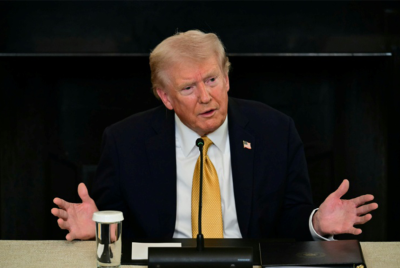
Speaking to reporters, Trump described his relationship with Kim in glowing terms while recounting alleged remarks about Biden.
'He said very nice things about me. He used to call Joe Biden a mentally retarded person,' he said.
The comment immediately drew attention due to the use of a derogatory term and the lack of clear evidence that Kim had ever made such a statement. While North Korean officials have previously criticised US leaders, there has been no confirmed instance of the exact phrase cited by Trump.
Despite this, the president appeared to present the claim as fact, using it to contrast how Kim allegedly treated him compared to Biden.
Trump: "You know who else didn't help us? South Korea didn't help us. We've got 45,000 soldiers in South Korea to protect them from Kim Jong Un, who I get along with very well. He said very nice things about me. He used to call Joe Biden a mentally retarded person." pic.twitter.com/l7BqskXLu0
— Aaron Rupar (@atrupar) April 6, 2026
After all this time, it is so hard to comprehend this sick insane fuck is the president of the United States.
— Ed T. (@EdTNYC820) April 6, 2026
Online Fury Explodes Over 'Sick' Comments
Reaction online was swift and intense, with critics condemning both the language and the tone of the remarks.
One viral post summed up the anger, stating, 'After all this time, it is so hard to comprehend this sick insane f*ck is the president of the United States.'
The backlash reflects wider concerns about the normalisation of offensive language in political discourse. Advocacy groups have long warned that such terms are harmful and contribute to stigma against people with disabilities.
The controversy also reignited scrutiny of Trump's own history of personal attacks, as he has repeatedly questioned Biden's mental fitness in speeches and public appearances.
He told reporters that the situation was 'very nice,' highlighting what he described as a friendly rapport with Kim. This comes despite a long history of hostile exchanges between the two leaders.
During Trump's first term, Kim publicly insulted him, calling him names such as a 'dotard' and a 'frightened dog.' At the same time, Trump famously spoke about receiving 'love letters' from the North Korean leader following their historic meetings.
While those summits marked the first time a sitting US president met Kim, efforts to curb North Korea's nuclear programme ultimately failed, with the country continuing missile tests in recent years.
Remarks Come Amid Wider Tensions
Trump's comments were made in the context of broader criticism directed at US allies, including South Korea, Japan and Australia, over their role in ongoing global tensions.
He complained that allied nations had not done enough to support US efforts, even as American troops remain stationed abroad. Around 45,000 US personnel are currently based in South Korea, a key deterrent against North Korean aggression.
At the same time, Kim's regime continues to expand its nuclear capabilities, with recent tests suggesting it is working towards weapons capable of reaching the US mainland.
Against this backdrop, Trump's remarks have raised questions about the balance between diplomacy and rhetoric. While he portrays his relationship with Kim as a success, critics argue that repeating offensive claims and praising authoritarian leaders risks undermining credibility on the global stage.
© Copyright IBTimes 2026. All rights reserved.
- Recommended For You