President Xi's 'Declining Nation' Dig Was Meant For Biden, Not Me, Trump Claims
Amidst a ceremonial summit, Trump and Xi discuss US-China relations, Taiwan tensions, and regional security.

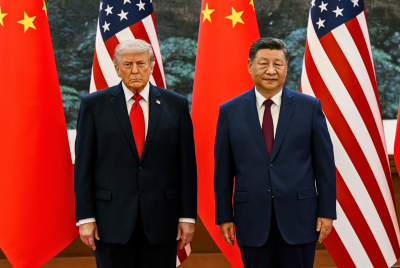
Donald Trump has moved quickly to reframe President Xi Jinping's reported description of the United States as a 'declining nation', insisting the barb was aimed squarely at Joe Biden rather than his own time in office. Seeking to present their latest meeting as proof of warming ties with Beijing, the US president cast the remark as a backhanded endorsement of his administration.
The comment, made in a social media post after Trump's talks with Xi, came as the two leaders publicly traded praise yet remained sharply at odds over Taiwan, trade and wider regional security, according to details released from the Beijing summit.
Trump Claims Declining Nation Comment Targeted Biden
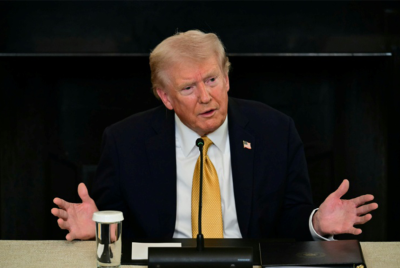
Trump wrote that when Xi had 'very elegantly' referred to the US as 'perhaps being a declining nation', the Chinese leader was talking about 'the four years of Sleepy Joe Biden and the Biden Administration', adding that Xi 'was 100% correct' on that point. He went on to argue that the country had reversed course under his own leadership and said Xi had congratulated him on what he described as a series of early successes.
In the same post, Trump said the US was no longer 'a Nation in decline' and expressed hope that relations with China would become 'stronger and better than ever before'.
Trump Praises President Xi During Beijing Summit
Trump's attempt to recast Xi's words came against the backdrop of a summit that appeared heavy on ceremony but thin on immediate policy breakthroughs. The pair met for about two hours at the Great Hall of the People after a formal welcome featuring cannon fire, military music and children waving Chinese and American flags.
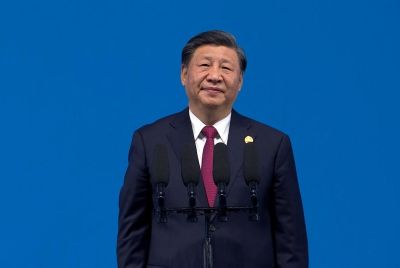
Before the private meeting, Trump said the US–China relationship was 'going to be better than ever before'. Xi's public comments were more guarded, with the Chinese president raising the question of whether Washington and Beijing could avoid the 'Thucydides Trap' — a phrase used in foreign policy debate to describe the risk of war between an established power and a rising rival.
Trump later told Fox News host Sean Hannity that Xi had said he 'would like to be of help' in efforts to end the war in Iran and reopen the Strait of Hormuz to oil shipments.
"When President Xi very elegantly referred to the United States as perhaps being a declining nation, he was referring to the tremendous damage we suffered during the four years of Sleepy Joe Biden... But now, the United States is the hottest Nation anywhere in the world" -… pic.twitter.com/Kjr5Rdaz0D
— The White House (@WhiteHouse) May 14, 2026
China Issues Strict Warning Over Taiwan Policies
That account contrasted with the firmer language that emerged from the Chinese side on Taiwan, long the most sensitive issue in relations between Beijing and Washington. According to a post on X by Chinese Foreign Ministry spokesperson Mao Ning, Xi told Trump that 'the Taiwan question is the most important issue in China-U.S. relations'.
Mao said Xi warned that if the matter was not handled properly, the two countries could face 'clashes and even conflicts', putting the wider relationship in jeopardy. The warning reflected Beijing's anger over a planned US arms package for Taiwan valued at $11 billion, which the Trump administration has approved but not yet delivered.
United States Reaffirms Support For Taiwan Security
Washington has long maintained support for Taiwan's self-defence, although Trump's more ambivalent language on the island has fuelled questions over how far that backing would extend in a crisis. US Secretary of State Marco Rubio said policy towards Taiwan remained 'unchanged' but added it would be 'a terrible mistake' for China to try to take the island by force.
Rubio, travelling with Trump, said China routinely raises the issue and that the US then makes its own position clear before moving on to other subjects. Taiwan's government responded by thanking Washington for its 'long-term support'. Michelle Lee, a spokesperson for Taiwan's premier, said Taipei viewed steps that helped maintain regional stability and manage the risks of 'authoritarian expansion' in a positive light.
© Copyright IBTimes 2026. All rights reserved.
- Recommended For You