Donald Trump Blames Military for 'Melody' Gaffe Amid Renewed Dementia Fears
Trump's 'Melody' slip and his defence of it have reignited scrutiny of his health ahead of a new medical examination.

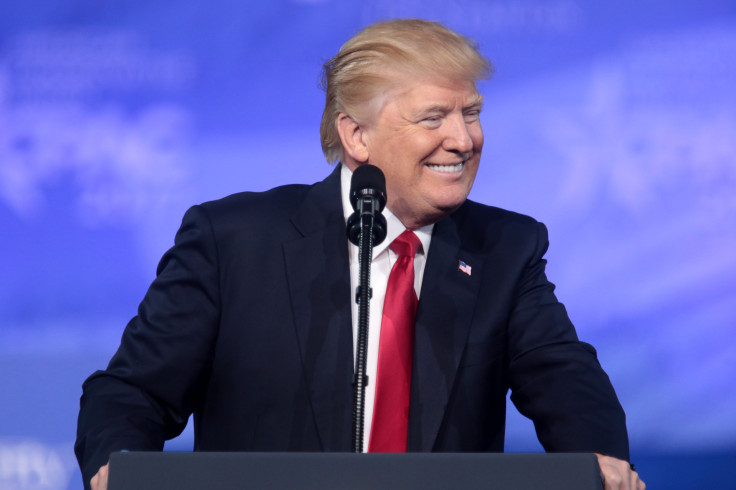
Donald Trump has blamed his phone and even the US military after admitting he referred to his wife, Melania, by the wrong name during a White House speech in Washington this week, a slip that has reignited online speculation about the 79-year-old president's mental fitness.
Trump acknowledged that he had at times referred to the first lady as 'Melody' in posts on his social media platform Truth Social, insisting the mix‑up stemmed from autocorrect rather than forgetfulness. Speaking from the White House podium, he told supporters that his device repeatedly changed 'Melania' to 'Melody' and that the error slipped through because he posted so quickly.
'Every time I wrote 'Melania,' it would word correct to "Melody,"' Trump said, according to the Express. 'Sometimes I wouldn't proofread it, and I would get absolutely decimated. They said, "He didn't know the name of his wife!" I said, "What the hell is wrong with this machine?" You know who corrected it? The military.'
Dementia Fears Amplified Online
The news came after months of heightened scrutiny over Trump's health, fuelled by his age, visible bruising on his hands earlier this year and footage of him appearing to nod off during a recent White House event. Critics have long questioned whether the president is showing signs of cognitive decline, and the 'Melody' episode has become the latest flashpoint in that debate.
JUST NOW: President Trump explains how his phone's autocorrect almost got him in trouble with the First Lady:
— Fox News (@FoxNews) May 6, 2026
"They have spell correct and word correct, and these crazy machines that we use to put out Truths... And every time I wrote 'Melania,' it would correct to 'Melody.'"… pic.twitter.com/ojPlmWBfMX
On social media, some users responded to Trump's explanation with open derision. One post, quoted by the Express, mocked his self‑promotional style: 'I've got GREAT DEMENTIA, a lot of people say it. I don't remember WHO SAID IT, because MY DEMENTIA IS TREMENDOUS! BTW, have I told you about my AMAZING DEMENTIA?!?'
Another commenter suggested Trump was 'sundowning' — a term often associated with dementia‑related symptoms that worsen towards late afternoon or evening, such as confusion and agitation. A third went straight for the constitutional nuclear option, writing, 'It's 25th Amendment time. Or are we going to wait until he's a drooling mess?'
Others fixated on Trump's claim that 'the military' had to intervene to sort out his phone. 'He needed the military to fix autocorrect? He could have given it to one of his grandkids or his genius son, who knew how to turn on a computer,' one critic wrote. Another said the story 'says a lot about his priorities and respect for the military's time and resources.'
To supporters, these reactions look like another round of bad‑faith attacks on an ageing but energetic president. To detractors, they are signs that the political system is again dancing round the question of whether the country's oldest leader is still up to the job.
Cognitive Tests, Medical Check‑Ups and the Narrative
The renewed Trump dementia argument arrives just days before a scheduled medical and dental check‑up on 26 May, his fourth publicly announced doctor's visit since entering his current term. Each appointment has been trailed and dissected with a level of attention that would be excessive for most leaders but has become routine for Trump.
He has admitted that the glare has changed how he views his own healthcare. According to earlier remarks referenced in reports, Trump said he regretted undergoing scans of his heart and abdomen last year because of the wave of speculation they unleashed about his condition.
👀
— Pepe Deluxe 🐸 (@deluxe_pepe) April 30, 2026
I took the Exam three times during my (“THREE!”) Terms as President, and ACED IT ALL THREE TIMES — pic.twitter.com/s3V4RWkxHQ
Yet he also leans into the topic when it suits him. On Truth Social, Trump recently boasted of acing a cognitive assessment, saying, 'I took the Exam three times during my ("THREE!") Terms as President, and ACED IT ALL THREE TIMES.' He went on to claim that it is 'rare' to ace such a test and insists he feels as he did '50 years ago.'
Medical professionals might raise an eyebrow at a patient apparently relishing his performance in a cognitive screening that is normally administered when there is at least some reason to check. Still, the details of the tests, their timing and their scoring have not been independently disclosed, and nothing is confirmed yet beyond Trump's own account.
The official medical record is less theatrical. In April last year, Navy Captain Sean Barbabella, the president's physician, declared Trump 'fully fit' to serve. Barbabella reported that the president had lost 20 pounds since a 2020 examination that found him bordering on obesity.
Later in the year, Trump was examined again after what the White House described as mild swelling in his extremities. Tests showed chronic venous insufficiency, a circulatory condition common in older adults in which blood pools in the veins. The condition can be managed and, on its own, does not necessarily limit someone's capacity to work, but it added another line to a file that already commands disproportionate attention.
For voters, the bigger question is not whether autocorrect once mangled the name 'Melania' or whether a frazzled president failed to proofread a late‑night post. It is whether they trust the assurances they are hearing. One user on X summed up a growing cynicism about Trump's White House: 'For people who lie constantly, this WH can't seem to construct a believable lie to save their lives.'
Others argue that, after years of contested narratives about his health, the public may never know the full story. As one post put it bluntly: 'We are lied to about his declining health, so does it really matter?'
© Copyright IBTimes 2026. All rights reserved.
- Recommended For You