Trump Trashes Residents of Democratic-Run Cities as 'Not Clean' in Bizarre Rant About Filthy Streets, Smell
Former President Trump targets Democratic-led cities, criticising their cleanliness and leadership during a Michigan rally.
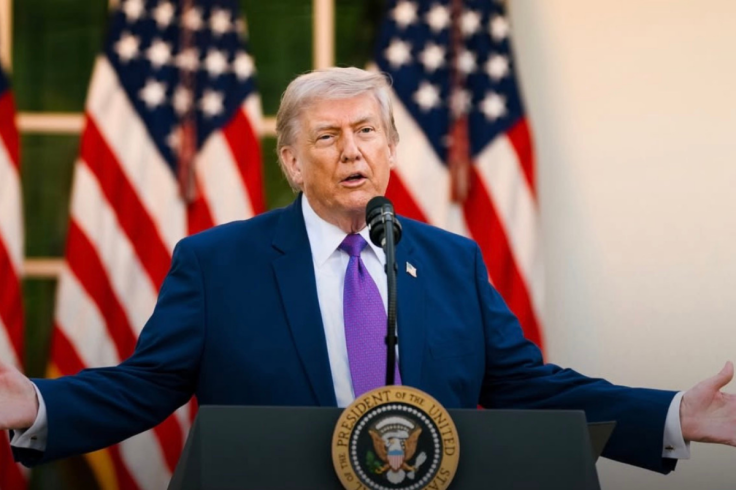
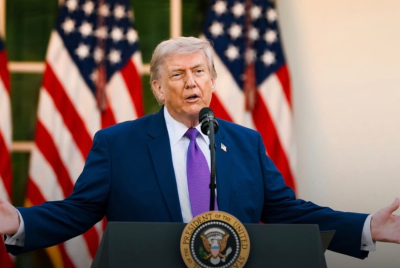
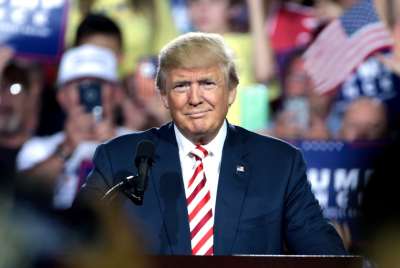
President Donald Trump criticised Democratic-led cities during a rally in Michigan on Monday, describing them as 'dirty' and claiming their residents were 'not clean' as he renewed his argument that urban areas governed by Democrats are in decline.
Speaking in Milford, Michigan, Trump contrasted Democratic- and Republican-led cities while arguing that his administration's approach to crime and public order had produced better results.
The comments formed part of a broader speech in which Trump promoted his administration's law-and-order agenda and criticised Democratic leaders over crime, sanitation and public safety.
Trump Targets Democratic-Run Cities
Addressing supporters, Trump said conditions in cities governed by Democrats had deteriorated.
'This is maybe gonna make news because I've never said it,' Trump told the crowd before launching into criticism of what he described as 'blue cities.'
'When they take something over, it's always dirty,' Trump said, referring to Democratic leadership.
'The sidewalks are dirty. The people are, I hate to say this, not clean. OK? The curbs are loaded with you-know-what. The smell is terrible.'
🚨PROJECTION: Trump claims Democratic-run cities are “dirty,” says “the people are… not clean,” and complains “the smell is terrible.”
— CALL TO ACTIVISM (@CalltoActivism) July 27, 2026
It’s always projection. Under Trump the East Wing is a hole in the ground, the Reflection Pool is green, and Trump’s diaper is always full. pic.twitter.com/yEdK9CK7ik
Videos of the remarks were widely shared across social media shortly after the rally.
Trump continued by arguing that urban problems were concentrated in cities governed by Democrats.
'We don't have problems with the Republican-run cities, I mean, for the most part,' he said.
Later in the speech, Trump referred to another unnamed city that he said had become 'filthy dirty' under Democratic leadership.
'They take over, everything becomes disgusting and dirty,' he said. 'It's dirty and filthy and grimy.'
The comments echoed a recurring theme in Trump's political messaging, in which he has argued that Democratic-controlled cities have failed to address crime, homelessness and declining public infrastructure.
Trump Claims He Fixed Washington Crime
Trump also pointed to Washington, DC, as evidence that federal intervention could improve public safety and city conditions.
He said graffiti had been removed, monuments restored and crime significantly reduced following actions taken by his administration, including the deployment of the National Guard.
'It was filthy,' Trump said, describing the nation's capital before those measures.
He also claimed crime in Washington had fallen by 88%. However, publicly available research has questioned that figure.
An analysis by the Niskanen Center found that the National Guard deployment was associated with a reduction in some opportunistic property crimes during its first six months but found no statistically significant impact on violent crime. The analysis did not support an overall decline of 88%, although crime statistics can vary depending on the offences measured and the period examined.
Neither the White House nor federal law enforcement agencies immediately provided data supporting Trump's figure.
Trump Tells Cities to Call Him
Trump said cities including New York, Chicago and Los Angeles should request assistance from his administration if they wanted to reduce crime.
'If they do that in New York, Chicago, Los Angeles, we would take care of crime so quickly,' Trump said. 'But we have to get called.'
He added that, if invited by local officials, his administration would 'get rid of the crime so quickly your head will spin.'
The comments reflected Trump's longstanding position that the federal government should play a more active role in addressing crime in major metropolitan areas, particularly where local leaders request assistance.
Throughout both his presidential campaigns and his current term, Trump has frequently argued that Democratic-led cities have experienced higher crime rates and deteriorating public order, while Democratic officials have countered that crime trends vary widely between cities and are influenced by numerous economic and social factors rather than political leadership alone.
Earlier in the Michigan rally, Trump also warned about what he described as the growing influence of communism in the United States, claiming it represented a greater long-term threat than major historical events including the First World War, the Second World War, the attack on Pearl Harbor and the 11 September 2001 terrorist attacks.
His remarks on Democratic-led cities quickly became one of the most widely circulated moments from the event, drawing criticism from political opponents while reinforcing a central theme of his administration's messaging on crime, immigration and urban governance as attention increasingly turns toward the next phase of his policy agenda.
© Copyright IBTimes 2025. All rights reserved.
- Recommended For You