

Trump Denies £170 Million Blizzard Aid To Four Democratic States While Approving £634 Million For Republican-Led States
The White House rejects claims of politicisation as governors and lawmakers challenge the president's decisions on blizzard recovery aid.
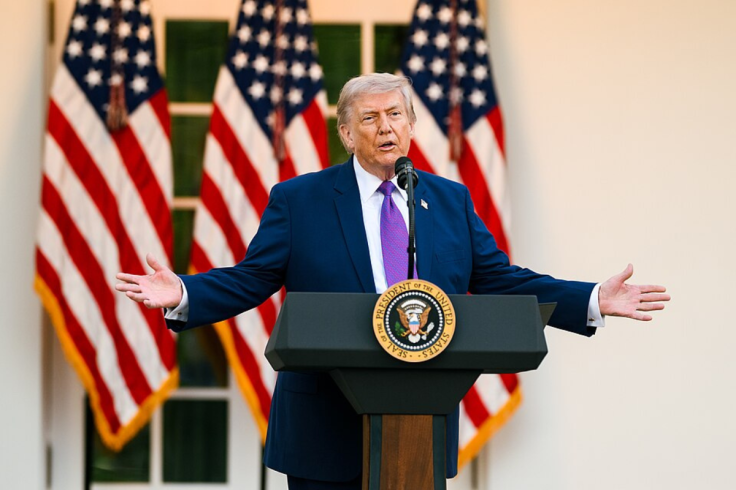
President Donald Trump has rejected £170 million ($227 million) in federal blizzard recovery aid for four Democratic-led states days after approving £634 million ($846 million) for Republican-led states, intensifying accusations that disaster relief decisions have become politically influenced.
New York, New Jersey, Massachusetts, and Rhode Island were all turned down for major disaster declarations following February's record nor'easter. Each of the four has a Democratic governor and two Democratic senators.
The White House denies any political calculation, but a nonpartisan analysis of federal data shows a stark partisan gap in approval rates across Trump's second term.
The February Nor'easter That Buried The Northeast
The storm that struck on 22 and 23 February 2026 was severe by any measure. Rhode Island recorded up to 37.9 inches of snow and wind gusts reaching 74 miles per hour, hitting with the force of a Category 2 hurricane, causing two deaths and hundreds of emergency room visits, according to the state's congressional delegation.
In New York, parts of Nassau and Suffolk counties saw nearly 3 feet of snow in a single day. Governor Kathy Hochul had activated the National Guard, declared a state of emergency across 22 counties, and formally requested a major disaster declaration in March, with support from Senators Chuck Schumer and Kirsten Gillibrand.
New Yorkers: this is a serious winter storm.⁰⁰I’ve declared a State of Emergency and activated the National Guard ahead of blizzard conditions expected across Long Island, New York City, and the Hudson Valley.⁰⁰Stay home, stay informed, and stay safe. pic.twitter.com/3wN4XWWjMs
— Governor Kathy Hochul (@GovKathyHochul) February 22, 2026
Rhode Island officials worked with FEMA on a joint preliminary damage assessment submitted on 7 April, which validated more than £14 million ($19 million) in damages. That figure exceeded the federal threshold used to determine whether a declaration can be considered.
Two Sets Of Decisions, Days Apart
Hochul learned of the rejection on 2 July. 'After months of waiting, President Trump today denied our request for a Major Disaster Declaration following the blizzard that pummeled New York City, Long Island, and the Mid-Hudson,' she said in a statement. She accused the president of turning his back on his home state and vowed to appeal.
Donald Trump just denied New York’s request for a major disaster declaration after February’s historic blizzard.⁰⁰Our first responders showed up when New Yorkers needed them most. Instead of having their backs, the President is leaving New Yorkers to foot the bill.⁰⁰We’ll…
— Governor Kathy Hochul (@GovKathyHochul) July 2, 2026
The timing is where accounts diverge slightly. Trump approved FEMA aid for six Republican-led states two days before rejecting the four Democratic ones. Rhode Island's delegation, by contrast, says the denial landed on the same day the president approved more than £634 million ($846 million) for nine Republican-leaning states.
The announcements also drew scrutiny over their political framing. Trump used Truth Social to publicise the approvals, opening his Wisconsin post by naming Congressman Tom Tiffany, whom he described as holding his complete and total endorsement for governor.
He did not mention Tony Evers, the Democratic governor who actually submitted the request, and he likewise omitted Kansas Governor Laura Kelly from that state's announcement.
What The FEMA Approval Data Shows
The Urban Institute, a nonpartisan think tank, has tracked the disparity. Its analysis of public FEMA data by senior fellow Andrew Rumbach found that roughly 84 percent of disaster requests from states that voted for Trump in 2024 were approved, against about 42 percent from states that backed Kamala Harris.
POLITICO's own earlier examination sharpened the picture further, finding that requests from states with a Democratic governor and two Democratic senators were approved just 23 percent of the time, compared with 89 percent for states with Republicans in all three posts.
The Urban Institute has separately modelled the administration's proposed FEMA overhaul, which would eliminate presidential declarations for snowstorms altogether.
That proposal matters here. Congressional appropriators from both parties affirmed in the 2026 Homeland Security funding package that snowstorms shall remain eligible for federal relief, yet FEMA told POLITICO that snowstorm damage must be genuinely extraordinary to qualify and that the East Coast is generally expected to manage major snowstorms independently.
The White House Defence And The Democratic Counterattack
White House spokesperson Abigail Jackson rejected the accusation outright. 'There is no politicization to the President's decisions on disaster relief,' she said, adding that Trump provides a more thorough review of disaster declaration requests than any administration before him and responds to each Stafford Act request with care to ensure tax dollars supplement rather than substitute state obligations.
Rhode Island's four Democrats wrote directly to the president on 3 July, demanding he reverse the denial. 'You chose to leave Rhode Islanders out in the cold,' they told him. Governor Daniel McKee, who called the blizzard one of the most severe weather events in state history, described the decision as another case of the White House putting politics ahead of people and confirmed he would appeal.
Pressure is building elsewhere too. Senators Gary Peters and Andy Kim led 15 Democratic colleagues in a 16 June letter to the Office of Management and Budget demanding documents on how declarations are now reviewed, arguing the administration has disclosed no metrics for its new approval process. Trump previously denied aid to Colorado and Washington state, and more than 19 Democratic attorneys general sued his administration last year over withheld FEMA funds.
All four rejected states have signalled they will appeal, meaning the same president who denied the money will decide whether to grant it a second time.
© Copyright IBTimes 2026. All rights reserved.