

'Not Living in Democracy': Political Scientist Warns Donald Trump Threatens US System in Outrage
Ryan Enos warned that Donald Trump's latest attacks on the media and election claims show an authoritarian push that even Fox News appears reluctant to fully back.

President Donald Trump's latest clash with the media and his renewed attacks on the 2020 election have left even Fox News wary, Harvard political scientist Ryan Enos said in a recent discussion with journalist Greg Sargent.
The remarks came as Trump's push to keep election claims alive and pressure broadcasters over coverage drew fresh scrutiny in Washington and beyond.
The episode centres on Trump's prime-time speech about elections, his anger at networks that refused to carry it live, and the awkward position this has put broadcasters in as the White House continues to lean on claims that remain disputed.
In Sargent's telling, Fox did not fully echo Trump's claims and even declined to air his Homeland Security secretary's follow-up remarks, which is hardly the sort of unity the president seems to expect from his media ecosystem.
Trump and the Fox News Problem
Enos argued that Trump's latest behaviour looked less like routine political combat and more like a deliberate attempt to reshape how voters understand elections. He described the pressure on news organisations as a form of intimidation, saying the aim is to make networks think twice before refusing Trump airtime next time around.
That matters because the stakes are not just reputational, they are constitutional, with Enos casting the moves as contrary to the First Amendment.
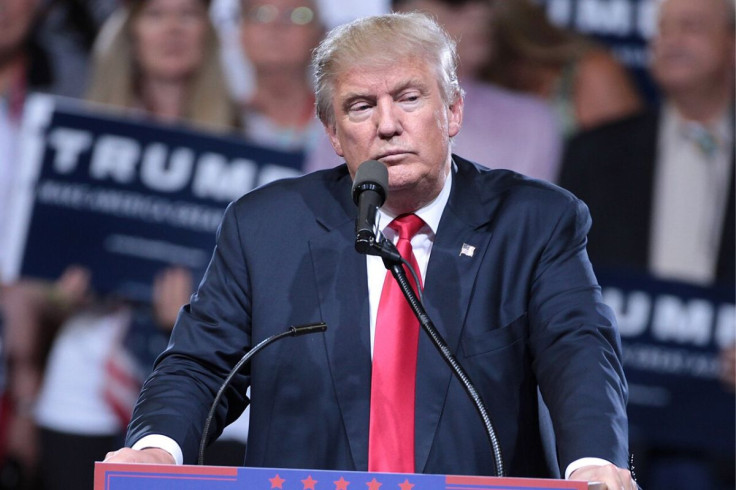
Sargent's discussion also pointed to the strange fact that Fox, of all places, appeared uneasy about where this was going. According to the episode summary, sources were reportedly dismayed by Trump's fixation on the election, viewing it as bad politics for Republicans and potentially bad for business given the network's ongoing legal exposure tied to election-fraud claims.
That is a messy little problem for Trump. If even the friendliest battlefield starts to wobble, the whole operation looks more brittle than the loudest posturing suggests.
Enos went further, comparing Trump's pressure campaign to 'schoolyard extortion,' a line that captured the aggressive logic of the moment without dressing it up as anything nobler. He said the point was not simply to win an argument on television but to make broadcasters fear the consequences of non-compliance.
That kind of behaviour, he suggested, is designed to leave the public with a warped picture of elections and a narrower sense of what is safe to say aloud.
Why the Speech Has Hit a Nerve
The news came after Trump's speech was met with a patchwork response from networks, with some reportedly refusing to carry it live, while others chose to air only parts of it or move on quickly.
The pushback seems to have irritated Trump enough that he kept escalating, according to Sargent, whose discussion framed the attacks on the media as part of a broader effort to keep distrust in the system alive. That idea is grimly familiar now, but it still has teeth.
Enos said Trump's behaviour also reveals a deeper weakness. For all the power of the presidency, he still cannot simply force every network to broadcast what he wants, when he wants it.
That is the point at which this stops looking like ordinary political theatre and starts looking more like a leader testing how far the system can be bent before it snaps. Not exactly subtle stuff.
There is also the legal backdrop, which hangs over all of this like a warning light. It has already faced major litigation over its 2020 election coverage, and Enos suggested those cases have changed the incentives enough to make the network more careful this time around.
In practical terms, that means one of the loudest pro-Trump outlets is suddenly behaving as if the bill for repeating baseless claims might arrive later, and with interest.
What Enos Says Comes Next
Enos told Sargent that many Republican politicians appear to know Trump's election claims are false, even if they do not always say so publicly. He argued that the broader public is also less receptive than Trump assumes, citing polling and the reluctance of elected Republicans to openly continue the fight.
The implication is blunt enough. Trump may still be trying to sell the story, but the audience is not quite as pliable as he thinks.

That, Enos suggested, is why the media fight matters so much. If the networks hold their line, they are helping protect the public from being dragged deeper into a false narrative. If they cave, even a little, they become part of the machinery.
And Trump, Enos said, seems determined to keep squeezing until someone gives way. The whole thing has a whiff of something more serious than a row about airtime, because it is. Nothing about it feels accidental anymore.
© Copyright IBTimes 2026. All rights reserved.