

Donald Trump to Sacrifice Ukraine? Shocking Warning From Former White House Insider
Miles Taylor warns that Trump's domestic challenges could influence his foreign policy, particularly on Ukraine.
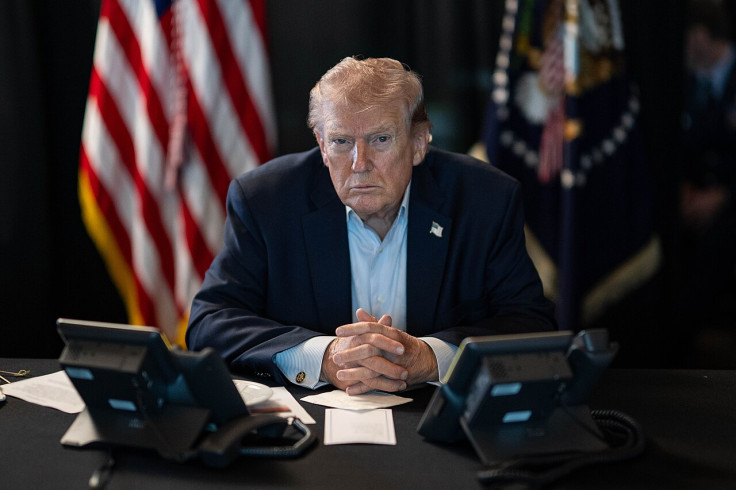
A former senior White House official has warned that Donald Trump could become more confrontational abroad if domestic pressure grows, with Ukraine likely to remain at the centre of that tension. Miles Taylor argued that political setbacks at home could push the president towards a more aggressive foreign policy, especially if he feels embattled after the midterm elections.
Taylor, who served as chief of staff at the Department of Homeland Security during Trump's first term, said the president's response to domestic losses could spill into international affairs. In his view, weakening approval ratings and a tougher Congress could leave Trump 'distracted, embattled and very likely humiliated,' which may make him more aggressive rather than more cautious.
Writing in The i, Taylor said, 'If you thought Donald Trump had asserted himself globally this year, you ain't seen nothin' yet.' He argued that 'the political ground is shifting beneath the US President's feet' as public backing erodes and congressional defeats become more likely.
Taylor's warning arrives as Trump's handling of Ukraine and Russia is already drawing scrutiny from European allies and foreign-policy analysts. The broader concern among critics is not simply whether Trump wants a rapid end to the war, but whether domestic political pressure could shape the terms of any settlement involving Kyiv.
Why Ukraine Remains Central
The warning lands against a backdrop of Trump already applying pressure on Kyiv in 2026. Reuters reported that Ukrainian President Volodymyr Zelenskyy said Trump was exerting undue pressure on him while pushing Ukraine toward concessions in peace talks.
Reuters also reported that Trump suggested a deadly Russian strike on Kyiv could set back peace efforts, underlining how central Ukraine remains to his current foreign-policy approach. In January, separate Reuters reporting said Trump argued Ukraine, not Russia, was holding up a potential peace deal, a line that alarmed European allies because it echoed Moscow's long-running argument that Kyiv should accept territorial concessions.
BBC reporting later showed that Trump announced a three-day ceasefire between Russia and Ukraine, although the wider conflict remained unsettled. Reuters subsequently reported that both the Kremlin and Trump said the war was close to ending, while Zelenskiy pushed back and argued Moscow had no intention of stopping the fighting.
That context has made Taylor's remarks especially sensitive. Critics fear that if domestic politics turn sharply against Trump, Ukraine could become part of a broader effort to project strength internationally or secure a fast diplomatic victory.
JD Vance stood at the White House podium today and declared that no president has done more to ensure Ukraine’s survival than Donald Trump.
— Gandalv (@Microinteracti1) May 19, 2026
This is the same Trump who cut off all military aid to Ukraine, froze intelligence sharing, and spent the better part of two years publicly… https://t.co/KtxGjnEpxU
Taylor's argument is not simply about temperament. It is about how political pressure inside Washington could shape foreign-policy decisions at a moment when the war in Ukraine remains unresolved and heavily dependent on US involvement.
Taylor's Claims About Political Pressure
Taylor also pointed back to the period after the 2018 midterms, when Democrats took control of the House. He said senior officials were called to 'secret meetings' and instructed to obstruct oversight, adding that staff were told to delay inquiries and prepare to defy subpoenas.
According to Taylor, that earlier period demonstrated how pressure inside Washington can alter Trump's behaviour. He described a White House mindset in which agencies were pushed toward resisting congressional demands and political retaliation became the default response.
His broader argument is that a president under siege domestically may look for dramatic moves abroad. In that framing, Ukraine is not simply a foreign-policy issue, but a potential bargaining tool in a wider domestic political struggle.
Taylor is not a neutral observer. He served as DHS chief of staff under Trump, was later revealed as the anonymous author of a 2018 New York Times op-ed criticising the administration, and has since built a public profile warning about Trump's governing style and approach to power.
Wider Ukraine Pressure Continues
Other reporting this year has reinforced the sense that Ukraine is already under heavy diplomatic strain. Reuters has covered repeated US pressure on Kyiv, while broader reporting has shown Trump demanding a rapid path toward a settlement and publicly framing the conflict in ways that have unsettled Ukraine and some European allies.
That pressure has continued alongside diplomatic efforts involving sanctions and ceasefire negotiations. On 20 May, US News reported that Zelenskiy discussed sanctions policy with Britain, arguing that diplomatic and economic pressure remained the strongest available tool against Moscow.
The developments have added weight to Taylor's warning because they show that Ukraine already sits near the centre of Trump's foreign-policy messaging. The debate is increasingly focused not only on whether Trump wants to end the war, but also on what kind of settlement he might ultimately support if domestic political pressure intensifies.
For now, Taylor's comments remain a warning rather than a prediction. Still, they fit a broader pattern in which Trump's domestic political battles and his handling of Ukraine increasingly appear to move in parallel.
© Copyright IBTimes 2026. All rights reserved.