

Trump's Third Walter Reed Visit in a Year Comes as His Doctor Stays Silent on Several Visible Symptoms
President Trump's health evaluations at Walter Reed prompt discussions on his fitness for office
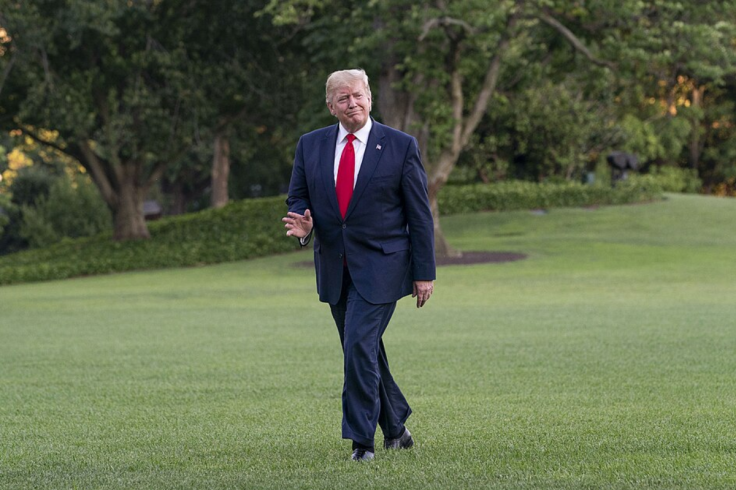
President Donald Trump made his third visit to Walter Reed National Military Medical Center in just over a year on Tuesday, with the White House again describing it as a routine medical and dental evaluation. The visit, which also included time with service members and staff at the facility, comes roughly a month before Trump turns 80 — making him the oldest person ever to have assumed the presidency.
Trump went to Walter Reed twice during 2025, in April and October, and has also visited his dentist in West Palm Beach twice this year, once in January and again earlier this month for a follow-up. The frequency of the visits has drawn attention beyond the usual scrutiny afforded a sitting president, with an independent physician arguing that the White House has not fully addressed several observable symptoms.
'Fit for Duty' — But Questions Linger
Trump's physician, Dr Sean Barbabella, has maintained that the president exhibits excellent cognitive and physical health and is fully fit to carry out his presidential duties. Trump himself has been vocal about his condition, claiming during a Cabinet meeting in March that he had taken cognitive tests three times and 'aced' every one. 'One doctor said, "I've never seen anybody get them all right,"' Trump said.
Independent medical voices have, however, pushed back on the White House's characterisation. CNN medical analyst Dr Jonathan Reiner, speaking to anchor Kate Bolduan on Tuesday, said the American people deserve a 'clear understanding' that Trump is 'fit for duty' and called for a better explanation of several of the president's visible health concerns.
Today, Trump will go to Walter Reed Hospital for another medical exam.
— Headquarters (@HQNewsNow) May 26, 2026
This is his 3rd medical exam in the past year. pic.twitter.com/u8UMBdCHFI
'He Falls Asleep Very Often'
Reiner pointed to what he described as 'severe daytime somnolence,' noting that Trump has fallen asleep in the Oval Office on multiple occasions with people talking to him, and expressed concern that the president may have been at risk of nodding off during Memorial Day observances at Arlington National Cemetery.
Reiner warned that chronic insomnia 'can result in an increase in risk of dementia, decrease in cognitive effects in older people,' adding that it is 'equivalent to about increasing your age by about three and a half years.'
Reiner had previously written on X that when a patient cannot stay awake in meetings, 'we do formal sleep testing to look for sleep apnea,' and said he was confident the White House medical team had done this — but flagged that the president 'continues to struggle with daytime somnolence.'
Bruising, Swelling and a Neck Rash
Trump's swollen ankles and bruised hands have sparked repeated questions about the president's health and fitness. The White House has offered explanations for both, attributing the bruising on his hands to frequent handshaking combined with daily aspirin use.
Reiner also questioned the ankle swelling explanation, noting that Trump had shown no such symptoms in earlier examinations — an observation he said could indicate a more sudden onset than a chronic condition would typically imply. He described the White House's explanation for the hand bruising as 'not credible.'
Dr. Jonathan Reiner: "The president has severe daytime somnolence. He falls asleep very often. He's fallen asleep in the Oval Office on multiple occasions with people talking to him in the cabinet room, and I was concerned yesterday that he might have fallen asleep at Arlington… pic.twitter.com/e44DRs1rzI
— Aaron Rupar (@atrupar) May 26, 2026
The White House confirmed earlier this year that Trump had been using a prescribed cream for a visible rash on his neck, though officials did not specify the underlying condition being treated. A medical report released after Trump's October 2025 visit stated that he 'continues to demonstrate excellent overall health,' with his cardiac age found to be 'approximately 14 years younger than his chronological age.'
The health of a sitting American president carries global implications, given the office's role in foreign policy, military command and economic governance. The White House has not answered key questions, even as Trump continues to assert that he is in excellent health. With no legal requirement for presidents to release their full medical records, the public relies on what the White House chooses to disclose — a tradition of transparency that critics argue is being selectively applied.
© Copyright IBTimes 2026. All rights reserved.
- Recommended For You


