Donald Trump's Recent Health Examinations Explained: Why Is POTUS Having a Fourth Major Medical Exam?
Examining the implications of Donald Trump's multiple medical evaluations during his presidency.
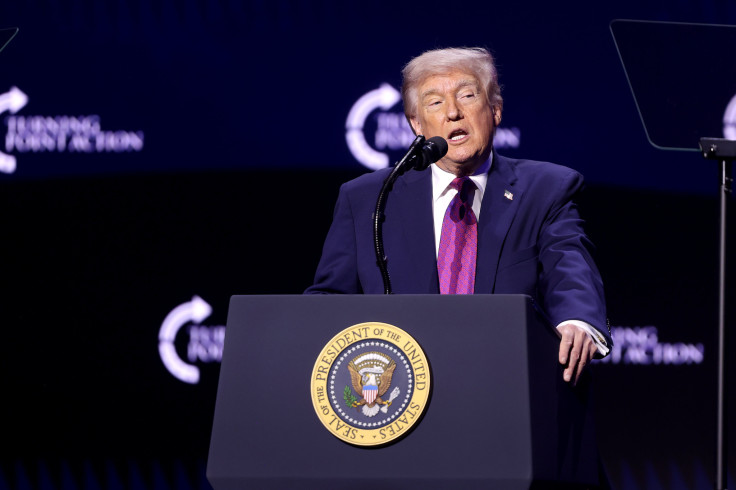
Donald Trump is due back at Walter Reed National Military Medical Center on Tuesday for another medical check-up, with the White House saying the visit is an annual physical and routine preventive care as the president heads towards his 80th birthday. It will be his fourth publicly announced medical examination since returning to office, and the latest to invite more questions than answers.
HAPPENING TODAY: President Trump heads to Walter Reed Military Medical Center to receive his annual routine medical exam. POTUS turns 80 years old next month.
— RedWave Press (@RedWavePress) May 26, 2026
Fox & Friends: “This marks his second exam since last summer when the White House revealed he was diagnosed with a… pic.twitter.com/7ZAGFyiCUQ
The President's health has been a live issue throughout his second term. A lengthy physical in April produced an upbeat summary from White House physician Navy Capt. Sean Barbabella, while a later July evaluation followed swelling in Trump's legs and bruising on his right hand.
By October, the White House was again sending him to Walter Reed, this time for what officials first called a routine yearly check-up and Trump later described as a 'sort of semi-annual physical.'
Donald Trump And The April Physical
The April examination was billed as an annual physical, but it was no quick once-over. According to the White House summary, it lasted nearly five hours and included blood work, a cardiac assessment, ultrasounds, laboratory tests and cognitive checks.
Barbabella said Trump was in 'excellent cognitive and physical health' and added that the president remained in 'excellent health, exhibiting robust cardiac, pulmonary, neurological, and general physical function.'
President Trump is scheduled to get another medical exam, putting his health under renewed public scrutiny after he has worked to dismiss concerns over his age and stamina. https://t.co/7AIfwLBiue
— The Boston Globe (@BostonGlobe) May 26, 2026
That early verdict set the tone for the rest of the year. On paper, it sounded reassuring enough, the kind of sentence presidents collect when the machinery of White House medicine is working as intended. In practice, it did little to settle the public appetite for detail, especially once further visits began to pile up.
Donald Trump And The July Diagnosis
The news came after White House press secretary Karoline Leavitt said Trump had undergone a 'comprehensive exam' after swelling appeared in his legs. The testing, she said, included vascular studies and led to a diagnosis of chronic venous insufficiency, a condition in which the leg veins do not return blood efficiently to the heart, causing pooling and swelling in the lower limbs.
Trump is heading to Walter Reed tomorrow for the THIRD time in 13 months….probably just a totally routine visit….a lot of very healthy people visit their doctor 3 times in 13 months https://t.co/SVcvNiN6pU pic.twitter.com/6USjkAJWkb
— Wu Tang is for the Children (@WUTangKids) May 25, 2026
Leavitt also addressed bruising on Trump's right hand, saying it was compatible with 'tissue damage from frequent handshaking' while he was taking aspirin. The White House physician's memo said there was no evidence of deep vein thrombosis or arterial disease, and the results were described as within normal limits.
Even so, the sight of swelling and bruising has continued to feed scrutiny, because symptoms that are explained in a briefing do not always vanish in the mind of the public.
Donald Trump And The October Scan
By October, Trump was back at Walter Reed again. Leavitt initially called that visit a routine yearly check-up, but the timing raised eyebrows because the president had already had his annual physical in April and the July work-up in between.
President Donald Trump is undergoing another medical assessment at Walter Reed. https://t.co/iao5yGFFDH pic.twitter.com/Er4sufX83Q
— TMZ (@TMZ) May 26, 2026
Trump then referred to it as a 'sort of semi-annual physical,' which was a curious phrase even by the standards of political health messaging. Barbabella's memo said the evaluation included 'advanced imaging, laboratory testing, and preventative health assessments conducted by a multidisciplinary team of specialists.'
The problem was that the White House would not immediately say what kind of imaging had been done. Trump later told reporters he had an MRI and said it was 'perfect,' before subsequently saying he had 'no idea' which part of his body had been examined.
In January, he changed his account again and told The Wall Street Journal that it had not been an MRI at all but 'less than that.' Barbabella then confirmed to the paper that the scan was a CT, carried out to 'definitively rule out any cardiovascular issues,' and that it showed no abnormalities.
The documented facts are relatively straightforward, a scan was conducted, later clarified as a CT scan, and the results were reported as normal. However, the handling of the explanation by the White House has been less clear-cut, and has done little to strengthen public confidence in the process.
Donald Trump And The Questions Ahead
Tuesday's appointment will be watched not just for what it finds, but for what it clarifies. Trump is also scheduled for a dental check-up on the same day, following two earlier visits to a dentist near his Florida estate, where he often spends weekends.
Nothing confirmed so far suggests a dramatic change in his condition, and the White House has repeatedly insisted the tests are routine. Still, the pattern is unusual enough to keep the conversation alive. Four publicly announced medical evaluations in one term is not nothing, especially for a president whose every visible bruise or pause now gets parsed like evidence in a case file.
© Copyright IBTimes 2026. All rights reserved.
- Recommended For You