'Sit Back and Relax': Donald Trump Explodes in 1 AM Iran Rant and Claims He Has 'Extreme Intelligence'
Trump's distinctive communication style blends diplomacy, criticism and self-promotion in a late-night post.

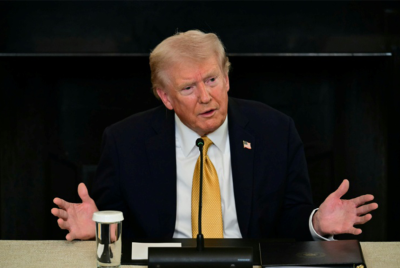
Donald Trump used a 1 a.m. Truth Social post to tell Americans to 'sit back and relax' over Iran, while attacking Democrats, defending his negotiating strategy and revisiting claims about his cognitive abilities. The late-night message blended foreign policy, self-promotion and partisan politics, offering another example of Trump's distinctive communication style as talks with Tehran continue.
Trump posted a deranged 1am Truth Social screed demanding critics shut up about Iran negotiations, calling opponents "unpatriotic" and dismissing war-or-peace concerns with a breezy "sit back and relax." Diplomatic genius, clearly. pic.twitter.com/LuYPw0tSDQ
— tomwellborn3rd (@TomWellborn3) June 1, 2026
A Late-Night Iran Message
Trump posted shortly after midnight on Monday, saying Iran 'really wants to make a deal' and insisting that any agreement would ultimately benefit both the United States and its allies. He argued that ongoing political criticism was making negotiations more difficult, complaining that Democrats and what he called 'seemingly unpatriotic Republicans' were constantly 'chirping' about whether he should move faster, slower, go to war or avoid war altogether.
Trump publicly admitting his job is “MUCH tougher” than expected while negotiating with Iran and blaming endless political hacks for chirping at him non-stop
— HUSSEIN (@PulseOrbit) June 1, 2026
Bro went from Truth Social flexes to straight up begging the country to sit back and relax because reality in the big… https://t.co/8XHVJ8g3TD
The timing drew attention because the post arrived while negotiations with Iran remained active and several key issues were still unresolved.
Reuters recently reported that Trump described the framework of a potential agreement as 'largely negotiated,' although questions surrounding sanctions, Iran's nuclear programme and shipping through the Strait of Hormuz remain under discussion.
Talks Still Evolving
The post also arrived amid mixed signals about the pace of negotiations. Recent reporting has indicated that Trump urged negotiators not to rush into an agreement, while also suggesting a final decision could be approaching. That context helps explain why Trump sought to project confidence while cautioning critics against second-guessing the process.
The Strait of Hormuz remains one of the most closely watched issues. Reports have suggested that any eventual agreement could involve measures affecting shipping access through the strategic waterway, which handles a significant share of global energy exports.
For the administration, maintaining flexibility during the final stages of negotiations appears to be a central objective.
Trump Tells Critics to Relax
Trump ended the post with a direct message to the public. 'Just sit back and relax, it will all work out well in the end,' he wrote. The remark stood out because it contrasted sharply with the rest of the post, which was largely devoted to criticism of political opponents and complaints about public commentary surrounding the negotiations.
Despite these volatile conditions, Trump said on Truth Social this morning that "Iran really wants to make a deal," and told Americans to "just sit back and relax, it will all work out well in the end."
— Phillipson Institute (@phillipsoninst) June 1, 2026
Who told Trump that he's winning?
'Cause we're not.https://t.co/IaHDapLTMc
Earlier in the message, Trump argued that many of his critics failed to understand the realities of complex diplomatic talks and suggested constant scrutiny was making the process more difficult. The result was a post that sought to reassure supporters while simultaneously pushing back against critics.
Intelligence Claim Returns
The Iran comments came shortly after Trump revived claims about his recent cognitive assessment. Trump has repeatedly pointed to a perfect score on the Montreal Cognitive Assessment, saying the result demonstrated what he described as 'extreme intelligence.' He has also argued that future presidential and vice-presidential candidates should be required to take similar tests.
🇺🇸 Trump achieved a perfect 30/30 on his latest Montreal Cognitive Assessment, and seems to quite proud of that fact.
— Mario Nawfal (@MarioNawfal) May 27, 2026
While the graphic is technically true, neither Obama nor Biden ever took the official cognitive screening while in office.
That being said, highly doubtful… pic.twitter.com/r20llxXLEC
Medical experts, however, note that the assessment is designed to screen for signs of cognitive impairment rather than measure intelligence or IQ. The medical memorandum released following Trump's examination described his cognitive performance as being within normal limits.
Trump’s team is being deceptive.
— Jen (@Sea_Glass1115) May 31, 2026
The Montreal Cognitive Assessment (MoCA) is a basic 10-minute screening tool for early dementia and mild cognitive impairment — not an IQ test or proof of ‘extreme intelligence.
He’s having to repeat it because his medical team is gauging his… pic.twitter.com/IHLXbK5AZx
Jeffries Back in Focus
Trump also returned to one of his familiar political targets, House Minority Leader Hakeem Jeffries. Using the term 'Dumocrats,' Trump repeated criticisms of Jeffries and suggested the Democratic leader had inspired the nickname because he viewed him as 'a dumb person.'
Trump: “Dumb ends with a B but most people don’t know that. And all I do is switch the E with a U, and you have a Dumocrat.
— Republicans against Trump (@RpsAgainstTrump) May 31, 2026
I came up with this by watching Hakeem Jeffries. He’s a dumb person” pic.twitter.com/B8D5wN1I6O
The comments reflected a broader pattern in Trump's political messaging, in which policy arguments are often combined with personal attacks and memorable nicknames aimed at opponents.
A Familiar Trump Formula
Taken together, the message illustrated how Trump continues to blend multiple political themes into a single public statement. What began as an update on Iran negotiations quickly expanded into criticism of rivals, discussion of cognitive testing and renewed attacks on Democratic leaders.
For supporters, the post reinforced Trump's image as a confident negotiator urging patience during a sensitive diplomatic process.
Smart approach by President Trump. Maximum pressure worked before, it can work again. Let the professionals negotiate without the DC noise machine interfering. America First means strong deals, not weak ones.
— Scott Berrier (@bdjaj12345) June 1, 2026
For critics, it offered another example of a president who frequently mixes high-stakes foreign policy with personal grievances and political combat.
This is a crisis of Trump's own making when he tore up the JCPOA. Under the JCPOA, Iran agreed not to develop or acquire a nuclear weapon. They were also in compliance with the agreed upon levels of uranium for energy resources. Trump is the arsonist trying to put out the fire.
— HardyOnTheBeach🏝 (@HardyOnTheBeach) June 1, 2026
As negotiations with Iran continue, the post is likely to be remembered less for any specific policy detail than for the way it combined diplomacy, self-promotion and partisan confrontation in a single early-morning message.
© Copyright IBTimes 2026. All rights reserved.
- Recommended For You