From 'Completely Destroyed' to 'Left Alone': Trump's Shifting Claims on Iran's Military Draw Scrutiny Amid Ceasefire Talks
Examining the discrepancy between Trump's public statements and intelligence reports

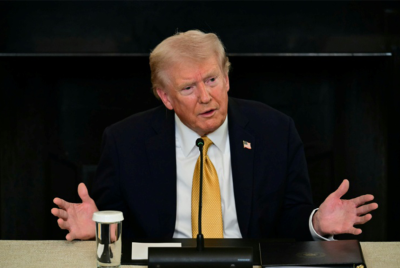
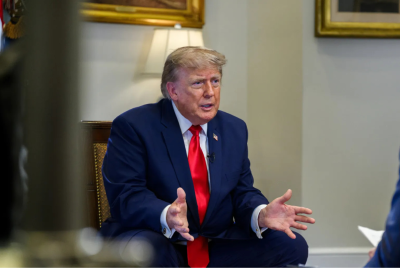
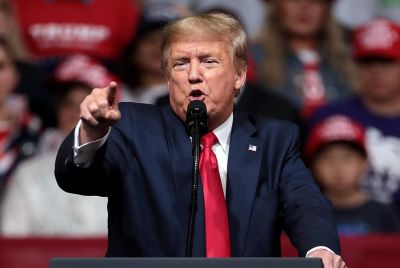
President Donald Trump has offered a strikingly different account of Iran's military standing, telling Fox News on Saturday that the United States had 'sort of left it alone' — a claim that sits in sharp tension with the triumphant language he used for months as US forces waged war against Tehran.
Speaking on 'My View with Lara Trump', the Saturday night programme on Fox News, Trump said: 'Their Navy is totally gone, 100 percent. Their Air Force is totally gone, 100 percent. Their military, we've sort of left it alone — because we think that their military is somewhat moderate.' He went further, adding: 'We've actually left their military alone. People would be surprised to hear that. Because mistakes have been made in wars where you wipe out everybody and then you have a country that for 40 years can never rebuild.' The remarks have drawn immediate scrutiny from observers and political figures alike, coming as fragile ceasefire negotiations between Washington and Tehran remain ongoing and unresolved.

A Record That Tells a Different Story
The contrast with Trump's own prior statements is stark. In an April 11 Truth Social post, Trump wrote: 'The United States has completely destroyed Iran's Military, including their entire Navy and Air Force, and everything else.' The following day, during a press gaggle after Air Force One landed in Maryland, Trump told reporters: 'Their military is destroyed. Their whole Navy is underwater. You know that 158 ships are gone. Their navy is gone. Most of their mine droppers are gone.'
Those were not isolated remarks. According to PolitiFact, Trump made similar declarations on at least seven occasions in March alone, including a 14 March Truth Social post in which he wrote: 'We have already destroyed 100% of Iran's military capability.' Defence Secretary Pete Hegseth had also echoed those assertions, adding that Iran's military capabilities had been rendered 'combat-ineffective for years to come.'
What Intelligence Assessments Actually Found
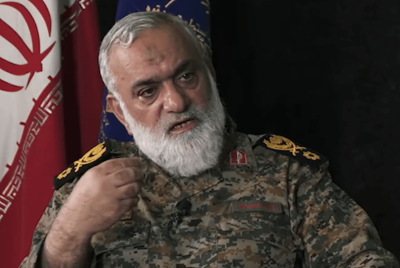
The shifting rhetoric comes against the backdrop of classified US intelligence assessments that contradict the administration's public position. Reporting by The New York Times in May found that Iran still fields roughly 70 per cent of its mobile missile launchers and has retained approximately 70 per cent of its prewar missile stockpile, encompassing ballistic missiles capable of striking targets across the region.
The assessments, based on satellite imagery and other surveillance data, also found that Iran had regained access to nearly 90 per cent of its underground missile storage and launch facilities, with many now considered partially or fully operational. Along the Strait of Hormuz, Iran had restored operational access to 30 of the 33 missile sites it maintains there — sites that could threaten American warships and oil tankers transiting the waterway.
Talks Continue as Republicans Grow Restless
Trump's latest comments come as he is reportedly seeking tougher new terms to a proposed deal negotiated by his team, with an unnamed senior administration official telling Axios that the requested changes pertain to 'specifics about how the US gets the enriched uranium and the timing.'
The proposed deal has also unsettled some of Trump's own Republican allies in the Senate. Senators Roger Wicker, Lindsey Graham, and Ted Cruz have all raised objections, arguing that the framework being discussed grants Tehran terms that lean too generously in Iran's favour and bear a troubling resemblance to the nuclear accord struck under a previous Democratic administration.
Trump has insisted a deal is within reach, saying at a Cabinet meeting on 27 May: 'They want very much to make a deal. So far, they haven't gotten there. We're not satisfied with it, but we will be — either that or we'll have to just finish the job.'
The disconnect between Trump's public claims and classified US intelligence findings carries significant consequences beyond political optics. If Iran retains a substantial portion of its missile arsenal and has restored access to most of its launch sites, the strategic calculus underpinning any ceasefire deal — and any future military decision — shifts considerably. For allies and adversaries alike, the credibility of the US account of the war's progress is now an open question.
© Copyright IBTimes 2026. All rights reserved.
- Recommended For You