

Donald Trump Claims Lower Oil Prices Are Part of Midterm 'Giant Hoax' in Sunday Truth Social Post
Energy data shows crude prices declined before and after the 3 November vote, while Trump provided no evidence of election-related manipulation
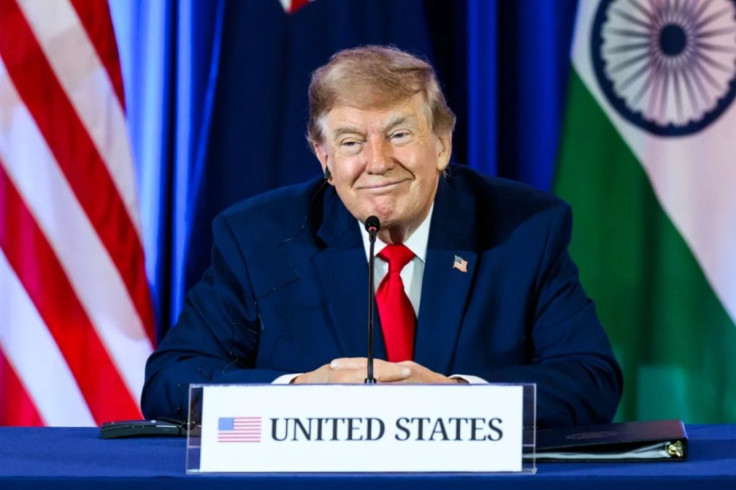
President Donald Trump questioned the timing of falling oil prices after the US midterm elections, calling the situation a 'Giant Hoax' on Truth Social on Sunday, 22 November 2026. His allegation suggested that the decline was linked to the election, although he provided no evidence of deliberate price manipulation.
The remarks followed earlier claims from Trump that fuel prices would fall after Americans voted on 3 November. He had questioned why consumers were paying more before election day, even as oil prices were already declining.
'Isn't it interesting that Oil prices have dropped precipitously after the Midterm Elections?' Trump wrote. 'I said that was going to happen. The whole thing is a Giant Hoax!'
Isn’t it interesting that Oil prices have dropped precipitously after the Midterm Elections? I said that was going to happen. The whole thing is a Giant Hoax! President DONALD J. TRUMP
— Commentary Donald J. Trump Truth Social Posts On X (@TrumpTruthOnX) November 22, 2026
( TS: Nov 22 2026, 4:49 PM ET ) pic.twitter.com/hldRX9eTWh
In a separate Sunday post, Trump accused Democrats and Iran of trying to keep oil prices elevated until the election. The accusation was not accompanied by evidence establishing a coordinated effort.
Trump Oil Prices Midterm Hoax Claim Follows Earlier Warnings
On 17 November, Trump again questioned the timing of lower fuel prices. Three days later, at a news conference, he claimed crude oil had fallen approximately 20 per cent since the start of November and was nearing $80 (approximately £61) a barrel.
The price history shows that the decline began before polling day.
Figures from the US Energy Information Administration, cited in published fact-checking, placed crude at approximately $110 (approximately £84) a barrel on 19 October and $100 (approximately £76) immediately before the election.
By 19 November, the reported price was around $87 (approximately £66) a barrel. Those figures describe a decline spanning both sides of the vote, rather than one that began only after it.
Trump also questioned the timing of the decline during a Fox News interview on 19 November.
'And you know, the oil price, you notice the coincidence the oil price dropped like a rock the day after the election,' he said. A clip of his remarks was subsequently shared on X on 20 November.
President Trump is now publicly calling out how PERFECTLY timed the collapse in oil prices are after the midterms
— Trumpusa1 (@Trumpusa1A1) November 20, 2026
"You know the oil price, you notice the COINCIDENCE, the oil price dropped like a ROCK the day after the election!" pic.twitter.com/gk3fC1bBhR
That earlier statement sits uneasily alongside the suggestion that the price movement began only once voting had finished. It does not, however, establish what drove the market decline.
Why Trump Oil Prices Midterm Hoax Claim Is Unsubstantiated
Crude oil and retail petrol prices measure different things. Crude is traded in wholesale markets, while prices at American filling stations also reflect refining, transport, taxes and local supply conditions.
Seasonal demand can affect prices too.
As autumn progresses, reduced driving and changes in fuel production can influence what motorists pay, independently of election results.
GasBuddy analyst Patrick De Haan also pointed to increased oil flows through the Strait of Hormuz during October.
He linked part of the decline to expectations of reduced tensions involving the United States and Iran, an explanation different from deliberate electoral timing.
The Energy Information Administration recorded an average US regular petrol price of $3.805 (approximately £2.91) per gallon on 16 November, compared with $4.478 (approximately £3.42) on 21 September. Rounded to the nearest cent, those figures are $3.81 (approximately £2.91)and $4.48 (approximately £3.42) respectively.
Although that offered some relief at the pump, the November average remained roughly 76 cents above the comparable figure a year earlier.
A national average also cannot show what happened at every individual filling station.
Trump's comments therefore concern an actual fall in prices, but his explanation for its timing remains unsupported.
The figures alone cannot establish that Democrats, Iran or any other group deliberately kept prices elevated before the election.
© Copyright IBTimes 2026. All rights reserved.