

Donald Trump's Health Scrutinised Again After Netizens Speculate Over 'Exoskeleton Device' in China Video
Footage posted by White House adviser shows pointed protrusion above 80-year-old president's right hip during APEC greeting, though cause remains unverified
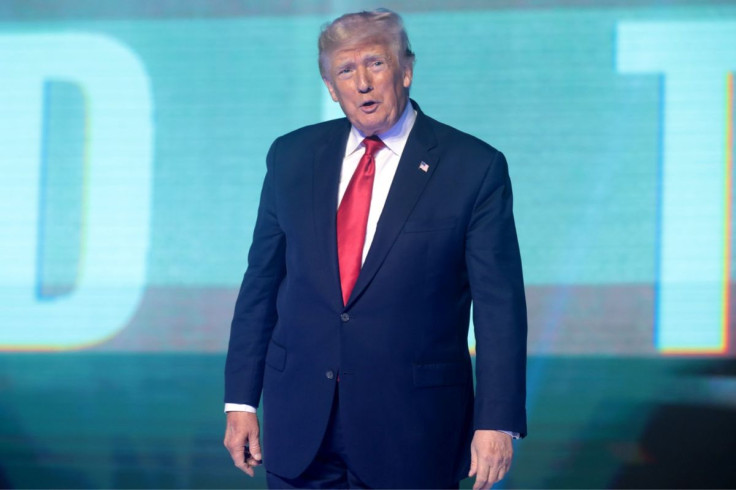
A video clip showing Donald Trump greeting Vladimir Putin in Shenzhen, China, has ignited intense speculation on X regarding the 80-year-old leader's health after viewers spotted a noticeable bulge beneath the back of his suit.
One commenter suggested it might be an 'exoskeleton device', according to The Daily Beast, whose description of the footage leaves the cause of the bulge unclear.
The Daily Beast's Erkki Forster described the encounter as taking place on the sidelines of the APEC Leaders' Summit. Trump's communications adviser Margo Martin filmed and posted the clip, Forster wrote.
The Footage Behind Trump Health Speculation
Forster described a rigid-looking bump beneath the back of Trump's suit as he walked towards Putin. It was most pronounced just above his right hip, where a pointed protrusion appeared to press against the fabric.
Filmed and posted by Margo Martin, the footage captured Trump approaching the 74-year-old Putin, shaking his hand, and leaning in to whisper in his ear as Putin responded with a broad smile.
How Online Comments Turned to Trump Health
Independent journalist Aaron Rupar drew attention to the bulge, according to The Daily Beast. In the exchange Forster quoted, one X user suggested it was a medical device, while another wondered whether it might be a pump or a bag. A separate commenter suggested an exoskeleton designed to be worn over clothes.
The comments offered competing guesses about what viewers could see through the fabric. Forster's description identified where the bump appeared and what it looked like. Whether it had any connection to Trump's health remained unverified.
.@POTUS meets with President Putin 🇺🇸🇷🇺 pic.twitter.com/sI7oeU4cYF
— Margo Martin (@MargoMartin47) November 19, 2026
Trump Health and the Case for Medical Disclosure
In a September interview with AlterNet, S. Jay Olshansky, an emeritus professor at the University of Illinois Chicago, discussed a different question about presidential health.
He explained that he lacked the information behind Trump's day-to-day decisions and therefore could draw no conclusions about Trump's cognitive functioning from those decisions.
Olshansky told AlterNet that he had once supported allowing presidents and presidential candidates to keep their full medical records private. He had viewed those records as private health information, with presidents and candidates entitled to the same privacy as anyone else. He explained that he had since come to favour testing and evaluation.
To explain his change of view, Olshansky drew a comparison with airline pilots. He argued that decisions made by people in both roles can affect others' health, directly or indirectly. He also favoured making the results of presidential evaluations public so people could know whether a president or candidate faced cognitive or physical health challenges.
Of the two, Olshansky placed greater weight on cognitive functioning. He voiced less concern about physical changes that can come with age, including problems with an eye, knee or hip. Those examples were part of his broader argument about what matters in evaluating a president or presidential candidate.
When it came to assessing cognitive functioning, Olshansky told AlterNet whom he would rely on for judgment. 'And the only person I would trust to provide any reliable assessment of cognitive functioning would be the individual's physician.'
© Copyright IBTimes 2026. All rights reserved.