

Trump Proposes ICC Protections at Summit With Vladimir Putin and China's XI Jinping
Trump said the ICC exceeded its jurisdiction, while leaders backed state officials' immunities
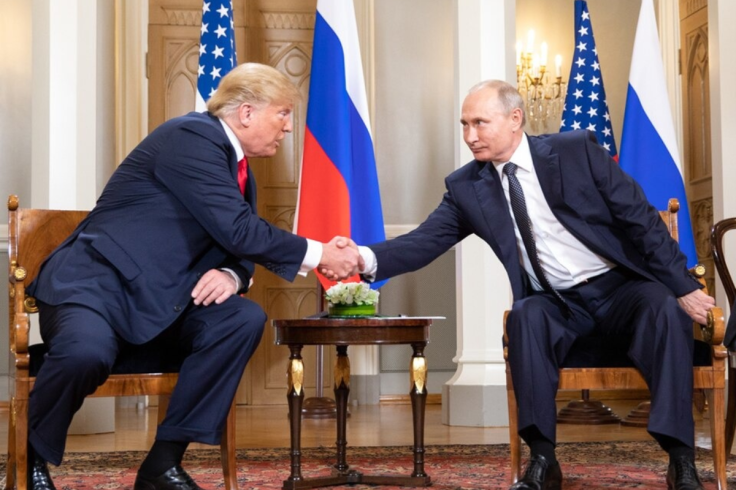
US President Donald Trump said he would suggest ways to protect American sovereignty from the International Criminal Court (ICC) at a summit with Russian President Vladimir Putin and Chinese President Xi Jinping. Their declaration backed state consent and officials' immunities but set out no detailed US plan or change to the court's powers.
The leaders met in Shenzhen on 19 November. Their statement addressed the ICC but included no enforcement mechanism.
Trump Promises To Suggest ICC Protections
Trump said he would suggest ways to protect US sovereignty from 'rogue globalist organisations' such as the ICC, which he claimed had 'gotten out of control' and strayed beyond its jurisdiction. He said all three leaders shared his view.
He did not specify measures. The joint statement said state consent and respect for state officials' immunities were 'of paramount importance'. The leaders agreed that the ICC and similar bodies 'must not abuse their jurisdiction'.
The declaration created no new immunity mechanism and did not amend the Rome Statute. It was a diplomatic position, not a change to international criminal law.
Putin's Arrest Warrant Puts Agreement in Focus
The ICC issued an arrest warrant for Putin on 17 March 2023 over alleged war crimes involving the unlawful deportation and transfer of children from occupied Ukraine to Russia.
A warrant is not a conviction. Russia rejects the court's authority.
The declaration does not cancel Putin's warrant or resolve the jurisdiction dispute. The United States, China and Russia are not parties to the Rome Statute. Russia signed it in 2000 but told the United Nations in 2016 it did not intend to become a party.
The ICC can exercise jurisdiction over non-member nationals when alleged crimes occur on a member state's territory or through a UN Security Council referral. Article 27 says official capacity does not exempt a person from criminal responsibility.
The statement aligns with an existing US campaign against the court. On 9 October, Secretary of State Marco Rubio announced ICC sanctions, saying Washington was protecting US nationals from investigation and prosecution.
The administration opposed the ICC's November 2024 warrants for Israeli Prime Minister Benjamin Netanyahu and former defence minister Yoav Gallant over alleged war crimes and crimes against humanity in Gaza. Those actions predate the declaration and show Trump's continuing opposition.
Beijing is not a Rome Statute party, and the ICC has no publicly listed investigation into the Chinese government. Xi is not subject to an ICC arrest warrant. Their position challenges what they see as international courts' overreach.
Putin Says Declaration Is Not Binding
Putin said after the summit that nobody would be forced to comply with the declaration's decisions. His comments highlighted its political, rather than binding, character.
UN deputy spokesperson Farhan Haq said Secretary-General António Guterres regarded the ICC as 'one of the crucial bodies for international justice'. He said the rule of law 'must be reinforced and not weakened'.
The declaration omitted the war in Ukraine and the conflict involving Iran, offering no peace settlement. Putin's warrant remained outstanding.
The leaders pledged UN reform and dialogue on reducing nuclear risks.
© Copyright IBTimes 2026. All rights reserved.