TSA Says You Can Carry a Rotisserie Chicken in Your Carry-On: 'As Many as You Can Fit'
Exploring the TSA's quirky security rules that allow rotisserie chickens but restrict protein shakes.
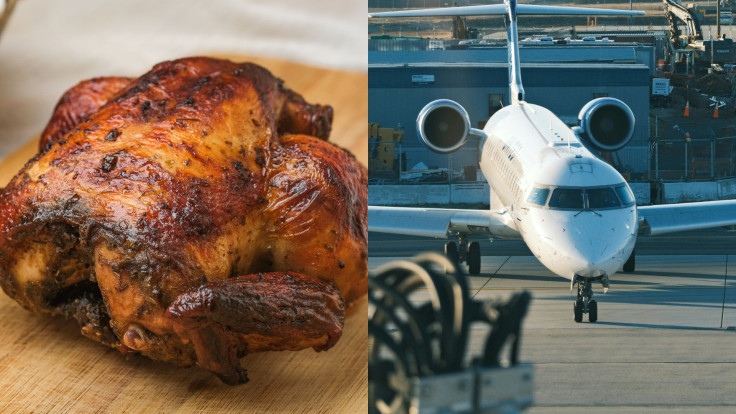
The US Transportation Security Administration (TSA) has clarified one of the stranger realities of modern air travel. Passengers can legally carry multiple rotisserie chickens through airport security, yet a slightly oversized protein shake could still end up in the bin.
The agency triggered fresh online bewilderment this week after posting a tongue-in-cheek message on X explaining that while liquids remain tightly restricted, cooked chickens are perfectly acceptable in carry-on luggage. In typical internet fashion, the post quickly spiralled into a mixture of mockery, disbelief and reluctant admiration.
'Protein shakes? 3.4 oz or less,' the TSA wrote. 'But rotisserie chickens??? As many as you can fit in your carry-on.'
It was absurd enough to go viral almost instantly. It was also completely accurate.
Protein shakes? 3.4 oz or less, but rotisserie chickens??? As many as you can fit in your carry-on.
— TSA (@TSA) May 11, 2026
Why Whole Chickens Pass Security But Drinks Do Not
The contradiction sounds ridiculous because, frankly, it is ridiculous on the surface. Yet the rule stems from the TSA's long-standing liquid restrictions introduced after the 2006 transatlantic aircraft bomb plot involving liquid explosives.
Under current TSA regulations, passengers travelling through US airports can carry liquids only in containers measuring 3.4 ounces or less inside a single quart-sized bag. The policy applies to everything from bottled water and shampoo to protein shakes and yoghurt.
Solid foods operate under entirely different rules.
That means cooked poultry, sandwiches, pizzas and even frozen items are generally allowed through security checkpoints provided they can pass screening procedures. A rotisserie chicken qualifies as solid food despite its slightly greasy reputation.
The TSA has spent years cultivating a strangely self-aware online presence built around explaining these contradictions. Its social media accounts regularly post lists of bizarre but technically permissible carry-on items, partly to educate travellers and partly because the internet rewards nonsense.
This latest example struck a nerve because it perfectly captured the inconsistency travellers feel every time security officers confiscate harmless toiletries while allowing unexpectedly large quantities of food onboard.
One user replied: 'I have never been a big fan of the TSA but this might turn it around.'
Another joked: 'Real ones marinate their chicken with protein shakes that way you get the best of both worlds.'
Travellers See The Rule As A Symbol Of Airport Absurdity
What makes the rotisserie chicken debate resonate is not really the chicken itself. It is the exhaustion many passengers feel navigating airport security rules that often appear arbitrary and aggressively inconvenient.
The TSA's liquid limits have long frustrated travellers precisely because they produce scenarios that sound impossible to explain rationally. A full-sized bottle of water may be prohibited, while an entire roast chicken wrapped in foil passes inspection without issue.
Social media users quickly pointed out the imbalance.
One commenter wrote: 'This logic is actually crazy. I had to check my carry-on last year when I flew internationally and was out of the country for a month.'
The traveller added that medications, soap and personal items could not fit into the required plastic bag, yet passengers could theoretically board with dozens of chickens.
Another post summed up the mood more bluntly: 'We live in a society where 4oz of vanilla whey is a felony but you can technically board a Boeing 737 with an entire farm's worth of Costco chickens.'
The humour works because airport security already feels surreal to frequent flyers. Shoes come off. Laptops come out. Tiny bottles become security threats. Then suddenly a fully cooked bird becomes perfectly acceptable cabin luggage.
Summer Travel Pressure Is Already Building
The timing of the TSA's viral post was not accidental. The agency has simultaneously been warning travellers to prepare for heavy summer airport congestion as holiday traffic rises across the US.
Security checkpoints routinely become flashpoints during peak travel periods, particularly when confused passengers hold up queues by carrying prohibited liquids or oversized toiletries. The TSA's online strategy increasingly leans into humour as a way to push travellers toward understanding the rules before arriving at the airport.
Whether that strategy actually reduces delays is another matter.
The TSA remains one of the most criticised federal agencies among ordinary travellers, often associated with delays, invasive searches and inconsistent enforcement. Self-deprecating internet humour offers a softer public face.
Still, the rotisserie chicken post revealed something important about modern travel culture. People are no longer shocked by strange airport rules. They expect them.
What surprises travellers now is discovering exactly where the line between dangerous and acceptable gets drawn. Apparently, according to federal aviation security standards, that line sits somewhere between a protein shake and an unlimited quantity of supermarket chicken.
© Copyright IBTimes 2026. All rights reserved.
- Recommended For You