

UK on High Alert and Ready To Defend Itself After Iran Declares British Bases 'Legitimate Targets'
Iran warned that any UK military base used by the United States to launch attacks against Iran would be considered a 'legitimate target' for retaliation.
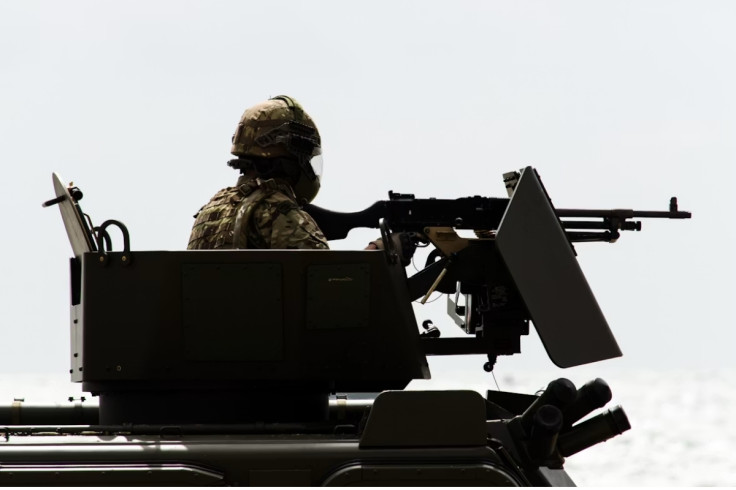
The UK government has said it is prepared to defend the country around the clock after Iran declared British military bases used by the United States to be 'legitimate targets' amid the continuing conflict. The warning followed fresh statements from Iran on 23 July as the US carried out a 13th consecutive night of strikes against Iranian targets, prompting Britain to reaffirm that its armed forces remain ready to respond to any threat.
The latest exchange follows Britain's decision earlier this year to allow the US to use British bases hosting American personnel and aircraft for what ministers described as defensive operations. While London has insisted it is not taking part in offensive military action against Iran, Tehran has increasingly portrayed the UK as a participant in the conflict because of that support.
UK Says It Is Ready as Iran Issues Warning
Iran's Foreign Ministry described the UK as an 'accomplice' in the US war, while the Islamic Revolutionary Guard Corps, through the IRGC-linked Tasnim News Agency, warned that any country providing military support to Washington 'will be responsible for the consequences and repercussions'. The group also claimed that American bombing missions had been launched from RAF Fairford in Gloucestershire two days before its statement.
The Ministry of Defence has not commented on whether RAF Fairford was used for operations against Iran during the latest strikes.
Responding to the threats, a UK government spokesperson stressed that Britain's military posture had not changed.
'Our Armed Forces are ready to keep the United Kingdom safe from any kind of attacks, whether it's on our soil or from abroad. The UK stands ready 24/7 to defend itself.'
The spokesperson said Britain's layered air and missile defence relies on capabilities operated by the Royal Navy, the British Army and the Royal Air Force alongside NATO allies. The government also repeated that its approach remained focused on protecting British people, national interests and allies while acting in accordance with international law and avoiding a wider regional conflict.
The warning from Tehran comes despite Britain's insistence that it has limited its cooperation with Washington to defensive missions launched from UK facilities rather than offensive operations against Iran itself.
Iran Brings Back Focus on UK Military Bases
The dispute over Britain's role is not new. Days after fighting erupted on 28 February, Iran's ambassador to London, Seyed Ali Mousavi, warned that Tehran would reserve the 'right to self-defence' if Britain became directly involved in the conflict and urged the UK to be 'very careful' about its actions.
Permission for US forces to use British bases, including RAF Fairford and Diego Garcia in the Indian Ocean, was first granted in March to target Iranian military infrastructure linked to attacks on Gulf countries and vessels passing through the Strait of Hormuz. According to the government, newly appointed Prime Minister Andy Burnham was informed last week that the arrangement with the United States would continue.
Tensions escalated further on 19 March when Iran launched two ballistic missiles at Diego Garcia. According to the source material, one missile reportedly failed during flight while the other was intercepted by a US warship.
The attack prompted renewed scrutiny of Iran's missile capabilities. Questions had previously been raised over whether Tehran possessed weapons capable of reaching Diego Garcia, located about 2,360 miles from Iran. Israel later claimed that Iran had missiles with a range of up to 4,000 kilometres, a distance that would theoretically place parts of mainland Europe and the UK within reach.
Even so, then Housing Secretary Steve Reed said at the time there was 'no specific assessment that the Iranians are targeting the UK - or even could if they wanted to'.
Analysts have also questioned the reliability and accuracy of Iran's missile arsenal, particularly after repeated US strikes that Washington says have significantly weakened Iran's military capabilities.
The conflict has increasingly centred on the Strait of Hormuz, where Iran has launched attacks against countries hosting US military bases and targeted civilian shipping. Despite those incidents, US Central Command said after completing its 13th consecutive night of strikes that operations were intended to 'further degrade Iran's ability to threaten civilian mariners and commercial vessels transiting regional waters'.
Centcom also said the Strait of Hormuz remains open to commercial traffic and that vessels continue to navigate the strategic waterway with US military support.
© Copyright IBTimes 2026. All rights reserved.