'Iran Will No Longer Exist': Donald Trump Launches Fresh Air Strikes and Warns US Will 'Complete the Job'
US launches air strikes as ceasefire with Iran frays.

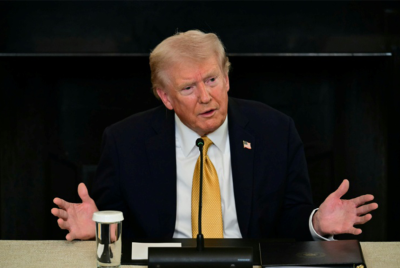
President Donald Trump has warned that the Islamic Republic of Iran 'will no longer exist' if Tehran continues violating a fragile ceasefire, as the United States launched fresh air strikes against Iranian military targets amid rapidly escalating tensions in the Gulf.
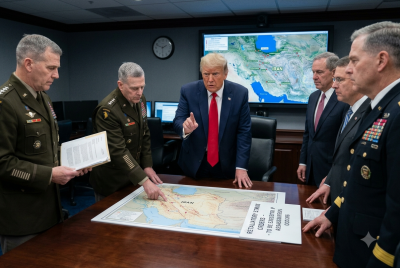
The military action followed what the White House described as repeated Iranian breaches of the ceasefire, including drone attacks on commercial shipping in the Strait of Hormuz. Trump's latest warning signals that Washington is prepared to expand its military response if hostilities continue, further raising the stakes in a region critical to global energy supplies.
Trump Raises the Stakes
In a post on Truth Social, Trump said US aircraft had struck Iranian missile and drone storage facilities, along with coastal radar installations, after Tehran again violated the ceasefire agreement.
United States aircraft just struck Iranian missile and drone storage locations, and coastal radar sites, for violating the Cease Fire Agreement, AGAIN! It is very possible that they will never learn! There may come a point when we are no longer able to be reasonable, and will be… pic.twitter.com/8sKbkA40kU
— Commentary Donald J. Trump Truth Social Posts On X (@TrumpTruthOnX) June 27, 2026
'United States aircraft just struck Iranian missile and drone storage locations, and coastal radar sites, for violating the Cease Fire Agreement, AGAIN!' Trump wrote. He followed with another warning, writing: 'It is very possible that they will never learn!'
Trump then suggested the United States could escalate further if Iran continued its attacks. 'There may come a point when we are no longer able to be reasonable, and will be forced to militarily complete the job that we very successfully started. If that happens, the Islamic Republic of Iran will no longer exist!'
This marks one of Trump's strongest public warnings since the conflict intensified, underscoring the increasingly confrontational posture adopted by his administration.
Hormuz Back in Focus
The latest strikes came after renewed attacks on commercial shipping in the Strait of Hormuz, one of the world's most important maritime trade routes and a vital corridor for global oil exports.
"We didn't miss it, nobody saw it coming," President Trump said Friday of Iran's drone strike on cargo ships in the Strait of Hormuz after he accused Tehran of violating the ceasefire agreement https://t.co/PuFVdyF6LY pic.twitter.com/uR02is6uGi
— Bloomberg (@business) June 26, 2026
Trump accused Iran of launching four drones at ships transiting the strait despite the ceasefire. According to the president, US forces intercepted three of the drones, while one commercial vessel was struck but remained operational.
Although independent assessments of the incidents continue, the reported attacks have renewed concerns about maritime security in the Gulf, where previous disruptions have unsettled global energy markets and heightened fears of a wider regional conflict.
US Central Command said the latest operation targeted Iranian military infrastructure associated with drone, missile and surveillance capabilities, describing the strikes as a response to continued threats against commercial shipping.
Ceasefire Under Renewed Strain
The latest exchange highlights the increasingly fragile state of the ceasefire, with both Washington and Tehran accusing one another of undermining the agreement. The Trump administration argues that Iran has repeatedly violated the ceasefire through attacks on shipping and other regional targets. Iranian officials, meanwhile, have accused the United States of escalating tensions through continued military operations.
As both sides trade accusations, efforts to preserve the ceasefire have become increasingly difficult. Analysts warn that repeated retaliatory strikes increase the risk of miscalculation, particularly around the Strait of Hormuz, where even limited military incidents can have significant international consequences.
Diplomacy Faces Another Test
Despite Trump's forceful rhetoric, neither Washington nor Tehran has formally abandoned diplomatic efforts. The White House has framed the latest operation as a direct response to what it says were repeated ceasefire violations rather than the start of a broader military campaign. At the same time, Trump's warning that the United States could 'complete the job' if Iran continues its attacks leaves open the possibility of further military action.
For now, the conflict remains balanced uneasily between diplomacy and escalation. Each reported violation places additional pressure on an already fragile ceasefire, while every military response increases the risk that the confrontation could widen beyond its current scope.
Whether the latest strikes remain an isolated reprisal or become the start of a broader campaign may depend on the next decisions taken in Washington and Tehran. For now, both governments remain locked in a cycle of accusation, retaliation and increasingly uncertain diplomacy.
© Copyright IBTimes 2026. All rights reserved.
- Recommended For You