Iran Attacks Gulf Nations and Threatens 'Complete Halt' to US Peace Talks After Fresh Air Strikes
Iran's strikes on Kuwait and Bahrain have heightened tensions in the Gulf, threatening to derail fragile ceasefire talks with the United States.

Iran launched strikes on Kuwait and Bahrain on Sunday, escalating tensions across the Gulf and prompting Tehran to warn it could enforce a 'complete halt' to peace negotiations with the United States if hostilities continue, according to statements from the Islamic Revolutionary Guard Corps (IRGC) and Gulf state authorities.
The latest attacks come despite a fragile 60-day ceasefire framework agreed earlier this month between Washington and Tehran under a 14-point memorandum of understanding (MOU), designed to pause hostilities and reopen negotiations over Iran's nuclear programme and regional security. That agreement now appears increasingly strained, with both sides accusing the other of breaching its terms.
Iran Attacks Gulf Nations as Ceasefire Fractures
Kuwait's military said it detected and intercepted multiple Iranian drones alongside two ballistic missiles targeting its territory. In neighbouring Bahrain, the Interior Ministry reported that a strike hit an eight-storey building near the airport, destroying its top floor. Authorities confirmed no fatalities, though the symbolism of the location, close to critical infrastructure, was not lost on officials.
Bahrain's Foreign Ministry described the incident in stark terms, calling it 'a dangerous escalation' and arguing that Iran's actions reflect 'a deliberate approach and a systemic pattern of repeated aggression.' The language signals a shift from cautious diplomacy to open alarm, particularly among Gulf states that have long viewed Tehran's regional posture with suspicion.
The IRGC, in claiming responsibility, framed the attacks as retaliation. It accused the United States of violating the ceasefire agreement first, warning that any further American strikes would trigger 'the complete halt of all diplomatic processes.' That phrasing matters. It suggests Tehran is not just responding militarily but actively preparing to walk away from talks altogether, a move that could collapse what little diplomatic runway remains.
US-Iran Talks at Risk After Fresh Military Exchanges
The news came after US Central Command confirmed on Saturday that it carried out additional strikes on Iranian missile and drone storage facilities, as well as coastal radar sites. The Pentagon linked those operations to a recent attack on a Panama-flagged tanker near the Strait of Hormuz, a vital shipping route long contested by Iran.
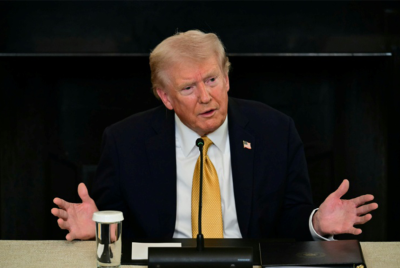
President Donald Trump reinforced that position in a post on Truth Social, writing that US aircraft had struck Iranian targets for 'violating the Cease Fire Agreement, AGAIN!' He added a blunt warning about the potential consequences if Iran continued its actions, saying there 'may come a point' where the US would escalate further. The rhetoric, even by recent standards, felt unusually sharp, edging closer to outright threat than diplomatic signalling.

Meanwhile, maritime tensions continue to build. Iran was also blamed for striking a Singapore-flagged cargo ship near the coast of Oman earlier in the week, an incident Trump described as a 'foolish violation' of the ceasefire. These overlapping flashpoints, on land and at sea, are beginning to blur into a wider pattern of confrontation rather than isolated breaches.
At the centre of it all sits the Strait of Hormuz, a narrow but critical artery for global oil shipments. Iran has repeatedly asserted authority over the waterway, a claim that complicates efforts to ensure safe and unrestricted passage. Speaking in Baghdad on Sunday, Iranian Foreign Minister Abbas Araghchi reiterated that position, warning that any external attempts to impose alternative arrangements would 'lead to further complications' and heighten tensions.
The situation is getting messy. The strait remains technically open, but conflicting narratives about control have created uncertainty for shipping and energy markets alike. Recent incidents in the area over the past two nights, referenced by Araghchi, appear to have only deepened that instability.
Online, reaction has been swift and divided. Some commentators on X described the strikes as inevitable given the mounting violations on both sides, while others warned that targeting Gulf states risks dragging more countries into what was already a volatile US-Iran standoff.
A handful of regional analysts have pointed out that Bahrain, in particular, hosts the US Navy's Fifth Fleet, raising uncomfortable questions about whether the latest strike was meant as a signal rather than a direct escalation.
Nothing is confirmed yet so everything should be taken with a grain of salt, especially regarding competing claims over who initiated the latest round of violations. What is clear is that the ceasefire, once billed as a stepping stone to broader negotiations, is now under visible strain. And if either side follows through on its threats, the diplomatic track could collapse entirely, leaving the region bracing for something far less predictable.
© Copyright IBTimes 2026. All rights reserved.
- Recommended For You