

Iran Warns US and Israeli Bases Are 'Legitimate Targets' After Beirut Strikes Shatter Days-Old Truce
Tehran's response to escalating tensions in the Middle East
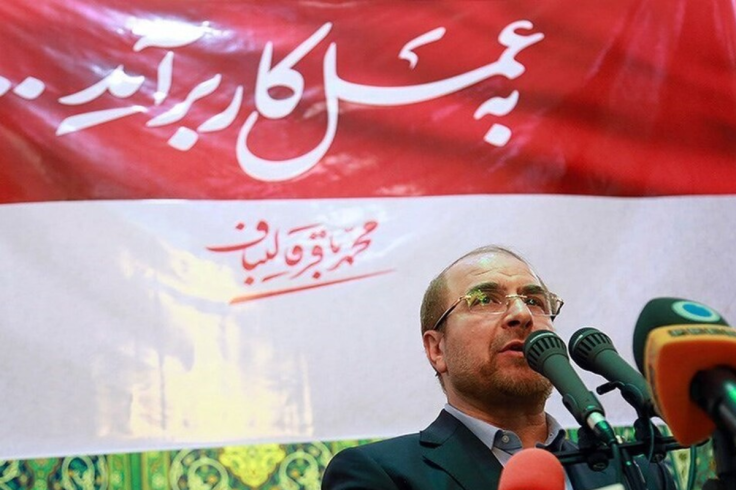
Iran sharply escalated its warnings on Sunday after Israeli forces struck Beirut's southern suburbs for the first time since a US-brokered truce was announced just days earlier. Iran's Parliament Speaker Mohammad Bagher Ghalibaf posted a stark message on X, declaring that the US naval blockade and what he described as Washington's green light to Israel had turned American and Israeli bases and assets across the region into, in his words, 'legitimate targets.'
'They are neither committed to a ceasefire nor believe in dialogue, and through the naval blockade and violation of agreements regarding Lebanon they showed that they only understand the language of power,' Ghalibaf wrote on X, adding that 'the hand of our armed forces is open, as always.' The statement marked one of Tehran's most direct threats since the broader conflict began, and came as the region's fragile diplomatic architecture showed fresh signs of collapse.
۱/ نه به آتشبس پایبندند نه به گفتگو باور دارند، و با محاصرهٔ دریایی و نقض توافقات دربارهٔ لبنان نشان دادند که فقط زبان قدرت میفهمند.
— محمدباقر قالیباف | MB Ghalibaf (@mb_ghalibaf) June 7, 2026
Strikes on Dahiyeh
Israel carried out airstrikes on Beirut's southern suburb of Dahiyeh, a Hezbollah stronghold, with the military saying it targeted a Hezbollah command headquarters. Lebanon's National News Agency reported two people were killed and at least 11 wounded, with two apartments in two separate buildings struck.
Israeli Prime Minister Benjamin Netanyahu and Defence Minister Israel Katz announced the air force was attacking Dahiyeh after Hezbollah ignored the ceasefire brokered by US President Donald Trump on 1 June. According to reporting by the Jerusalem Post, the strikes were consistent with understandings underlying the joint Israel-US-Lebanon ceasefire agreement, under which Israel would respond to any Hezbollah fire into Israeli territory by targeting the group's command headquarters in Dahiyeh.
Iran threatened a 'painful and decisive response' to the strikes, with a senior Iranian MP warning the response would come that night.
A Truce That Never Fully Held
The Beirut strikes came less than a week after Trump announced a ceasefire arrangement for Lebanon on 1 June. Trump posted on social media that he had a 'productive' call with Netanyahu and claimed Israel and Hezbollah would stop attacking each other, and that Israeli troops would not move on Beirut. After the announcement, Hezbollah agreed to a US proposal calling for a ceasefire with Israel, according to a statement from the Lebanese Embassy in Washington.
However, the arrangement showed cracks almost immediately. Trump told PBS NewsHour that Lebanon was not part of the ceasefire agreement with Iran 'because of Hezbollah' but would 'get taken care of,' describing the situation there as 'a separate skirmish.' Hezbollah, which was not a signatory to the arrangement, continued operations and has said it will not disarm unless Israel halts its campaign and withdraws.
BREAKING: Iran’s Speaker of the Parliament Ghalibaf says the US and Israel are “neither committed to a ceasefire nor believe in dialogue” after Israeli strikes on Beirut today.
— The Kobeissi Letter (@KobeissiLetter) June 7, 2026
Ghalibaf says Israeli strikes on Beirut today and the US blockade of the Strait of Hormuz “turn…
The Blockade at the Centre of It All
Ghalibaf's statement also pointed to the US naval blockade of Iran as a central grievance. The United States imposed the naval blockade on Iran on 13 April 2026, following the failure of the Islamabad Talks. By 22 April, President Trump had claimed the blockade was costing Iran $500 million (£374,000) daily, while the US Department of Defense estimated Iran had lost $4.8 billion (£3.59 billion) in oil revenue by 1 May.
Iran has refused to reopen the Strait of Hormuz until the US lifts the naval blockade imposed on Iranian ports, creating what analysts have described as a dual blockade that has throttled global shipping lanes since Iran was attacked by the US and Israel in late February.
Sunday's events represent a significant test of whether any negotiated arrangement in the region can hold. Iran's parliament speaker is not a peripheral figure — Ghalibaf has been central to Tehran's diplomatic positioning throughout the conflict, and his direct threat against US and Israeli military assets signals that Tehran views the Beirut strikes as a material breach, not a technicality. With peace talks already strained and the Strait of Hormuz crisis continuing to roil global energy markets, the window for de-escalation is narrowing at speed.
© Copyright IBTimes 2026. All rights reserved.