US-Iran Ceasefire in Much Jeopardy After Both Sides Exchange Fresh Strikes Despite Ongoing Peace Talks
Tensions rise as US and Iran exchange recent military strikes despite ongoing peace negotiations.

The US-Iran ceasefire appeared increasingly fragile on Sunday after the United States and Iran exchanged fresh military strikes despite ongoing negotiations aimed at ending the conflict.
According to reports, the latest attacks came as Washington and Tehran were working on a memorandum of understanding intended to bring an unpopular war to a close, raising fresh doubts over whether diplomatic efforts can still hold.
The latest escalation followed an interim ceasefire agreement signed less than two weeks ago. The deal, brokered by Pakistan, committed both countries and their allies to refrain from initiating military operations against one another while negotiations continued over other issues, including Iran's nuclear programme and the reopening of vital shipping routes.
Although talks had begun and the US had reportedly eased some sanctions on Tehran, both sides have since accused each other of violating the agreement.
US-Iran Ceasefire Unclear After Military Exchange
The latest round of fighting began after the US military carried out strikes against multiple sites inside Iran. US Central Command, known as Centcom, said the operation was a direct response to what it described as continued Iranian aggression against commercial shipping.
According to the military, the strikes targeted military surveillance infrastructure, communications systems, air defence positions, drone storage facilities, and minelaying capabilities. Officials said the operation followed an alleged Iranian drone attack on a Panama-flagged cargo tanker travelling through the Strait of Hormuz, one of the world's most strategically important energy shipping routes.
Iran responded within hours.
The Islamic Revolutionary Guard Corps said it had launched a combined missile and drone operation targeting eight US military sites across Kuwait and Bahrain. In a statement, the IRGC warned that any further military action would receive what it described as a 'crushing response' and said additional violations of the ceasefire would bring 'the complete halt of all diplomatic processes.'
Authorities in Bahrain and Kuwait condemned the reported attacks, although it remained unclear what damage, if any, had been caused.
A US official told Reuters that no American casualties or significant damage to US facilities had been reported while assessments were continuing.
Peace Talks Continue Despite Rising Tensions
The recent military exchange comes at a particularly sensitive moment in negotiations.
Washington and Tehran have reportedly been discussing a memorandum of understanding designed to create a longer-term framework for ending the conflict, which has pushed global oil prices sharply higher and resulted in thousands of civilian deaths.
The interim agreement signed earlier this month was intended to halt hostilities, reopen the Strait of Hormuz to commercial shipping, and allow diplomats to focus on more difficult issues, including Iran's nuclear programme.
One round of mediated talks has already taken place in Switzerland between US Vice President JD Vance and Iran's parliamentary speaker Mohammad Baqer Qalibaf. Following those discussions, Washington reportedly waived sanctions on Tehran in an apparent effort to build confidence between the two sides.
That progress now looks increasingly uncertain.
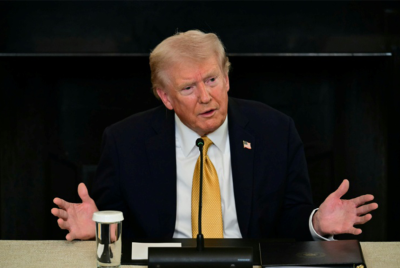
US President Donald Trump also struck a combative tone in a post on Truth Social, warning that there could come a point when the United States would 'no longer be able to be reasonable' and would be forced to 'militarily complete the job that we very successfully started'. He added that, if such a scenario unfolded, 'the Islamic Republic of Iran will no longer exist.'
Centcom defended the latest strikes by saying Iran had been given an opportunity to respect the ceasefire, but instead chose to continue attacks against commercial shipping.
'Iran was given a chance to honor the ceasefire agreement but elected not to,' the command said in its statement.
However, neither Washington nor Tehran has formally announced that negotiations have collapsed. Both governments continue to accuse the other of undermining the ceasefire, leaving the future of the Pakistan-brokered peace process increasingly uncertain.
© Copyright IBTimes 2026. All rights reserved.
- Recommended For You