UN and Rights Groups Say Rape Using Trained Dogs at Israel Detention Sites Is Systematic, Endorsed at the Highest Level
Euro-Med Human Rights Monitor and UN findings highlight an alleged organised state policy of sexual violence against Palestinians in Israeli detention.

A new report by Euro-Med Human Rights Monitor, corroborated by a UN special rapporteur and a formal warning from the UN secretary-general, has concluded that sexual violence against Palestinians in Israeli detention, including rape using trained dogs, constitutes an organised state policy rather than isolated misconduct.
The report, published on 12 April 2026 and titled 'Another Genocide Behind Walls,' draws on direct testimonies from Palestinian former detainees recently released by Israeli forces, documenting rape, sexualised torture with hard objects, genital mutilation and the use of animals during interrogation.
Its publication follows a March 2026 report to the UN Human Rights Council by special rapporteur Francesca Albanese, who concluded that torture in Israeli detention has become 'a structural feature of the ongoing genocide' and is 'sanctioned at the highest political levels.' Israel rejects the characterisation of systematic abuse and has repeatedly denied independent UN monitors access to its detention facilities.
Testimonies of Dog Rape and Genital Torture in Israeli Prisons
The Euro-Med Monitor report details the testimony of Wajdi, a 43-year-old former detainee who spent a year in Israeli custody. He told researchers that during interrogation he was tied naked to a metal bed, then raped by a soldier while other soldiers filmed the assault and mocked him.
He described being brought a trained dog, which also raped him. He said the rape was repeated at least twice more on the same day and again two days later by three soldiers. Wajdi told Euro-Med Monitor: 'I wished for death. I was bleeding.'
The full report also documents a 48-year-old detainee identified as A.J., who alleged that during interrogation an interrogator squeezed his testicles and attempted to insert an object into his penis, causing him to lose consciousness. He said he woke in hospital to learn his testicles had been surgically removed. Multiple other testimonies describe rape with metal rods, rifle butts, fire extinguisher nozzles and wooden sticks, resulting in documented cases of intestinal rupture, severe anal injuries and permanent loss of urinary and reproductive function.
There is now overwhelming evidence of the use of dogs to rape Palestinian inmates in Israeli prisons - first reported in our Oct 2024 Al Jazeera Investigative Unit film GAZA. /1 https://t.co/cj0QAB0f0B pic.twitter.com/APTbqx3EKE
— Richard Sanders (@PulaRJS) April 18, 2026
Euro-Med Monitor researcher Khaled Ahmad told the organisation that accessing such cases was 'nearly impossible' because of the cultural weight of the disclosures. He said the group knew the actual number of victims was higher than those documented, and that 'dozens of other male and female victims who were raped or sexually assaulted chose to remain silent.' Women's cases were especially under-represented, Ahmad said, because disclosure in Palestinian society carries 'greater and more complex consequences' for female victims.
A 42-year-old woman from northern Gaza who was held at Sde Teiman, cited in subsequent reporting, alleged that she was bound naked to a metal table and repeatedly raped by two masked soldiers over two days. She said she was filmed throughout and that soldiers later showed her the footage during interrogation, threatening to publish it if she did not cooperate. Israel has denied these specific allegations.
Francesca Albanese's UN Report
UN Special Rapporteur Francesca Albanese submitted her report, titled 'Torture and Genocide (A/HRC/61/71),' to the Human Rights Council in March 2026. Drawing on more than 300 testimonies collected by multiple organisations, remote consultations with legal experts and survivors and accounts from Israeli whistleblowers, Albanese found that Israel's detention system has 'degenerated into a laboratory of calculated cruelty.'
The report states that policies institutionalising torture were promoted by senior Israeli officials. It names National Security Minister Itamar Ben-Gvir, who oversees the Israel Prison Service and who Albanese says advanced a deliberate 'prison revolution' designed to institutionalise degradation. 'What once operated in the shadows is now practised openly,' she wrote, 'a regime of organised humiliation, pain and degradation, sanctioned at the highest political levels.'
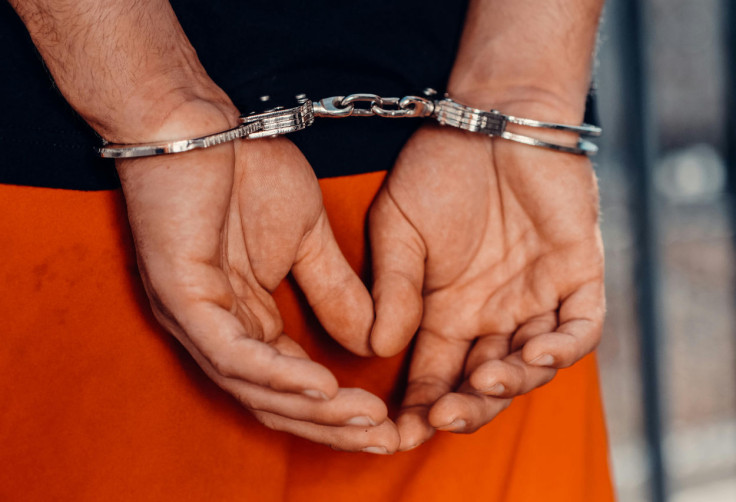
The report calls on the Office of the Prosecutor of the International Criminal Court to investigate and prosecute acts of genocide and torture, and to immediately request arrest warrants for Israeli officials including Ben-Gvir, Foreign Minister Israel Katz and Finance Minister Bezalel Smotrich. It also recommends that the UN Secretary-General add the Israeli army to the annual report on conflict-related sexual violence, as mandated by UN Security Council resolutions 1820 and 1960.
In August 2025, UN Secretary-General Antonio Guterres sent a formal letter to Israel's UN Ambassador Danny Danon warning that he was putting Israeli armed and security forces 'on notice for potential listing' in the next annual sexual violence report. The letter, shared by Israel's mission to the UN and reported by CNN, cited 'credible information of violations by Israeli armed and security forces, perpetrated against Palestinians in several prisons, a detention center and military base.' Danon rejected the warning as based on 'baseless accusations.'
Charges Dropped, Soldiers Reinstated to Active Duty
The question of accountability has a concrete test case. On 12 March 2026, the Israeli military dropped all charges against five soldiers from Force 100 accused of sexually assaulting a Palestinian detainee at the Sde Teiman detention facility on 5 July 2024. The military's own indictment had described soldiers stabbing the detainee with a sharp object near his rectum, causing cracked ribs, a punctured lung and an internal tear.
The Military Advocate General cited 'complexities in the evidentiary structure' and difficulties arising from the detainee's release to Gaza as justification for dropping the case. Dr. Yoel Donchin, a medical officer at Sde Teiman, told Haaretz that the man's injuries were so severe he initially assumed a rival armed group had carried out the attack. Two of the five soldiers failed polygraph tests when asked whether they had inserted an object into the detainee's anus. Military Advocate General Itay Offir withdrew the indictment regardless.
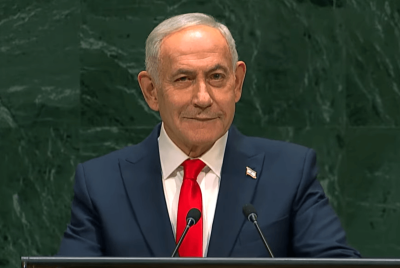
Prime Minister Benjamin Netanyahu and Foreign Minister Israel Katz had both previously called the prosecution of the soldiers a 'blood libel,' according to reporting by Common Dreams citing Israeli politicians' public statements. Finance Minister Bezalel Smotrich called the accused 'heroic warriors.' National Security Minister Itamar Ben-Gvir described them as 'our best heroes.'
By 16 April 2026, Al Jazeera reported that Israeli Chief of Staff Eyal Zamir had authorised the five soldiers to return to reserve service, with some already deployed to combat roles. No internal military investigation into the Sde Teiman incident had been completed at the time of reinstatement.
Amnesty International senior director for research, advocacy and policy Erika Guevara Rosas described the decision to drop charges as 'yet another unconscionable chapter in the Israeli legal system's long-standing history of granting impunity.' She said Netanyahu's welcoming of the decision illustrated the system's 'unwillingness or inability to prosecute crimes under international law.' Euro-Med Monitor's previous 2024 report found that Israeli indictments in cases of alleged crimes against Palestinians have not exceeded 0.81% of all complaints filed.
As soldiers implicated in documented assault return to active duty without investigation and the architects of detention policy face no domestic accountability, the question international courts must answer is whether the evidence already assembled is sufficient to act.
© Copyright IBTimes 2026. All rights reserved.
- Recommended For You