'His Abilities Are Declining Significantly': Speech Pathologist Sounds Alarm Over Trump's National Mall Rant
Expert analysis suggests possible neurological decline in the president's speech.
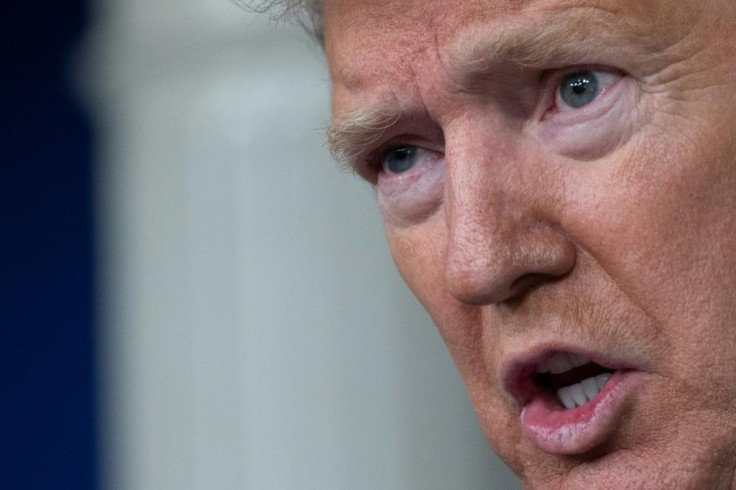
Donald Trump's abilities are 'declining significantly', a speech pathologist has warned, after analysing the president's National Mall speech in Washington DC last Wednesday for America's 250th birthday celebration and flagging what she says are repeated signs of possible neurological decline.
The remarks came during Trump's appearance at the 'Great American State Fair' event on the National Mall, a celebration that has already been dogged by rows over attendance and crowd management. Clips of the speech circulated widely online afterwards, with much of the chatter fixating on video angles that appeared to show people walking away mid‑speech. Buried underneath that noise, however, was a quieter but far more serious conversation about how Trump actually sounded.
Speech Pathologist Dissects Trump's National Mall Rant
Hilary Shae, a licensed speech‑language pathologist who specialises in concussion recovery, has been using her professional background to scrutinise Trump's public appearances. In a new video posted on Saturday, she argued that the president's abilities are declining, pointing to what she framed as a cluster of red‑flag errors during the National Mall rant.
According to Shae, Trump repeatedly struggled with words that should be straightforward for a seasoned public speaker. In the 30‑minute address, she noted mispronunciations or slurred attempts at phrases such as '250th anniversary,' 'magnificent,' 'ancient ruins,' 'Los Angeles' and 'horizon.' In several instances, his articulation trailed off before the final syllables. In others, he appeared to land on the wrong sounds altogether, then simply ploughed on without correcting himself.
Shae suggested that these were not random gaffes but fitted a recognisable clinical pattern. She described many of the errors as 'phonemic paraphasias,' a term used when the motor planning required to put sounds in the right order breaks down. She offered a simple example, if someone intends to say 'telephone' but instead produces 'tephelone,' the sounds have been scrambled in a way that points to a coordination problem within the speech system.
'That is what's happening a lot of the time with Donald Trump's speech,' she said in the video, arguing that longer, multi‑syllabic words seemed particularly difficult for him to control. In her view, the more complex the word, the more it exposes any underlying problem with motor coordination.
Claims of Neurological Decline and Dysarthria
Shae also floated another possibility, dysarthria, which occurs when the muscles needed for speech weaken and can no longer reliably produce clear sounds. This can make a person's speech sound slurred, slowed or laboured. In Trump's case, she said, the way his words fade out at the end, especially when they run to three syllables or more, is consistent with that type of disorder.
None of this is a formal diagnosis, and Shae was not examining Trump in a clinical setting. IBTimes UK could not independently verify her assessment, and nothing has been confirmed by Trump's own medical team, so everything should be taken with a grain of salt.
'The fact that there are so many examples of these speech difficulties in one 30‑minute speech means that Donald Trump is getting worse,' she argued. She went on to say that 'whatever is going on, whether it's dementia, whether it's a stroke, whether it's a combination, whether it's congestive heart failure, whether it's whatever it might be, his neurological abilities are declining significantly.'
It is a blunt claim, and one that cuts straight into the already overheated debate over Trump's fitness for office. Questions about age and cognition have dogged both major US candidates for years. Here, though, a licensed clinician is putting her professional reputation behind the idea that this is not just the odd senior moment, but a pattern.
Silent as Videos Fuel Online Debate
Trump's campaign has not issued any public response to Shae's comments about his abilities declining or the specific suggestions of possible dementia, stroke or dysarthria. The president's team has generally dismissed concerns over his health as partisan attacks, pointing instead to his marathon rallies and relentless travel schedule as evidence that he remains robust.
On social media, viewers sliced the speech into short clips and started trading them like forensic evidence. Some zeroed in on the mispronunciations and trailing words flagged by Shae, calling it 'hard to watch' and accusing mainstream outlets of looking the other way. Others insisted the whole thing was overblown, pointing out that Trump has always mangled words and gone off on tangents, long before anyone was talking about neurological decline.

That raises uncomfortable questions about what kind of evidence would actually settle the matter. A full, transparent medical evaluation by independent specialists would cut through much of the speculation, but there is no sign that Trump intends to offer that. In the absence of such disclosure, people online will continue doing what they do now, parsing grainy clips and second‑guessing every slurred syllable.
It also leaves newsrooms with an awkward balancing act. Ignore Shae and similar experts and you risk missing a serious story about a leading political figure's health. Lean too hard into one remote video assessment and you stray close to speculation dressed as diagnosis. In this case, A licensed speech pathologist has gone on the record to say she believes Trump's neurological abilities are declining significantly, and she is using his National Mall rant as Exhibit A.
© Copyright IBTimes 2026. All rights reserved.
- Recommended For You