The Winds of Winter Shock: George RR Martin Reveals Secret Behind TWOW Delay in Resurfaced Interview
Resurfaced interview with Martin sheds new light on why 'The Winds of Winter' is still unfinished, revealing his deep resistance to outlines and love of messy spontaneity
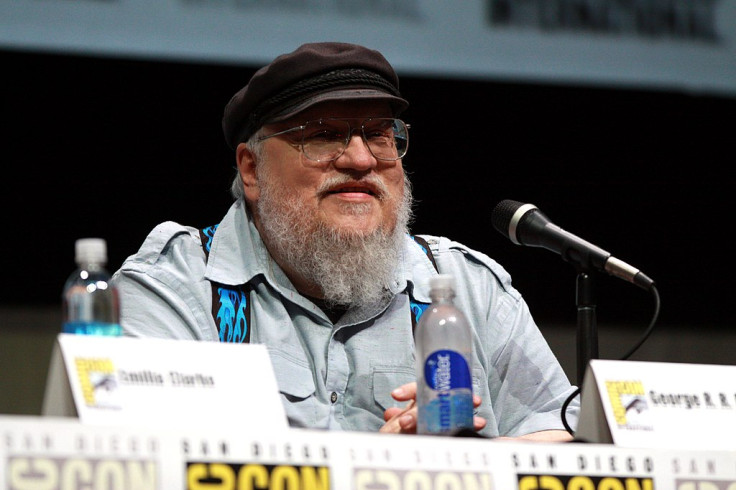
George R.R. Martin's long‑delayed fantasy novel The Winds of Winter may owe its troubled progress to a decision he made more than two decades ago, according to a resurfaced interview in which the author admitted he refuses to use formal outlines and instead lets stories grow as he writes them.
Speaking at the US Library of Congress' National Book Festival in 2005, the A Song of Ice and Fire creator said he 'never wrote outlines' for his books and suspected he 'might be faster' if he did.
The Winds of Winter is the sixth instalment in Martin's bestselling fantasy saga, and fans have been waiting since 2011's A Dance with Dragons for the next chapter in the saga that inspired HBO's Game of Thrones.
Over the years, Martin has offered periodic updates on his Not A Blog, often stressing the book is in progress but declining to commit to publication dates. In the absence of concrete news, readers have been left to excavate past interviews and public comments for clues as to why the manuscript remains unfinished. Nothing is confirmed about the exact reasons for the delay.
The Winds of Winter And Martin's 'Gardener' Method
In that 2005 Library of Congress appearance, Martin drew a sharp line between his approach and that of heavily structured writers.
'I don't have a formal outline. I'm not one of these writers who outlines every what's gonna be in every scene, what's gonna be in every chapter,' he said, adding with a hint of self‑reproach: 'I might be faster if I did.'
He described how his years in Hollywood forced him into a different discipline. Working on television meant producing detailed outlines as part of the production process, but he made clear this was a matter of professional necessity rather than creative instinct.
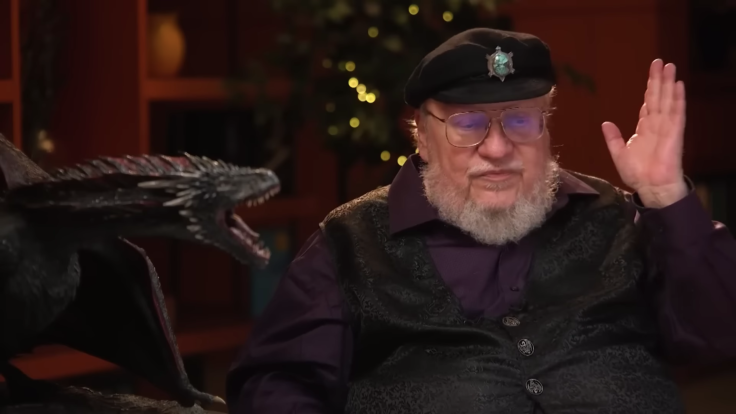
'I did a lot of outlining when I worked in Hollywood,' he told the audience. 'I never liked it. It did take away some of the spontaneity. I felt, you know, in some sense, I had already told the story even though I had only told it in shorthand, and retelling the story over again is not as much fun as telling the story for the first time.'
Martin has often compared himself to a 'gardener' rather than an 'architect,' preferring to plant characters and situations and see where they lead, rather than build a rigid framework and slot scenes into pre‑planned spaces. It is a romantic idea, and there is an argument that the tangled moral choices and brutal twists of A Song of Ice and Fire owe much to that method. But it also introduces obvious structural headaches in a series with dozens of viewpoints and continent‑spanning plots.
George R.R. Martin's publisher has confirmed that The Winds of Winter will not release this Fall despite a recent online rumor
— ScreenTime (@screentime) April 14, 2026
It's been almost 15 years since A Dance with Dragons released pic.twitter.com/LM5Hqpnw0y
Endless Restructures Inside The Winds of Winter
The cost of this no‑outline approach surfaced publicly during Martin's work on A Dance with Dragons, the fifth book in the series. In a 2010 blog post, he acknowledged that a major event he had originally planned for the end of that novel was repeatedly shifted as he wrestled with the story's shape.
'The event was originally going to occur near the end of the book, but in one of my forty‑seven restructures I moved it to the late middle instead,' he wrote.
Forty‑seven restructures of a single narrative thread is eyebrow‑raising by any standard. Martin said he ultimately decided to move some chapters into The Winds of Winter because it felt right for the plot. Yet the detail is revealing: each time he advanced the story, earlier chapters had to be pulled apart and re‑stitched so that character arcs and chronology stayed coherent.
Without a firm outline, that process becomes a loop. New material is drafted, new ideas bloom, and then huge chunks of existing text are revised to accommodate them. In a slim novel, that sort of organic tinkering might be manageable. In a series famous for its cast lists running to several pages, it risks turning progress into quicksand.
From the outside, it looks less like writer's block and more like an engineer repeatedly redesigning a bridge while people are still trying to cross it.
Did Game Of Thrones Steal The Winds of Winter's Thunder?
Martin's longstanding dislike of outlines is not just a technical quirk. In the same 2005 session, he framed it as a matter of emotional energy. If a story is exhaustively mapped in advance, he argued, it feels as if it has already been told, robbing the act of writing of its charge.
Two decades later, that logic invites a more awkward question. What happens to that creative charge when the ending of your story has, in effect, already been told on global television?
In an interview with Rolling Stone, Martin said of HBO's Game of Thrones: 'The major points of the ending will be things that I told them, you know, five or six years ago.' He provided the showrunners with the broad shape of his planned conclusion, and those beats were translated to the screen before he had completed the corresponding novels.
Everything you’re waiting for in Winds of Winter is about to get worse, not better.
— ADA (@Uc_heyy02) May 7, 2026
Quick recap of where we are after A Dance with Dragons and what it actually means going forward:
Jon dies and yup , he’s coming back, but probably not the same.
Stannis vs the Boltons is about… pic.twitter.com/QEqzmcn8Db
Fans have long speculated that seeing those narrative milestones realised in another medium could make it harder for Martin to return to them on the page. If, by his own admission, outlining a story in shorthand dulls the pleasure of writing it, then watching the climactic twists of A Song of Ice and Fire play out on television might have a similar effect, only magnified.
None of this is provable from the outside. Martin has not said that Game of Thrones directly undermined his momentum on The Winds of Winter, and he continues to insist that his ending will differ from the series in important respects. But the resurfaced comments about spontaneity and the joy of 'telling the story for the first time' help explain why the road to book six has been so torturous, and why pinning down a final destination has taken so very long.
© Copyright IBTimes 2026. All rights reserved.
- Recommended For You