

'Every Dollar Is Not a Good Dollar': 50 Cent's Private Performance at Trump Jr's Ultra‑Elite Club Sparks Hypocrisy Backlash
Rapper's performance at a politically charged venue has raised questions about his principles, though experts say the controversial booking may test his brand of doing whatever he wants.
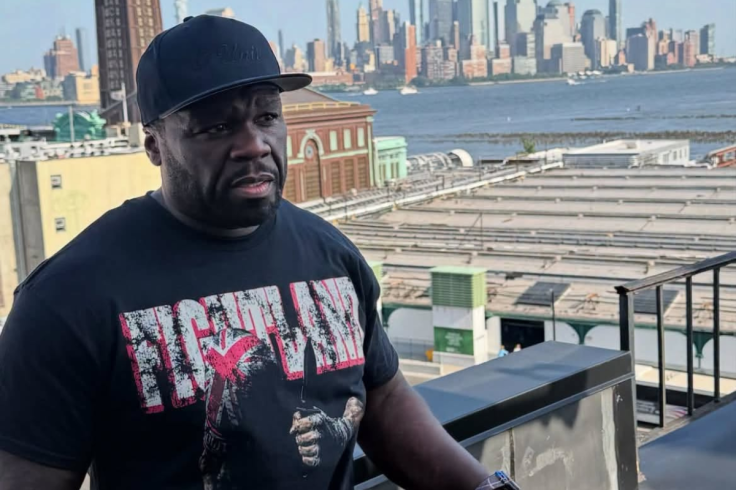
50 Cent's old warning that 'every dollar is not a good dollar' is being thrown straight back at him after the rapper performed a private show on 3 July at Executive Branch, a members‑only club in Washington's Georgetown neighbourhood co‑owned by Donald Trump Jr.
The performance, reported to have taken place just ahead of the US Independence Day holiday, put the Grammy winner on stage before one of the most politically charged audiences in America.
The Executive Branch reportedly charges a $500,000 annual membership fee, attracting ultra‑wealthy figures linked to Donald Trump's orbit.
The combination of 50 Cent, Trump Jr., and a pay‑to‑enter power club was always going to be combustible. It has now sparked accusations that the star has broken his own rules about money, politics and principle.
50 Cent's Executive Branch Gig Tests His Own 'Every Dollar' Line
The Executive Branch booking sits awkwardly next to that recent declaration.
In the radio interview, 50 Cent, whose real name is Curtis James Jackson III, told hosts he was 'afraid about politics', adding that once an artist steps in, 'no matter how you feel, someone passionately disagrees with you.'
Yet just months later, according to the reporting that surfaced, he was entertaining paying members inside a club founded by Trump Jr alongside financiers Omeed Malik and Christopher Buskirk of 1789 Capital.
The venue has quickly become a hub for wealthy conservatives and allies of the administration, with reported members including tech investor David Sacks, twins Tyler and Cameron Winklevoss and financier Howard Lutnick.
The club has hosted prominent political figures after major White House events, making it less a neutral nightlife spot and more an unofficial salon for the Trump‑aligned elite.
Fans See A Pattern In 50 Cent's Club Choices
Frustration with 50 Cent's judgement around club appearances was already bubbling before the Trump Jr connection.
Fans previously attacked him online after he headed to West Hollywood hotspot Poppy just hours after anger erupted over what many saw as an insensitive Instagram tribute to late actor Michael K Williams.
Comment sections, by eyewitness accounts, were filled with accusations that he was being tone‑deaf, dismissive and more interested in partying than addressing the hurt caused by his posts.
A photographer even asked him on camera whether he was 'expecting the backlash' as he entered the venue. The rapper appeared to brush it off, but the episode left a mark.
Social media reaction to the Executive Branch performance has followed a familiar arc for celebrity controversies, a mix of anger, disappointment and resigned eye‑rolling.
One recurring theme, based on the language used across comment threads, is a sense that fans feel played. He told them one thing on the radio, did another thing in private, and they only found out after the fact.
Brand Experts Say 50 Cent Still Has More Room To Move
Some industry observers are less alarmed than fans. Brand and communications consultant Sam Gauchier argues that once a star has publicly drawn a moral or political line, that statement becomes part of their identity in the eyes of the audience.
'Once an artist publicly explains why they draw a line, that reasoning becomes part of their brand,' she said. 'Once you tell people where your line is, they're naturally going to notice when it appears to move.'
However, Gauchier does not think one performance at the Executive Branch will fundamentally damage 50 Cent's public image.
She points out that his persona has, for years, been anchored in independence, entrepreneurship, and a stubborn insistence on making business decisions on his own terms.
Public relations specialist Amore Philip makes a blunter point about the economics behind such gigs. 'Private events at exclusive venues are among the highest‑paying performance opportunities available,' she said.
Philip accepts that playing a Trump‑linked venue on the eve of 4 July risks being read as a tacit political endorsement. Even so, she suggests the 'calculus is different' for 50 Cent because he has never really pretended to be ideologically consistent.
His audience, she argues, has largely accepted a version of him that does what he wants, when he wants.
As of this writing, 50 Cent himself has not publicly set out his reasoning for this specific show.
This is not the first time the rapper has been linked to the Trump political machine, or the first time he has publicly drawn, then blurred, a line.
In a 2019 interview, he said Donald Trump had offered him $500,000 to attend the presidential inauguration and that he refused, explaining: 'Every dollar is not a good dollar.'
In 2020, amid a noisy fight over tax policy, he briefly appeared to back Trump before abruptly reversing course and posting 'F— Trump, I never liked him.'
Earlier this year, during an appearance on The Breakfast Club, he claimed he had rejected a $3 million offer to perform at a Trump campaign rally at Madison Square Garden for one simple reason: he did not want to be involved in politics.
© Copyright IBTimes 2026. All rights reserved.