

'Cheating for Messi': Cristiano Ronaldo Approves Explosive FIFA Corruption Video
A single tap on a screen was enough to drag football's greatest rivalry back into the shadows of a sport that no longer fully trusts its own referees.

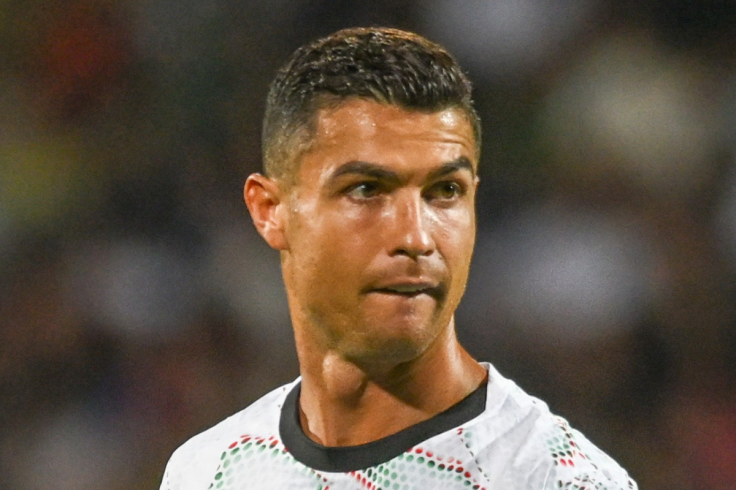
Cristiano Ronaldo has stirred a fresh storm over alleged FIFA corruption after his verified Instagram account appeared to like a viral video accusing the governing body of 'cheating for Messi' to help Argentina reach the 2026 World Cup final in North America.
The two global icons played their last World Cup at the 2026 tournament, co-hosted across the United States, Canada and Mexico. Ronaldo and Portugal went home early, while Lionel Messi captained Argentina all the way to the final, where the reigning champions were beaten 1–0 by Spain in extra time. That contrast has hung over their rivalry ever since, and Ronaldo's quiet tap of a like button has now been treated as something of a public verdict.
Ronaldo's Instagram Like Pours Fuel on FIFA Corruption Claims
The latest drama began after a video circulated on Instagram stitching together accusations that FIFA favoured Argentina during the 2026 World Cup. The clip, whose creator is not identified in the available reporting, asserts that questionable refereeing decisions and VAR interventions consistently went Argentina's way, effectively helping Messi's side into the final.
Screenshots widely shared online appeared to show Cristiano Ronaldo's official account among the users who had liked the post. He did not comment beneath the video, issue a statement, or clarify his stance. Still, in the hyper-scrutinised world of Ronaldo versus Messi, even a silent like is treated as a loaded message.
Cristiano Ronaldo likes an Instagram post from
— Addict (@RealBarcaAddict) July 21, 2026
a journalist accusing Argentina and Messi of corruption: "Argentina is a team that should have been eliminated about five matches ago, if not for the help it received from FIFA.
FIFA is one of the most corrupt organizations on…
Supporters quickly interpreted the move as a subtle swipe at both Messi and FIFA. Some saw it as Ronaldo endorsing the idea that the global body bent the rules for its most marketable star. Others argued it was just an impulsive bit of social media activity that has been blown up into something it is not.
Crucially, Ronaldo has not confirmed that he stands behind every allegation contained in the video. A like on Instagram is not evidence that any of the corruption or match-fixing claims are true. There is currently no proof that FIFA fixed matches to help Argentina in 2026, and no formal body has substantiated the conspiracy-laden phrase 'cheating for Messi.'
Argentina's 2026 Run and the 'VARgentina' Backlash
The news came after Argentina's route to the 2026 final had already become a magnet for suspicion and anger, particularly following their chaotic round-of-16 win over Egypt.
Argentina trailed 2–0 before launching a dramatic comeback to win 3–2. What should have been remembered as an epic turnaround instead triggered days of fury. According to the Egyptian Football Association, key moments went against their team following Video Assistant Referee reviews and late refereeing calls.
One goal from Egyptian forward Mostafa Zico was ruled out after a VAR check, and a late Egyptian penalty appeal was rejected shortly before Argentina scored the decisive winner. The Egyptian FA lodged a formal complaint with FIFA, saying 'defending the rights and interests of the Egyptian national team is not a matter that can be ignored, minimised, or treated as secondary.' The statement, cited in earlier reporting, described that defence as a 'responsibility' the organisation carried with 'full conviction and determination.'
🚨 External Analysis Report Egypt vs Argentina match featured 23 refereeing errors. The most ever recorded in a single FIFA World Cup game.
— Preeti (@MadridPreeti) July 9, 2026
Every single one of them benefited Argentina over Egypt. pic.twitter.com/ZAX2N7lLrH
The controversy lit up football talk shows, podcasts and social media. Critics started using the nickname 'VARgentina' to suggest that the review system itself was somehow slanted to favour Messi's side. Clips of the Egypt game and other tight decisions flew across TikTok and X, each replay slowed down and annotated as if the internet were a global referees' committee.
FIFA's head of refereeing, Pierluigi Collina, publicly rejected any suggestion of institutional bias. Argentina defender Lisandro Martínez also weighed in, defending match officials and calling their work 'excellent.' No investigation has uncovered evidence that FIFA, VAR officials or referees deliberately manipulated outcomes to keep Argentina alive in the tournament.
That lack of proof has not stopped the allegations spreading, and Ronaldo's apparent engagement with the corruption video has only made the noise louder.
Separate Money Probe Adds To Distrust Around Argentine Football
The social media row arrives just as the Argentine Football Association is facing a very different sort of scrutiny, one that has nothing to do with VAR calls or Messi's penalty record.
US federal investigators are reportedly looking into more than 300 million dollars moved through American banks by the AFA's Miami-based arm. According to reporting relayed by WUSF, the probe focuses on the federation's international commercial deals and how that money was distributed.
Investigators are said to be examining the AFA's relationship with TourProdEnter LLC, a South Florida company responsible for handling overseas sponsorship agreements. A report also stated that authorities were seeking information about operations under AFA president Claudio 'Chiqui' Tapia and treasurer Pablo Toviggino.
🚨📲 Cristiano Ronaldo likes an Instagram post from a journalist accusing Argentina and Messi of corruption 🤣 pic.twitter.com/IbWXuJGwcH
— All About Argentina 🛎🇦🇷 (@AlbicelesteTalk) July 20, 2026
There is no indication in the available reporting that Messi is implicated, nor that this financial investigation overlaps with Argentina's World Cup fixtures. They are separate issues, involving different alleged conduct. No charges have been announced and nothing is confirmed yet.
Still, when fans already believe a system is rigged, another story about millions flowing through opaque commercial structures does little to restore trust.
FIFA's Corruption Past Keeps Conspiracies Alive
FIFA's own history makes it an easy target whenever fresh suspicion arises. In 2015, the organisation was dragged into one of the biggest corruption scandals in modern sport, after a sprawling US investigation uncovered years of alleged bribery and kickback schemes involving football officials and sports marketing executives.
The first US indictment charged 14 FIFA officials and marketing executives with racketeering, wire fraud, money laundering and related crimes. A second indictment later in 2015 added another 16 officials to the case.
According to the US Department of Justice, the broader prosecutions eventually saw more than 50 individual and corporate defendants charged from over 20 countries. Twenty-seven individuals pleaded guilty and two former FIFA officials were convicted at trial.
The DOJ later recognised more than $201 million (£150.1 million) in losses suffered by FIFA itself, regional confederations like CONCACAF and CONMEBOL, and various national federations, formally treating them as victims of corrupt insiders.
That history does not prove anything about Argentina's 2026 run. What it does do is prime fans to see any tight decision, any odd banking arrangement, as part of something bigger and darker. In that environment, one Instagram like from Cristiano Ronaldo, dropped quietly into the noise, becomes yet another data point in a story supporters are writing for themselves.
Whether that story ever collides with hard evidence is a different question entirely.
© Copyright IBTimes 2026. All rights reserved.