

'1,000% Going Bankrupt': Elon Musk Says Robots Are No Longer Optional for US
A billionaire's techno‑utopia collides head‑on with the brute maths of a $39 trillion IOU.
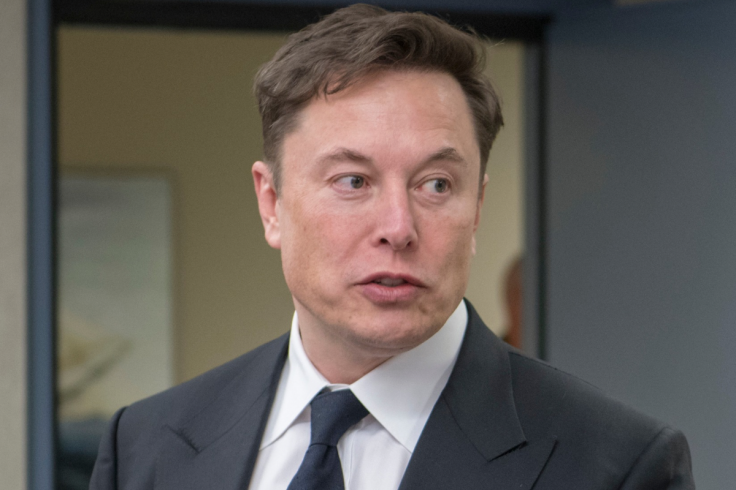
The United States, heaving under a record national debt of around $39 trillion (£29.12 trillion) as of March 2026, is '1,000% going to go bankrupt' unless artificial intelligence and robots transform the economy within a few years, Elon Musk has warned in recent interviews.
The warning lands just as America's debt burden pushes beyond levels last seen in the aftermath of the Second World War. Interest payments alone now exceed the entire US defence budget, according to watchdog estimates, and the gap between what Washington spends and what it raises grows wider each year.
Against that stark arithmetic, Musk has been touring podcasts with a solution that sounds more like sci‑fi than fiscal policy: flood the economy with AI and robotics, trigger a productivity shock, and let growth and mild deflation quietly defuse the debt bomb.
Elon Musk Ties AI and Robotics to America's Debt Crisis
On the Dwarkesh Patel podcast in February 2026, Musk did not bother softening his language.
'We are 1,000% going to go bankrupt as a country and fail as a country,' he said, describing the US national debt as unsustainable under current trends. 'Without AI and robots, nothing else will solve the national debt.'
He had already tested a version of the same argument on investor Nikhil Kamath's show in late 2025, and repeated the core claim on Fox Business, telling the channel that artificial intelligence and robotics were 'pretty much the only thing that's going to solve for the US debt crisis.'
The Tesla and SpaceX chief ties his optimism to a very tight timeline. In his conversation with Patel, Musk predicted that 'in three years or less' the output of goods and services powered by AI would exceed the rate of inflation. In other words, he expects advanced automation to pour so much new supply into the economy that it becomes structurally cheaper to produce things, easing price pressures and making today's mountain of debt easier to carry.
His logic goes like this: more efficient factories, smarter software, robot labour that never sleeps, and workers augmented by AI systems all combine to push productivity sharply higher. If that leads to lower prices and faster growth, then debt shrinks as a share of the economy, even if the nominal dollar amount remains huge. It is a high‑growth escape hatch, not an austerity plan.
Musk pushes the idea further. He sketches a future of 'universal high income,' a phrase he has used to describe a world in which robots do so much of the work that humans can, in theory, choose whether to participate in the labour market at all. In some of his comments, he has floated a 20‑year horizon for reaching the point where working is optional and material scarcity fades.
It is a utopian notion, albeit one strapped to a pretty grim diagnosis of America's public finances.
US Debt Crisis Reaches World War II Territory
The raw numbers Musk is reacting to are already at historic levels. The national debt crossed $39 trillion (£29.12 trillion) in March 2026 more than double where it stood a decade earlier. Debt held by the public is now racing towards the record set in 1946, when wartime borrowing pushed it above 106 per cent of the entire US economy.
After World War II, the US essentially grew its way out of the problem. A long boom in output, some inflation, and a period of relative spending restraint brought the debt‑to‑GDP ratio down over several decades without the sort of brutal cuts that would be politically impossible today.
This time, the structural headwinds are different. Deficits are embedded in the system, with entitlement costs such as pensions and healthcare rising relentlessly as the population ages. Interest payments on the existing debt are compounding on top.
According to the Committee for a Responsible Federal Budget, those interest costs already exceed annual defence spending, a milestone the group described as a 'wake‑up call' back in 2024.
As the watchdog drily noted, no one in Washington actually woke up. The bill comes due every year before Congress even starts arguing about specific programmes.
That is the fiscal backdrop for Musk's claim that only AI and robots can change the trajectory in time.
Why Musk's AI Debt Fix Is a Massive Gamble
There is a kernel of orthodox economics buried somewhere inside Musk's more dramatic rhetoric. Historically, countries with large debt loads have reduced them mainly through growth, not through draconian spending cuts or sudden surges in taxation. If the pie gets bigger quickly enough, a dangerous debt ratio can look manageable within a generation. That is essentially the post‑WWII story.
Musk is betting that AI and robotics can deliver a similar outcome on fast‑forward. The uncomfortable bit, as many economists would point out, is timing. The US Treasury is paying interest on that $39 trillion (£29.12 trillion) now, not in some future where humanoid Optimus robots are running production lines. The national debt does not politely pause while software improves.
If AI adoption and productivity gains arrive on roughly the three‑year timeline Musk has floated, they could indeed change the maths, especially if they lift tax revenues and hold down inflation. If it takes 10 or 15 years, however, the debt stock will have grown significantly in the meantime, and higher interest payments may have become embedded in the budget. Every year the fix is delayed, the bar gets higher.
Then there is the awkward question Musk barely touches: who actually benefits from the AI boom. If most of the gains accrue to the companies that own the systems and the capital, and if wages for ordinary workers stagnate or even fall as jobs are automated, tax revenues may not rise enough to meaningfully improve the government's position. Corporate profits and asset prices could soar, yet the income tax base that funds most US spending might remain underpowered.
In that world, Musk could be right about robots transforming productivity and still wrong about the national debt sorting itself out.
None of this means his prediction can be dismissed out of hand. Investors once laughed at the idea of reusable rockets and mass‑market electric cars too. SpaceX launches are now routine, and Teslas are a common sight on roads. His track record for up‑ending complacent industries is, frankly, annoying for his critics.
But scaling AI to the point that it quietly fixes a structural fiscal imbalance built up over decades is an even bigger ask than building rockets or cars. It pits exponential technology against compounding interest and entrenched politics. Right now, the numbers are moving faster than the robots.
© Copyright IBTimes 2026. All rights reserved.