

Burnham Names Healey Chancellor of the Treasury He Once Blamed for Starving Defence, While Sacking Six Ministers
Burnham's reshuffle signals a new political era with a focus on national defence.
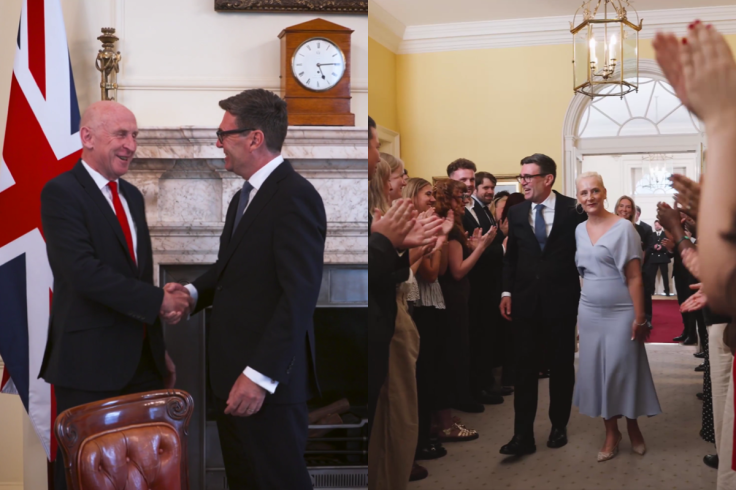
Andy Burnham began his first day as prime minister by appointing John Healey as chancellor, putting him in charge of the very Treasury he had recently accused of underfunding the military, while also removing six senior ministers from the cabinet.
The reshuffle marks a clear change of direction at the top of government as Burnham replaces key figures from the previous administration with his own choices.
Strategic Shift as Burnham Hands Treasury to Healey
John Healey emerges as the main beneficiary of this reshuffle, securing what is widely regarded as the most important role in government outside the premiership.
The former defence secretary had previously resigned after a public dispute over military spending. He now takes charge of the department he had criticised for limiting defence funding.
The appointment indicates that the new administration intends to place greater emphasis on national defence, aligning Downing Street with the new chancellor's approach to public spending.
It also ends speculation that either Shabana Mahmood or Ed Miliband might be asked to oversee the nation's finances.
John Healey has been appointed as Chancellor of the Exchequer @hmtreasury. pic.twitter.com/QPa3uK0tON
— UK Prime Minister (@10DowningStreet) July 20, 2026
Dramatic Cabinet Returns Under Burnham
While Miliband was not chosen for the Treasury due to concerns that his appointment might unsettle financial markets, he instead becomes foreign secretary.
The former energy secretary is now expected to oversee changes within the Foreign Office, including work on a plan to restore international aid spending to 0.7 per cent of gross domestic product, a target that has long been a point of tension within Labour's ranks.
The reshuffle also marks the return of two figures who had left government under difficult circumstances.
Louise Haigh, who resigned as transport secretary after pleading guilty to a decade-old fraud offence, is appointed first secretary of state and minister for the Cabinet Office, a swift rehabilitation that signals how much trust Burnham places in her political judgement.
Angela Rayner returns to the front bench as housing secretary nearly a year after resigning over her tax affairs, having since been cleared by HM Revenue and Customs.
Her reappointment is likely to be read as a further sign that Burnham is willing to bring back figures with strong grassroots support, even where their departures were politically damaging at the time, provided they have since been vindicated or served their time out of office.
It is the greatest privilege to be appointed Chancellor of the Exchequer by the Prime Minister.
— John Healey (@JohnHealey_MP) July 20, 2026
Together, we will build a new economy, build new hope and advance the working people of this country.
Time to get on with the job. https://t.co/RQHEMMUxip
Old Guard Loyalists Fall in Burnham Clear-Out
The restructuring has had a marked impact on senior ministers from the previous administration.
Rachel Reeves is one of the most prominent departures, announcing that it had been the privilege of her life to serve as chancellor. Allies say she declined another job in government, although it is unlikely any other role would match the influence of the Treasury.
Attorney General Lord Richard Hermer, a close associate of the former prime minister since their time at Doughty Street Chambers in 1996, confirmed that he would return to the backbenches after facing repeated criticism in office.
Former deputy prime minister David Lammy and chief secretary Darren Jones were also removed from their posts, reflecting their close association with the outgoing leadership.
Housing secretary Steve Reed announced his departure with a pointed remark about loyalty inside the former government. He said: 'I make no apology for returning that loyalty.' He added that he hoped others would now show it to the new prime minister.
The reshuffle concluded with the removal of business secretary Peter Kyle.
© Copyright IBTimes 2026. All rights reserved.