

Powerball Winner Fraud Claims Erupt as Arkansas Mayor's Brother Revealed To Have $1.8 Billion Ticket
The transparency law that unmasked Tracy Hartwick is the same rule tearing apart the conspiracy theories
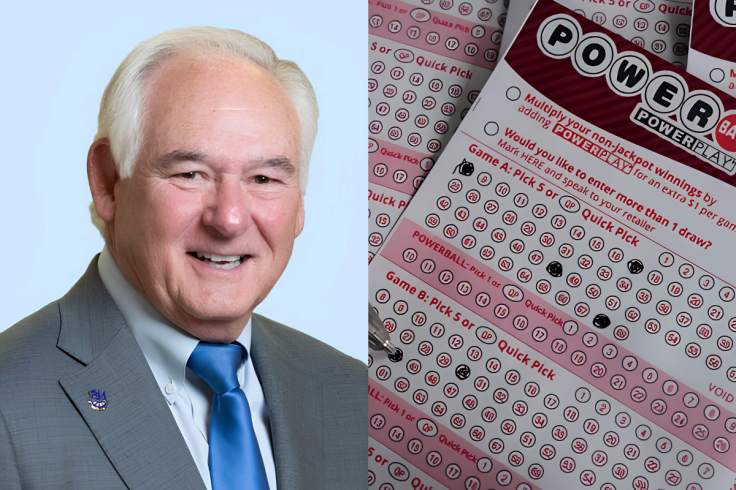
Fraud accusations flooded X within hours of Arkansas naming Tracy L. Hartwick, younger brother of North Little Rock Mayor Terry Hartwick, as its historic, record-breaking $1.8 billion (£1.4 billion) Powerball winner, but the law that exposed him tells a very different story.
Arkansas Scholarship Lottery documents released last week ended six months of speculation over who held the winning ticket from the 24 December drawing, the second-largest jackpot in US history. The records, first obtained by the Arkansas Democrat-Gazette through a public records request, arrived with a political twist that lit up social media.
The $30 Ticket Behind a Massive $565 Million Payday
Hartwick, of Cabot, bought a $30 (£22) quick play ticket at a Murphy USA petrol station ahead of the Christmas Eve drawing. The very first line of his ten number combinations flawlessly and perfectly matched the winning line of 4, 25, 31, 52, and 59 with Powerball 19.
He validated the win on 5 January and took a lump sum of $834,942,287.04 (£620 million). After $188 million (£140 million) went to the Internal Revenue Service (IRS) and $31 million (£23 million) to the Arkansas Department of Finance, he collected $565,873,785.82 (£420 million). Lottery records show he kept 94% of the prize, while his brother Timothy Allen Hartwick and an unnamed third person took 3% each, worth about $18.1 million (£13.4 million) apiece after taxes.
Why X Users Cried Foul
The reveal triggered instant suspicion online. X users questioned the odds of a politically connected family landing the largest prize in Arkansas history, with some branding the draw rigged and others sarcastically declaring they finally understood who 'really' wins lotteries. None of the claims has been backed by any evidence.
The Law That Unmasked Him Debunks the Claims
The irony driving this story is that the public only knows Hartwick's name because of his political connection. Arkansas Act 889 of 2021 normally allows local winners of lottery prizes over a minor $500 (£371) to remain strictly confidential for up to three years.
However, the transparency legislation purposely cuts that privacy window to six months for elected officials and immediate relatives. This specific disclosure mandate explicitly includes siblings, parents, children, spouses, and even certain married in-laws.
Hartwick signed paperwork accepting the shortened period when he claimed the prize and waited out every day of it before the records became public. The disclosure rule exists precisely to protect public confidence in the lottery, and it worked as designed. A North Little Rock city spokesperson said the mayor would not comment on the records.
Could You Stay Anonymous in Your State?
The answer depends on where you play. States such as Delaware, Kansas, Maryland, and Texas allow big winners to shield their names permanently from the general public, while California and Wisconsin require disclosure. Many others, like Arkansas, fall somewhere in between, with time limits or prize thresholds attached.
For the millions who play the 'what if I won' game, the Hartwick saga carries a practical lesson. Your privacy after a jackpot depends on the state where you buy the ticket and, in Arkansas at least, who sits at your family dinner table. The fraud claims, meanwhile, have nothing left to stand on.
© Copyright IBTimes 2026. All rights reserved.