Aung San Suu Kyi Photographed for First Time in Nearly Four Years After Red Cross Visit
Myanmar's Nobel laureate meets ICRC amidst international concerns over her health
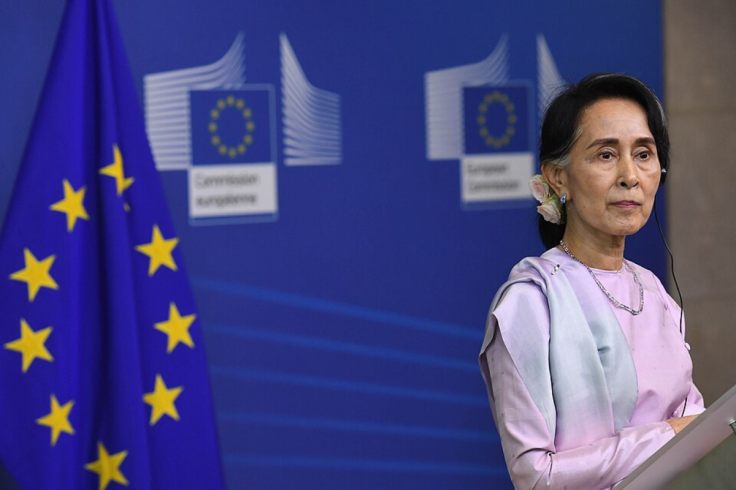
Aung San Suu Kyi has been photographed for the first time in nearly four years, after Myanmar's military-backed government confirmed she met a representative of the International Committee of the Red Cross on Monday. The images, released by the Presidential Press and Information Bureau, show the 81-year-old Nobel laureate shaking hands with ICRC resident representative Arnaud de Baecque inside a sparsely furnished, wood-panelled room.
It marks her first confirmed meeting with anyone outside the government since her detention in 2021, and comes after her son Kim Aris launched an international campaign demanding proof that his mother was still alive.
#BREAKING: ICRC Resident Representative to Myanmar Meets Aung San Suu Kyi
— Cape Diamond (@cape_diamond) August 3, 2026
The @ICRC Resident Representative to #Myanmar, Mr. Arnaud de Baecque, met with Aung San Suu Kyi this morning, with Nay Pyi Taw officials also releasing photos from her recent 81st birthday. She has been… pic.twitter.com/HOFz07ZoSe
Aung San SUU Kyi Photographed in First Confirmed Meeting in Four Years
Suu Kyi was detained in 2021 when the armed forces deposed her government and sentenced her to 33 years in prison on charges her supporters and international rights groups regard as politically motivated. That sentence was later reduced, and she was moved to house arrest, the BBC reported.
The ICRC confirmed the visit took place 'in accordance with the ICRC's standards and procedures for visiting people deprived of liberty', adding that the arrangement 'included the opportunity to speak with Daw Aung San Suu Kyi in private'. The organisation did not disclose what was discussed.
Additional photographs released alongside the meeting showed Suu Kyi cutting a pink cake inscribed 'Happy Birthday Aunty Suu', suggesting the images may have been taken during a celebration of her 81st birthday in June.
SUU Kyi's Son Demands Proof of Life as Health Fears Mount
Kim Aris told the BBC's Newshour programme he could not 'believe what's been said' about his mother's condition, noting the military had 'spread a lot of disinformation and false news over the years'. His comments reflect the scepticism that has surrounded years of unverified assurances from the junta about her welfare.
That scepticism has been echoed internationally. Reuters, whose photograph of the meeting was distributed by the Myanmar government spokesperson, said it could not independently verify the location of the meeting or confirm exactly when the images were taken. The wire service also noted the meeting was the first confirmed public engagement involving Suu Kyi with an external party in several years.
Dr Sean Turnell, a former economic adviser to Suu Kyi who was detained by the junta and later released, said the photographs were significant but cautioned against reading too much into them. 'It is good to see her alive,' he told IBTimes UK. 'But we should remember that this is a regime that has used access to her as a bargaining chip before. The real test is whether they allow regular, independent access, not just a one-off photo opportunity.'
Minister for the Indo-Pacific's statement on the International Committee of the Red Cross' meeting with Aung San Suu Kyi ⬇️ pic.twitter.com/p3uLg871WY
— Foreign, Commonwealth & Development Office (@FCDOGovUK) August 3, 2026
Junta's Calculated Concession Signals Willingness To Negotiate but War Continues
The timing is notable. Myanmar's military-backed government, still led by coup leader Min Aung Hlaing following an election held earlier this year, has been attempting to ease its international isolation through a series of official visits to neighbouring states.
Among the demands placed on the junta by the international community are an end to aerial bombardment of opposition-held areas, negotiations to end the civil war, and Suu Kyi's release. Those demands have so far been rejected. The publication of Monday's photographs, however, suggests the military may be more willing to bend on the question of access to her, even as the war and bombing campaign continue unabated.
For now, the images offer the clearest evidence in years that Suu Kyi remains alive, though her exact physical condition still cannot be independently verified from photographs alone.
The meeting does not resolve the central demand of Suu Kyi's supporters, her release, but it does puncture years of unverifiable claims from the junta about her welfare. For a government trying to shed its diplomatic isolation, allowing outside contact with its most famous prisoner signals a calculated, if limited, concession, one that campaigners are likely to press the military to build on.
© Copyright IBTimes 2026. All rights reserved.
- Recommended For You