Calls Grow For JD Vance Excommunication After Comments On Potential Trump Nuclear Strike Spark Outrage
Pope Leo XIV and US Bishops Criticize Vance's Statements Amid Rising Tensions

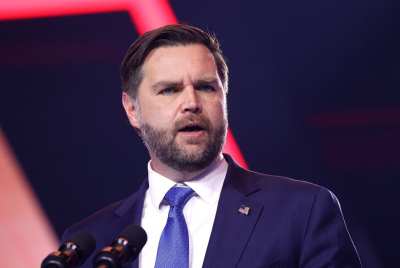
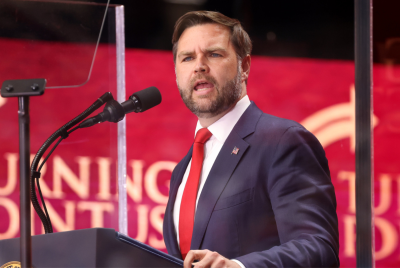
Catholic fury towards Vice President JD Vance reached a new peak on 7 April 2026 after he warned that the United States has 'tools in our toolkit that we so far haven't decided to use' against Iran, a statement that triggered immediate speculation about nuclear weapons and renewed public demands for the Vatican to expel him from the Church.
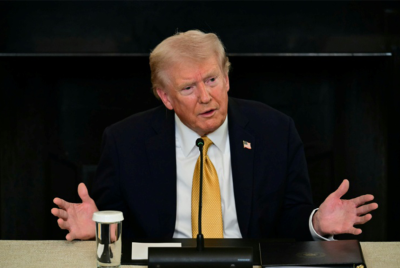
Vance made the remarks at a joint press conference with Hungarian Prime Minister Viktor Orban in Budapest, hours after President Donald Trump posted on Truth Social that 'a whole civilisation will die tonight, never to be brought back again,' a threat framed around Trump's 12-hour deadline for Iran to reopen the Strait of Hormuz or face strikes on power plants and bridges.
Vance's Budapest Remarks and the Nuclear Inference
Speaking alongside Orban, Vance said: 'They've got to know we've got tools in our toolkit that we so far haven't decided to use. The president of the United States can decide to use them, and he will decide to use them if the Iranians don't change their course of conduct.' The remarks, delivered as Trump's self-imposed deadline ticked down, came in the same news cycle as the president's 'civilisation will die' post.
An account associated with the former Kamala Harris 2024 presidential campaign, rebranded as @HQNewsNow, claimed on X that Vance had implied Trump 'might use nuclear weapons.'
JD Vance doubles down on Trump’s new post threatening “a whole civilization will die tonight” and implies Trump might use nuclear weapons pic.twitter.com/GbxU602u6n
— Headquarters (@HQNewsNow) April 7, 2026
The White House moved swiftly to shut down that reading. The administration's Rapid Response account on X posted: 'Literally nothing @VP said here implies this, you absolute buffoons.' Press Secretary Karoline Leavitt, however, gave a less definitive answer when asked the same question by AFP. 'Only the President knows where things stand and what he will do,' she said.
Literally nothing @VP said here "implies" this, you absolute buffoons https://t.co/7JU3wXMaWX
— Rapid Response 47 (@RapidResponse47) April 7, 2026
That hedging, combined with Vance's language, was enough to set off a fresh round of domestic and international alarm. The Arms Control Association noted that the US intelligence community's own 2026 Worldwide Threat Assessment did not indicate Iran had made a decision to weaponise its nuclear programme, creating a gap between the administration's public rhetoric and its own classified assessments.
Earlier in Budapest, Vance had laid out what he framed as two available paths for Iran. 'There are still some things that we'd like to do, for example, on Iranian ability to manufacture weapons, that we'd like to do a little bit more work on militarily,' he told reporters at the joint press conference, as reported by Fox News. Vance had also said he was praying that the United States is 'on God's side' in the conflict, a formulation he stopped short of endorsing directly. 'I certainly hope that God agrees with the decision that Iran shouldn't have a nuclear weapon, but I'll keep praying about it,' he said.
Pope Leo XIV and the US Bishops Condemn the Civilisation Threat
The Catholic hierarchy's response was swift and unusually pointed. Archbishop Paul S. Coakley of Oklahoma City, president of the US Conference of Catholic Bishops, published a formal statement through the USCCB on 7 April that left no ambiguity about the bishops' position. 'The threat of destroying a whole civilization and the intentional targeting of civilian infrastructure cannot be morally justified,' he wrote. 'I call on President Trump to step back from the precipice of war and negotiate a just settlement for the sake of peace and before more lives are lost.'

Pope Leo XIV went further. Speaking from Castel Gandolfo, the pontiff called Trump's threat 'truly unacceptable' and said any attack on civilian infrastructure would constitute a violation of international law. He described himself as following the crisis 'with dismay' and urged Americans and 'all people of good will' to contact Congress and press political leaders to choose peace.
His words, confirmed by Vatican News, placed the Holy See in direct and public conflict with the White House during Easter Octave, a timing many Catholic observers described as historically significant.
Archbishop Timothy Broglio, who leads the US Archdiocese for the Military Services, had already raised grave doubts about the war's legitimacy. In an interview with the CBS News programme 'Face the Nation' that aired on Easter Sunday and was taped on 2 April, Broglio said the conflict likely did not satisfy Catholic just war criteria, arguing that military action appeared to be 'compensating for a threat' before that threat 'is actually realised.' The Vatican's Secretary of State, Cardinal Pietro Parolin, had reached a similar conclusion. The weight of the Church's senior leadership was, by 7 April, positioned squarely against the administration's conduct of the war.
The Excommunication Petitions and Vance's Standing in the Church
Two petitions on Change.org explicitly urging the Vatican to excommunicate Vance had gathered attention before the Budapest remarks; the nuclear controversy pushed them into wider circulation on 7 April. One, titled 'Convince the Pope to excommunicate JD Vance,' is publicly accessible on the platform.
A second, originating in Canada, carries the title 'Urge Pope Leo to excommunicate JD Vance' and is separately listed. Latin Times confirmed on 7 April that, as of that date, there was no evidence of a formal canonical process being initiated against Vance.
Christopher Hale, a Catholic writer and editor of the newsletter Letters from Leo, which tracks Pope Leo XIV's papacy, has been among the most prominent voices calling for Vance's removal from public Catholic life. Hale, in analysis published through Alternet, wrote that 'Catholics must do everything in our power to ensure JD Vance never holds elected office again.'
Catholics around the globe are calling for JD Vance’s excommunication from the Catholic Church after he suggested Donald Trump could use nuclear weapons against Iran tonight. pic.twitter.com/9EzFVYo9uj
— Christopher Hale (@ChristopherHale) April 7, 2026
In a piece published 7 April on his Substack newsletter, Hale described what he called 'a demonic trinity' in the administration's Easter-week statements, placing Vance's 'every tool' language alongside Trump's 'civilisation' threat and characterising the combination as conscripting Christian language into justifications for potential mass harm to civilians.
No pope has excommunicated a sitting American vice president in the history of the Republic. As of 8 April 2026, none has moved to do so. Still, the public pressure and institutional condemnation directed at Vance have reached a scale that makes the question something other than merely rhetorical.
© Copyright IBTimes 2026. All rights reserved.
- Recommended For You