

Lost Maya Genius Finally Identified as Archaeologists Decode Name of 1,200-Year-Old Astronomer
Archaeologists uncover the identity of a Maya astronomer-mathematician in Xultun, revealing ancient astronomical calculations.
A 1,200-year-old wall of calculations at the ruined Maya city of Xultun in Guatemala has yielded the name of the astronomer behind it, with archaeologists identifying a court scientist now known as Sak Tahn Waax, or 'White-chested Fox'.
The name emerged from a cramped masonry room at the ancient city, where researchers have been documenting faint hieroglyphs and numbers since 2010.
The building, known as Structure 10K-2, contains dozens of tiny mathematical notes about the movements of Venus and Mars that specialists long suspected were the working papers of elite court astronomers, though the identities behind them had remained unknown until now.
First Named Maya Astronomer-Mathematician Identified
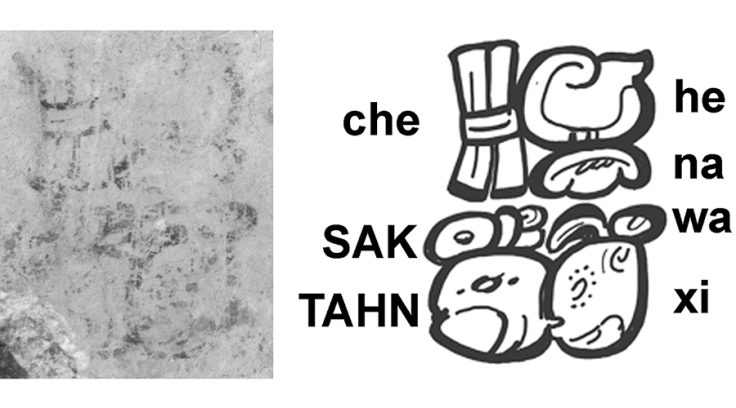
According to a new study in the journal Antiquity, a cluster of 11 painted symbols at the base of one mural, labelled Text 19, proved to be the key.
Once enhanced through repeated scanning, photography and magnified imaging under different angles of light, the sequence resolved into an astronomical formula followed by a short phrase, 'so says', and then a personal name: Sak Tahn Waax, translated by epigraphers as 'White-chested Fox'.
Maya astronomers and mathematicians are usually absent from the written record. Classic period texts, dating from around 250 to 900 CE, tend to focus on kings, gods and wars, and rarely mention working scholars.
David Stuart, an archaeologist and epigrapher at the University of Texas at Austin, said this is the first time a Maya astronomer-mathematician has been explicitly credited by name for a calculation. 'Now we have a name,' Stuart said, describing the wall as an old office 'whiteboard' left behind when its owner moved on.
The room, roughly six square feet in area, was deliberately filled with mud and stone before later buildings rose around it, preserving columns of numbers, corrections and notations.
Lead author Franco Rossi of the Massachusetts Institute of Technology and his colleagues found that Text 19 contains a formula linking cycles from several Maya calendars, including a 260-day ritual calendar, a 365-day solar year, a 584-day approximation of Venus's synodic cycle and a 780-day approximation for Mars.
Combined, the sequence totals five Venus cycles, 2,920 days, most likely pointing to a date equivalent to 7 November AD 781 in the Julian calendar.
Rossi said the inscription is 'the first direct mention of an ancestral Maya astronomer-mathematician by personal name', and the study notes it is also the oldest recorded name for such a specialist anywhere in the Americas.
Whether Sak Tahn Waax painted the figures himself, dictated them to a scribe, or lent his name to the work of juniors remains unclear.
Xultun's Buried 'Wall Of Numbers'
Xultun lies about 25 miles north-east of the better-known city of Tikal and spans roughly six square miles of jungle. First reported in 1915, it only received sustained excavation from 2008.
Some of its temples reach 115 feet in height, though Heather Hurst of Skidmore College notes it remains 'one of these big sites that no one ever heard of'.
The 10K-2 room was discovered in 2010 when a student, Maxwell Chamberlain of Boston University, spotted traces of painted plaster inside a looters' tunnel.
Subsequent digs uncovered murals of royal scribes working at low benches, surrounded by columns of numbers and glyphs, later documented using multispectral imaging. The material was dated to the second half of the eighth century, before the Maya collapse that saw populations fall and cities empty across the region.
Anthony Aveni, an archaeoastronomer at Colgate University who previously worked on Xultun's astronomical tables but was not involved in this study, called it 'probably the most wonderful discovery leading to an understanding of Maya science' he has seen in his career.
How the formula was used remains unknown. Rossi noted that Text 19 does not appear within a larger table like the Dresden Codex, and is not obviously part of a longer almanac.
One possibility is that the calculation served as a guide to how the cycles of Venus and Mars intersected with human timekeeping, for use in rituals, political ceremonies or seasonal forecasts.
© Copyright IBTimes 2026. All rights reserved.