Where is the 3I/ATLAS Now? Harvard Physicist Claims 12-Billion-Year-Old Relic Is an Alien Probe
A frozen wanderer older than the Sun has slipped through our skies, leaving behind data, debate and a reminder of how little we know about the galaxy we live in.
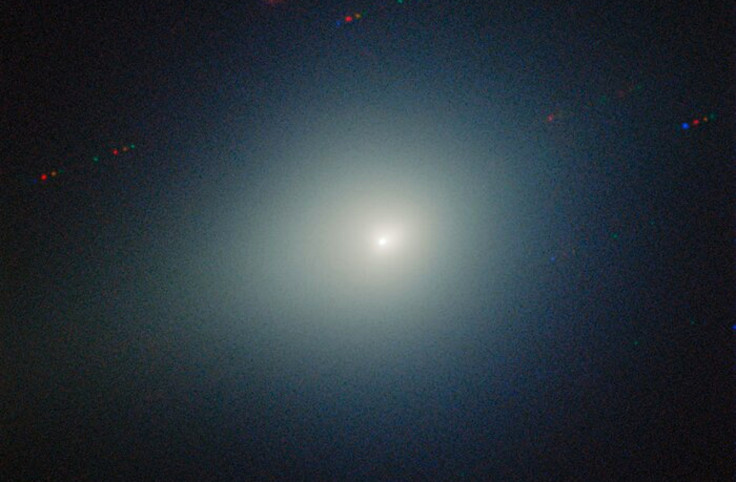
An interstellar comet known as 3I/ATLAS, which swept past the Sun in 2024, could be a 12‑billion‑year‑old relic from deep space and has even been described by a Harvard physicist as a possible alien probe, according to new research and long-running controversy over its origins. The object, only the third confirmed interstellar visitor ever seen in our solar system, was tracked as it brightened dramatically before heading back out towards the dark between the stars.
3I/ATLAS first appeared in telescopes in July 2024, immediately drawing attention because its orbit made clear it did not originate in our own planetary system. Its steep, hyperbolic trajectory marked it out as a true interstellar interloper, following in the footsteps of 1I/ʻOumuamua in 2017 and 2I/Borisov in 2019. Those earlier objects were too faint and fleeting to yield much detail. This time, astronomers had a rare opportunity: a comparatively bright comet, passing close enough to the Sun for the world's most powerful observatories to pick it apart.
🚨 Scientists have completed a search for alien technology on the mysterious interstellar comet 3I/Atlas. 👀
— 3I/ATLAS updates (@Defence12543) June 4, 2026
After scanning more than 74 million radio signals, researchers found no evidence of extraterrestrial technology. 🛸
Every remaining signal was traced back to Earth or… pic.twitter.com/qw9aTprC0X
3I/ATLAS, Alien Probe Claims And Nasa's Firm Rebuttal
The attention on 3I/ATLAS did not come only from astronomers quietly poring over data. Almost as soon as it was announced, Harvard astrophysicist Avi Loeb began speculating publicly that the object might be artificial, suggesting it could be some form of alien spacecraft or probe. Loeb has spent years arguing that ʻOumuamua might have been engineered technology rather than a natural rock or comet, and he saw echoes of that debate in 3I/ATLAS.
NASA, though, moved quickly to shut that line of thought down. The space agency rejected the alien spacecraft suggestion, pointing instead to the emerging science that painted 3I/ATLAS as an unusually old, but natural, fragment of ice and dust. The Search for Extraterrestrial Intelligence Institute, better known as Seti, later backed that assessment, saying it had found 'no evidence of extraterrestrial technology' associated with the comet.
Nothing in the publicly released data confirms Loeb's more provocative claims and, at this stage, any talk of alien probes remains firmly in the realm of speculation. Without direct signatures of technology, the balance of evidence lies heavily on the side of an exotic but natural object, and all such suggestions should be taken with a grain of salt.

What The Telescopes Saw In 3I/ATLAS
Behind the headlines, the real story of 3I/ATLAS lies in the painstaking work done with the James Webb Space Telescope and the Atacama Large Millimeter/submillimeter Array (Alma) in Chile. These instruments allowed scientists to analyse the comet's chemical make-up in unprecedented detail.
In a study published in Nature, a team led by Martin Cordiner of Nasa's Goddard Space Flight Center reported that 3I/ATLAS contains around ten times more deuterium a heavy form of hydrogen than is typically found in comets and other icy bodies in our own solar system. That excess deuterium shows up in 'heavy water,' where deuterium replaces normal hydrogen.
Cordiner said this chemical fingerprint could only be explained if 3I/ATLAS formed in an environment that was extraordinarily cold. According to the team's interpretation of astrochemical models, the comet's building blocks must have condensed at temperatures close to absolute zero, around –243C. That places its birth in some frigid region of a long‑vanished protoplanetary cloud, far from the warming influence of any young star.
Taken together with its inferred age of up to 12 billion years, the object looks less like a curiosity and more like a fossil. Cordiner described 3I/ATLAS as 'maybe the oldest object to have been observed in our solar system' and suggested it could be a relic from 'cosmic noon', the era when star formation across the universe was near its peak.
If that age estimate holds, 3I/ATLAS predates our own solar system by more than seven billion years. For billions of those years, it may have drifted on 'vast unimaginable trajectories around our galaxy', as Cordiner put it, slowly circling the Milky Way before a chance gravitational nudge flung it through our neighbourhood.

A Once‑Only Visitor, And The Future Of Interstellar Hunts
The scientific community is treating 3I/ATLAS as a one‑off opportunity. Astronomer Peter Veres, who helped confirm the comet's interstellar status at the International Astronomical Union's Minor Planet Center, called the research 'exciting' but cautioned that the clock is ticking. The comet is already receding, moving back out of the solar system and onto an escape path that means it 'will never return.' As its distance grows, fresh observations will become steadily harder, then effectively impossible.
It is precisely that sense of fleeting contact that makes 3I/ATLAS feel both mundane and profound. On one hand, the data points towards a perfectly natural explanation anchored in chemistry, not science fiction. On the other, this is tangible material from a different stellar nursery, older than the Sun, briefly lighting our skies before vanishing into the dark.
🆕 Webb has found clues to the ancient origins of 3I/ATLAS!
— ESA Webb Telescope (@ESA_Webb) June 22, 2026
As the interstellar comet 3I/ATLAS began moving away from the Sun in December 2025 ☄️ astronomers took the opportunity to study its chemical makeup with the #NIRSpec instrument on Webb. This allowed them to understand… pic.twitter.com/apCg2UTiOT
Astronomers expect that 3I/ATLAS will not be the last such messenger. New survey telescopes, particularly the Vera C Rubin Observatory in Chile, are designed to sweep the sky repeatedly and pick up fast‑moving, faint objects that older surveys would have missed. Cordiner believes this is 'just the beginning of an exciting new field,' arguing that each new interstellar comet or asteroid will carry a different piece of the story of how planets and stars formed across the galaxy.
Key points about 3I/ATLAS can be summed up simply. It is only the third confirmed interstellar object ever observed. Its isotopic make‑up suggests an origin in ultra‑cold conditions, and its age may reach back three times further than that of our solar system.
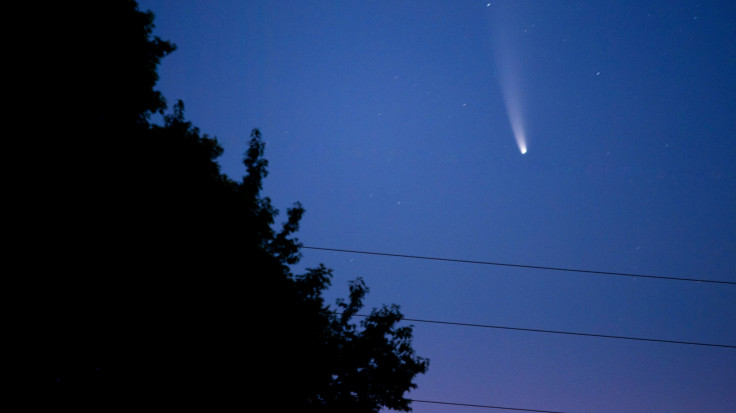
Claims that it might be an alien probe remain unproven and are contradicted by current observational evidence. For now, 3I/ATLAS looks like what the data says it is: an ancient, icy fragment from somewhere else in the Milky Way, glimpsed once and then lost to interstellar space again.
© Copyright IBTimes 2026. All rights reserved.
- Recommended For You