

Thailand Unearths Giant New Dinosaur Species Unlike Any Found Before With an Exceptionally Long Neck
Named Uragasaurus kalasinensis, the long-necked dinosaur is believed to have roamed the region around 150 million years ago.
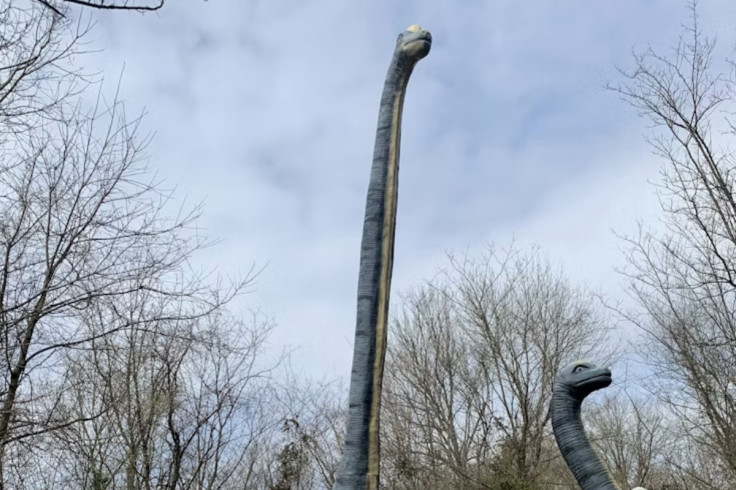
A newly identified dinosaur species discovered in north-eastern Thailand has given palaeontologists fresh insight into prehistoric life in Southeast Asia after researchers confirmed the giant plant-eater possessed anatomical features unlike those of any dinosaur previously documented.
Named Uragasaurus kalasinensis, the long-necked dinosaur is believed to have roamed the region around 150 million years ago during the Late Jurassic period.
The discovery emerged from a fossil-rich site in Kalasin Province that was first identified in 2008 after a resident found unusual fragments resembling serpent scales. Since then, excavations at the Phu Noi site have uncovered thousands of fossils, with dinosaur remains accounting for more than 90% of those recovered.
The latest study, published this week in Nature, confirms that one of those fossils belongs to an entirely new species.
A Species Unlike Any Seen Before
The breakthrough came after scientists closely examined a dorsal vertebra, a bone from the middle of the dinosaur's back, recovered from the excavation site.
Using CT scanning technology, researchers determined the fossil belonged to the Mamenchisauridae family, a group of sauropod dinosaurs renowned for their remarkably long necks. Members of this family are thought to have used their extended necks to feed on vegetation at varying heights without moving their enormous bodies over great distances.
What surprised the research team was that the fossil displayed several distinctive anatomical features not seen in previously identified dinosaurs.
Lead researcher Dr Apirut Nilpanapan of Mahasarakham University said the dinosaur possessed a unique arrangement of supporting bones known as laminae, forming a Y-shaped structure. Even more striking was its unusual internal air-cavity system.
'The features, in particular a unique air-cavity structure, were unlike any other dinosaur in the world. That's what sets it apart,' Nilpanapan said.
Based on the available fossils, researchers estimate Uragasaurus kalasinensis measured up to 20 metres, or about 66 feet, placing it roughly the length of a cricket pitch. Like other sauropods, it would have been a herbivore sustained by an enormous body supported by four pillar-like legs.
Although Mamenchisauridae fossils have previously been discovered mainly in China, researchers say this is the first confirmed member of the family identified in Thailand.
Thailand Fossil Site Rewrites Dinosaur History
The discovery also highlights the growing scientific importance of the Phu Noi fossil site, which has steadily transformed understanding of prehistoric ecosystems across Southeast Asia.
When survey teams first investigated the area after the initial fossil fragments were reported in 2008, they uncovered an extensive collection of dinosaur bones and teeth dating back to the Late Jurassic period. Continued excavations have since produced one of Thailand's richest dinosaur fossil records.
For Nilpanapan, recognising that the vertebra represented an entirely new species proved an unforgettable moment.
He admitted he smashed his computer after realising what the team had found, describing the experience as both 'exhilarated and relieved' after years of research.
The finding follows another significant dinosaur announcement from Thailand earlier this year. In May, scientists revealed the discovery of Nagatitan, another long-necked herbivorous dinosaur identified from fossils unearthed in the country.
That species measured approximately 27 metres in length and weighed an estimated 27 tonnes, making it the largest dinosaur ever discovered in Southeast Asia.
Southeast Asian Countries Important for Dino Research
Together, the discoveries are strengthening Thailand's reputation as an increasingly important location for dinosaur research. While countries such as China, Argentina, and the United States have traditionally dominated major palaeontological discoveries, researchers believe Southeast Asia still holds vast untapped fossil deposits capable of reshaping scientists' understanding of dinosaur evolution and migration.
The identification of Uragasaurus kalasinensis also expands the known geographical range of the Mamenchisauridae family, suggesting these giant long-necked dinosaurs may have been more widely distributed across ancient Asia than previously believed.
Researchers expect continued excavations at Phu Noi to yield additional fossils that could clarify how these enormous herbivores evolved and spread across the region. For now, a single vertebra has proven enough to reveal an animal unlike any that has been identified before, offering another reminder that some of Earth's oldest secrets remain buried beneath its surface, waiting to be uncovered.
© Copyright IBTimes 2026. All rights reserved.