

Why Were 7,000-Year-Old Skeletons Headless? Archaeologists' Discovery in Slovakia Challenges Burial Beliefs
Archaeologists uncover a prehistoric burial site in Slovakia, sparking debate on ancient rituals
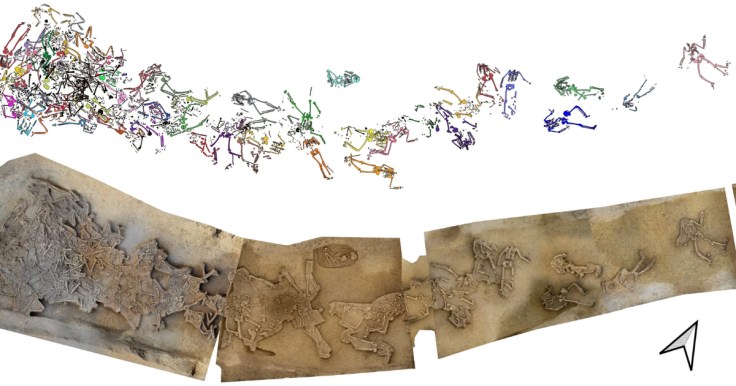
Archaeologists and students from Germany's Kiel University and the Institute of Archaeology of the Slovak Academy of Sciences in Nitra who were investigating a prehistoric settlement in Slovakia have uncovered one of the most unusual burial sites ever found in Europe, revealing dozens of human skeletons that were deliberately buried without their heads.
The discovery, dating back around 7,000 years, has prompted fresh debate about death rituals and social customs among some of the continent's earliest farming communities.
The remains were found in a ditch surrounding part of the Neolithic settlement of Vráble in south-western Slovakia. Researchers uncovered at least 78 skeletons, with all but one missing their skulls. The only individual discovered with an intact head was a child.
At first glance, the mass burial appeared to suggest violence or a massacre. However, detailed analysis has led researchers to believe the headless bodies were not the victims of brutal executions but participants in a complex burial tradition that remains poorly understood.
Discovery Reveals Unusual Stone Age Burial Ground
The Vráble settlement was occupied between approximately 5250 and 4950 BC by people associated with the Linear Pottery culture, one of Europe's earliest farming societies.
Archaeologists have identified more than 300 houses spread across three neighbourhoods within the settlement. Excavations began in 2012, but researchers only started examining the surrounding ditch in recent years. There they found bodies placed in seemingly random positions, with some lying side by side while others were piled on top of one another.
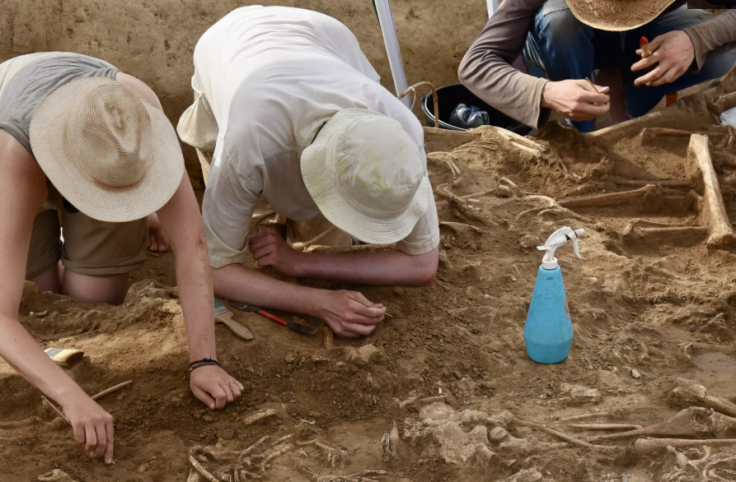
The ditch itself stretches for more than a kilometre and enclosed one section of the settlement. Archaeologists discovered not only a large concentration of headless skeletons but also smaller groups of paired burials.
Researchers believe the bodies were deposited shortly after death. The arrangement of the remains and the absence of complete skeletons indicate that the burials were carried out intentionally rather than resulting from a natural disaster or battlefield event.
Evidence Suggests Ritual Rather Than Mass Violence
Detailed examination of the neck vertebrae revealed cut marks made by sharp tools. These marks indicate that the skulls were carefully removed after death rather than through violent decapitation while the individuals were alive.
Researchers also noted that lower jaws were missing alongside the skulls, suggesting that preserving the head as a complete unit may have been important to the community.
This interpretation differs from other prehistoric sites where manipulated human remains have often been linked to warfare, social collapse or acts of violence. At Vráble, scientists have found no clear evidence that a massacre occurred.
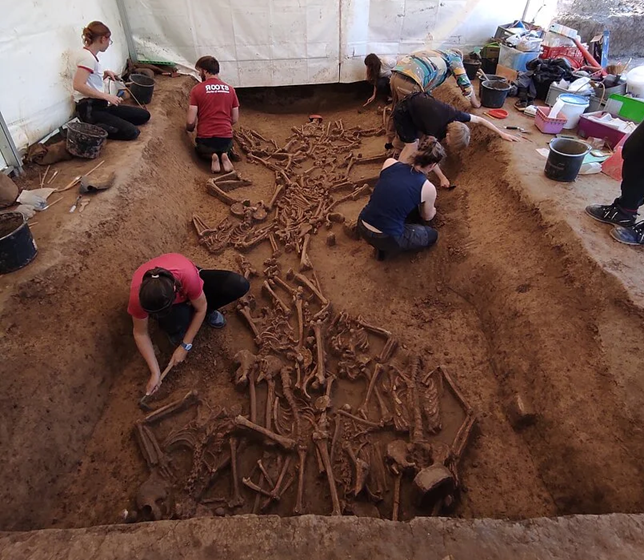
Instead, they believe the treatment of the dead may have formed part of a recurring cultural practice linked to beliefs about identity, ancestry and the afterlife.
Why Were The Skeletons Headless?
The leading theory is that the skulls were deliberately removed as part of a ritual focused on the symbolic importance of the human head. In many Neolithic societies, the head was regarded as the centre of personhood, memory and ancestral connection.
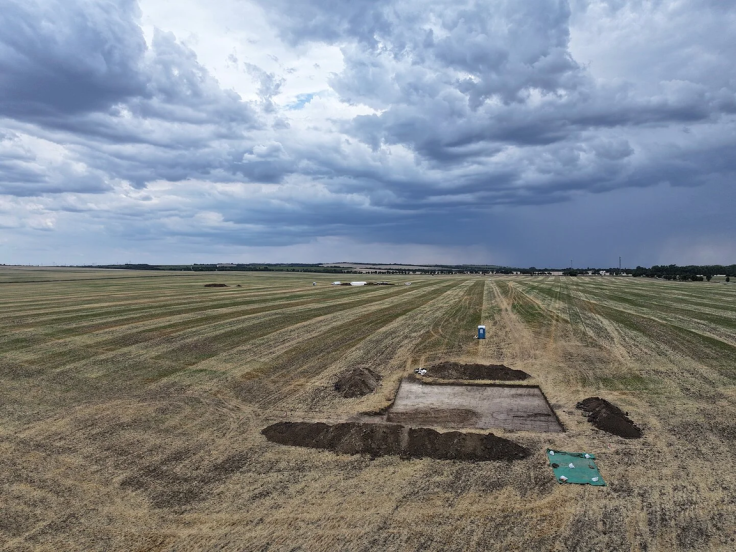
Researchers suggest the skulls may have been preserved, displayed or stored elsewhere, although none have yet been found. Similar traditions have been documented at ancient sites in the Near East, where skulls were removed from graves and honoured within communities.
While the exact purpose remains uncertain, archaeologists believe the headless burials reflect a meaningful social practice rather than an act of cruelty. Further excavations may eventually reveal where the missing skulls went and why they held such significance for one of Europe's earliest farming societies.
© Copyright IBTimes 2026. All rights reserved.