

Earthquake Mystery Solved? Scientists Discover Deep Earth System That Could Transform Disaster Prediction
Groundbreaking research reveals structured seismic activity deep within Earth's crust, challenging previous assumptions.
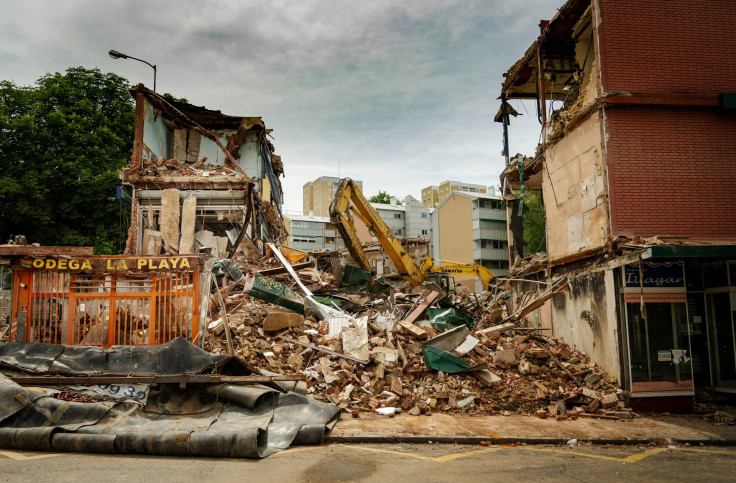
Scientists have produced the first detailed global map of deep earthquakes occurring beneath continents, revealing a previously poorly understood system operating within the Earth's crust and upper mantle.
The findings, published in Science and based on global seismic datasets alongside new analytical modelling, map 459 continental mantle earthquakes (CMEs), which are extremely rare seismic events that originate below the Mohorovičić discontinuity, or Moho, the boundary separating the Earth's crust from its mantle.
Rather than being random anomalies, the results suggest that earthquakes occurring far beneath the Earth's surface may form part of a structured and previously unrecognised geophysical system. The newly identified patterns show clusters of deep seismic activity that appear to follow long-term structural pathways within tectonic plates, challenging earlier assumptions that such events were isolated and unpredictable.
Scientists say the discovery could significantly improve understanding of how stress builds and is released within the planet's interior, potentially strengthening long-term earthquake forecasting models.
Explaining the physical context of these events, geophysicist Simon Klemperer of Stanford University, a co-author of the study, noted that crossing the Moho involves entering rock with a 'much higher melting point.' These rocks remain solid at far higher temperatures, meaning the mantle can retain sufficient rigidity to fracture under stress, which is a key mechanism behind these deep continental mantle earthquakes.
Together, the findings provide the first coherent global framework for understanding how rare deep-earth seismic events are distributed and how they relate to the broader mechanical behaviour of Earth's interior.
The First Global Map of Deep Earthquakes
The research team compiled seismic data from monitoring stations around the world, combining decades of earthquake records with modern computational imaging techniques to build a three-dimensional representation of deep seismic activity beneath continents.
The resulting map highlights that deep earthquakes, occurring hundreds of kilometres below the surface, are not evenly distributed. Instead, they appear concentrated in specific zones that align with ancient and active tectonic boundaries.
One of the key breakthroughs was identifying consistent vertical and diagonal seismic 'corridors' within subducting plates, suggesting that internal deformation processes may be far more organised than previously believed.
Researchers involved in similar seismic studies have noted that these deep quakes behave differently from shallow crustal earthquakes, both in how energy is released and how stress accumulates over time.
What Makes Deep Earthquakes Different?
Unlike shallow earthquakes, which occur within the Earth's crust and are typically linked to surface fault lines, deep earthquakes originate far below the surface, often at depths of 300 to 700 kilometres.
At these depths, the extreme pressure and temperature conditions should, in theory, prevent the brittle fracture processes that cause typical earthquakes. Yet seismic activity still occurs, indicating that alternative physical mechanisms are at work.
Scientists believe these may involve:
- phase changes in minerals under extreme pressure
- slab deformation in subducting tectonic plates
- sudden energy release within metastable rock structures
The new mapping study suggests these processes may not be random but instead follow predictable spatial patterns within descending tectonic slabs.
A Structured System Beneath Continents
One of the most significant implications of the research is the possibility that deep earthquakes are part of a structured internal system rather than isolated geological anomalies.
The mapped data shows that seismic events often cluster along long-lived subduction zones where one tectonic plate is forced beneath another. These zones appear to act as conduits for stress accumulation and release deep within the Earth.
Researchers suggest that this could indicate a previously unrecognised form of internal Earth 'circulation', where mechanical stress is transferred over long distances within sinking slabs of crust.
This challenges older models that treated deep earthquakes as largely independent from broader mantle dynamics.
Why This Could Change Earthquake Forecasting
Although the research does not enable short-term earthquake prediction, it may significantly improve long-term seismic risk modelling.
By identifying recurring deep-earthquake structures, scientists may be able to better understand:
- where stress is accumulating deep underground
- how energy is transferred across tectonic systems
- which regions may eventually influence surface-level seismic activity
Experts caution that translating these findings into practical prediction tools will take years of additional modelling and validation.
However, they argue that the ability to map deep structural earthquake pathways represents a major step forward in understanding Earth's internal dynamics.
Scientific Caution: No 'Prediction Breakthrough' Yet
Despite public interest in earthquake forecasting, scientists involved in the research emphasise that the findings do not allow precise prediction of when or where earthquakes will occur.
Instead, the study improves the conceptual framework for understanding seismic behaviour over long geological timescales.
Seismologists note that earthquake systems are influenced by multiple interacting variables, including:
- crustal stress accumulation
- fluid movement within fault zones
- mantle convection patterns
- temperature and pressure gradients
As a result, while structural mapping improves understanding, real-time prediction remains scientifically out of reach.
A New View of Earth's Interior
The research contributes to a growing shift in geophysics, where the Earth is increasingly viewed as a dynamic, interconnected system rather than a collection of independent layers.
By integrating deep seismic mapping with mantle imaging and tectonic modelling, scientists are beginning to construct a more unified picture of how energy moves through the planet.
This approach could eventually improve understanding of not only earthquakes but also volcanic activity and long-term plate development.
© Copyright IBTimes 2026. All rights reserved.
- Recommended For You


