Mars Meteorite Garnet Discovery: Scientists Find Rare Ancient Egyptian Gem Inside Space Rock
The rare 'time‑capsule' fragment hints at intense heat, pressure and complex chemical processes that once operated inside the red planet.
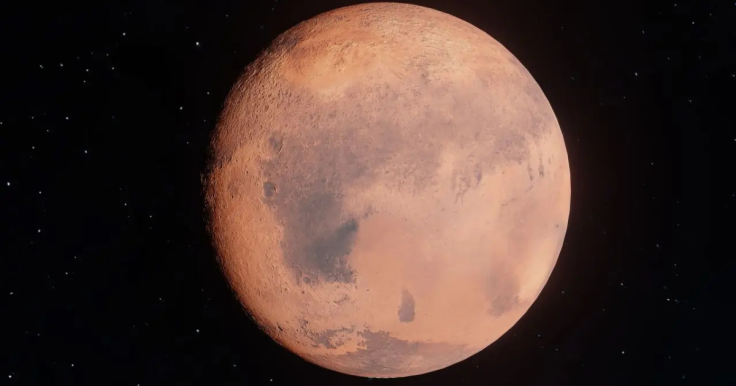
An international team of scientists has confirmed the first ever Mars meteorite garnet discovery, identifying a completely new type of Martian rock inside a fragment known as NWA 8171.
The tiny sliver of stone, recovered in North‑West Africa but blasted from Mars long ago, could reshape how researchers reconstruct the planet's 4.5‑billion‑year geological history and the extreme conditions that once raged beneath its surface.
Mars Meteorite Garnet Discovery As A Geological Time Capsule
The new work, led by assistant professor of Earth sciences Dr Tanya Kizovski at Brock University in Canada and involving Professor James Darling from the University of Portsmouth, centres on an unusual clast, or fragment, trapped within the meteorite NWA 8171.
The team argue that this minuscule pocket of rock acts as a geological time capsule, preserving evidence of the temperatures, pressures and chemical conditions that shaped Mars billions of years ago.
On Earth, garnet is better known in high‑street jewellers than in laboratories. The dark red gemstone was prized by ancient Egyptians and Romans and later became a favourite of Victorian jewellery makers.
In geology, though, it is what researchers call a cornerstone mineral. Garnet crystals grow and change composition in response to shifts in temperature, pressure and fluid flow deep underground, allowing scientists to reconstruct tectonic collisions, ore‑forming processes and the restless movement of hot fluids in Earth's crust and mantle.
That is why the first garnet‑bearing rock type traced to Mars is such a big deal. It immediately expands the toolkit available to planetary scientists, giving them a mineral that can lock in details about past conditions in a way few others can.
As Darling put it, the findings 'add a striking new dimension to our understanding of the geology of Mars and open an exciting new window into the evolution of our planetary neighbour.'
Mars Meteorite Garnet Discovery Inside NWA 8171
In many ways, the Mars meteorite garnet discovery began with a hunch. At the Royal Ontario Museum in Toronto, where NWA 8171 is held, Kizovski and colleagues were cataloguing the meteorite's minerals and chemistry when one area of the sample caught their attention.
'This little section of the meteorite looked really interesting, and the chemistry was a bit odd,' Kizovski recalled.
At first the team assumed they were dealing with pyroxene, a very common mineral in Martian rocks, but the anomalies were enough for them to take a second, much closer look.
Researchers used the Electron Microscopy and Microanalysis Unit at the University of Portsmouth alongside the museum's specialised laser equipment to map the fragment's mineralogy and composition in microscopic detail.
According to the study, published in Geochemical Perspectives Letters, the garnet sits inside a complex clast that seems to have experienced multiple episodes of crystallisation and later alteration.
The clast itself is part of a regolith breccia, essentially a rock made from broken surface debris that has been welded back together over time. NWA 8171 belongs to a rare family of just 18 known Martian regolith breccias, thought to come from the same ancient impact event on Mars.
Within the clast, the scientists distinguish two main zones. One is an andradite‑rich domain, where calcium‑bearing garnet occurs with the mineral diopside. The other is a K‑feldspar‑rich zone dominated by augite and feldspar.
On Earth, similar mineral cocktails typically form in reactive environments such as skarns, where hot fluids invade carbonate rocks, or in some unusual alkali igneous settings.
What The Mars Meteorite Garnet Discovery Suggests About Martian Processes
Kizovski notes that garnet on Earth usually forms in metamorphic rocks, which are created when pre‑existing igneous or sedimentary rocks are transformed by extreme heat, high pressure or circulation of hot fluids.
On Mars, she argues, comparable conditions could have been generated by a sizeable meteorite impact into the crust, by magma rising into the shallow subsurface, or by some awkward combination of the two.
The chemistry of the clast raises further questions. The augites in the K‑feldspar‑rich zone are consistent with compositions seen in other Martian rocks, which supports the idea that at least part of the fragment is genuinely Martian.
The diopsides in the andradite‑bearing zone, however, show a broader spread of compositions, overlapping with values observed in some Earth rocks and carbonaceous chondrites.
That pattern led the team to conclude that the garnet is unlikely to be a straightforward igneous mineral crystallised directly from a melt. Instead, they suggest it formed during an oxidising metasomatic event on Mars, when chemically reactive fluids percolated through the crust and altered existing minerals in place.
Alien Impostor Or True Martian? Scientists Probe Garnet Meteorite's Mysterious Origin
Yet an awkward possibility shadows the Mars meteorite garnet discovery. Because NWA 8171 is itself a jumbled regolith breccia, the garnet‑bearing clast could, in theory, be a foreign object.
It might have been delivered to Mars by an asteroid or comet, mixed into the Martian surface, and only later ejected again by a separate impact that launched the meteorite into space.
Kizovski has been careful not to overclaim. She has cautioned that the current data do not definitively prove whether the garnet‑bearing rock formed on Mars or arrived as an 'exotic meteorite impactor', meaning a rock from some other planetary body that smacked into the Martian crust.
To settle the issue, scientists now need to examine the garnet's isotopic signatures. The next step, Kizovski explains, is to measure oxygen isotopes in the garnet‑bearing rock and compare them with those in other Martian meteorites.
Isotopes are atoms of the same element that have the same numbers of protons and electrons but different numbers of neutrons, and small shifts in their ratios can reveal where in the Solar System a rock crystallised.
A Scientific Dilemma At The Heart Of The Mars Meteorite Garnet Discovery
Isotopic analysis would mean destroying part of the already tiny garnet‑bearing sample, something the team has so far avoided 'due to its rarity, as it may be the only garnet‑bearing Martian rock we have for study', Kizovski said.
That leaves researchers with a classic scientific dilemma: sacrifice a sliver of a unique object in pursuit of clear answers, or preserve it intact and accept that some of the biggest questions may remain open.
For now, the work continues on less destructive fronts. Royal Ontario Museum curator Kim Tait, research assistant Jessica Tomacic and Darling are still poring over NWA 8171, while comparisons with rover and orbital data may yet reveal hints of similar garnet‑bearing rocks on the Martian surface.
Martian meteorites are pieces of the Martian crust that were hurled into space by ancient impacts before eventually falling to Earth, often in hot deserts where they are easier to spot.
They give scientists a rare physical sample of a world otherwise probed at long range by orbiters and rovers. Until now, none of these precious rocks had ever yielded garnet, a mineral that on Earth records some of the most intense heat and pressure events in our planet's past.
© Copyright IBTimes 2026. All rights reserved.
- Recommended For You