3I/ATLAS Mystery Explained: California Scientists Hunt for Alien Tech on Rare Interstellar Object
SETI researchers find no alien signals on 3I/ATLAS, but the study refines future searches and expands understanding of interstellar visitors.

Scientists in California have completed one of the first dedicated searches for signs of alien technology on 3I/ATLAS, the latest known object to enter the solar system from interstellar space, finding no evidence of artificial radio signals.
A recent #SETILive conversation between @allplanets and planetary scientist Dr. Cecilia Tubiana (INAF) explored ESA’s Juice observations of the interstellar comet 3I/ATLAS as it traversed the inner Solar System.
— The SETI Institute (@SETIInstitute) June 26, 2026
Learn more: https://t.co/clvITD3t1m
Rather than disappointing researchers, the result provides an important scientific benchmark. By ruling out detectable technosignatures on one of the rarest types of objects ever observed, the study helps refine future searches and expands scientists' understanding of visitors from beyond the solar system.
3I/ATLAS is only the third confirmed interstellar object detected passing through the solar system, following 1I/'Oumuamua in 2017 and 2I/Borisov in 2019. Its discovery offered researchers at the SETI Institute an uncommon opportunity to test whether such objects might carry detectable signs of advanced technology.
Rapid Response
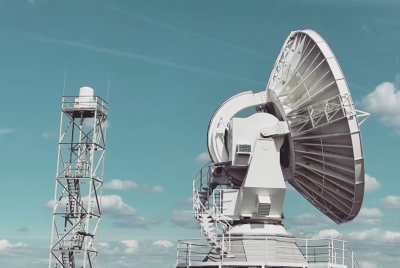
Researchers began observations less than 24 hours after 3I/ATLAS was announced in July 2025, using the Allen Telescope Array at Hat Creek Radio Observatory in northern California.
The team observed the object for more than seven hours across frequencies between 1 and 9 gigahertz, searching for narrowband radio emissions. Because such signals are unlikely to occur naturally, they are considered one of the principal signatures scientists look for when searching for possible technological activity.
Subsequent investigation showed that all of those candidates originated from terrestrial or satellite sources rather than 3I/ATLAS.
A Valuable Null Result
Although no artificial signals were detected, researchers say the findings remain scientifically significant. Interstellar objects are believed to have formed around distant stars before being ejected into interstellar space. Because so few have been observed, each provides valuable information about planetary systems beyond our own.
3I/ATLAS is only the third confirmed interstellar visitor. Physicist Avi Loeb joins @EVargasTV to talk about whether it could offer new clues about the composition, origin and behavior of material from beyond our cosmic neighborhood.
— NewsNation (@NewsNation) June 25, 2026
More: https://t.co/FLJxzVeJsL pic.twitter.com/KJlSSuCR63
The observations also established limits on any possible radio transmitter associated with 3I/ATLAS. According to the study, any transmitter on or near the object would have needed to emit below approximately 10 to 110 watts under the observing conditions to avoid detection by the Allen Telescope Array.
Rather than eliminating future possibilities, the results provide an important reference point for evaluating future interstellar visitors.
Understanding the Baseline
Lead author Dr Sofia Sheikh said the absence of a signal remains an important scientific outcome. 'Eventually, our own Voyager spacecraft will be extraterrestrial artifacts in other stellar systems,' she said. 'Given that, it is important that we understand the natural distribution of interstellar objects so that we will be able to identify any anomalies that could one day be signs of an artificial interstellar object.'
Researchers say establishing that baseline is essential before any unusual detection can be confidently identified. With only three confirmed interstellar objects observed to date, every new arrival helps improve understanding of what naturally occurring visitors look like.
Co-author Valeria Garcia Lopez said the study also demonstrated the capability of existing search techniques. 'The results from 3I/ATLAS show how realistic it is to detect a signal with the technology we have today,' she said. 'That is why it is important to keep searching for technosignatures, even from objects we might not expect to have signals.'
Preparing for Future Searches
The study also demonstrates how rapidly SETI researchers can respond when new interstellar objects are discovered. Such objects spend only a limited time passing through the solar system, making early observations critical. The response to 3I/ATLAS showed that existing observing networks can begin targeted searches within hours of a discovery announcement, maximising the scientific opportunity before the object moves beyond practical range.
Researchers say that capability will become increasingly important as next-generation observatories discover more interstellar visitors in the years ahead. A larger sample of objects will allow scientists to compare observations, refine detection methods and better distinguish genuine technosignatures from terrestrial radio interference.
For now, 3I/ATLAS has yielded no evidence of alien technology. But researchers say the observations establish an important reference point for future technosignature searches and strengthen the methods that could be used to investigate the next interstellar visitor.
© Copyright IBTimes 2026. All rights reserved.
- Recommended For You