Stanford Scientist Explains Why We Haven't Found Aliens Yet: 'Maybe We're One of the First'
New planetary model from Stanford University offers insights into the rarity of habitable planets.
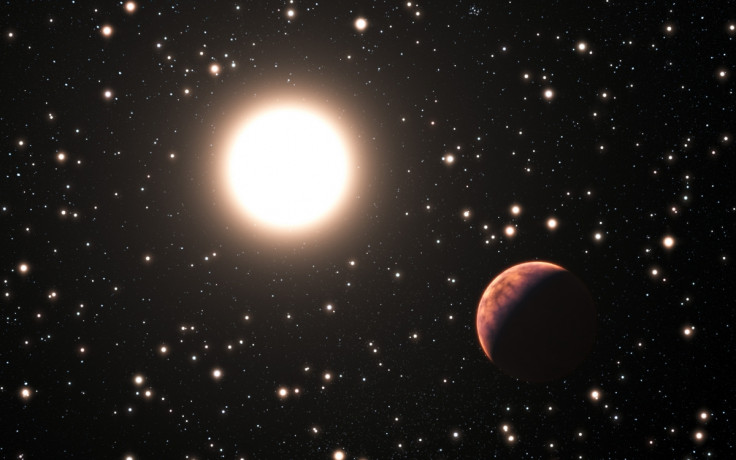
A Stanford scientist says a new planetary model may explain why we have not found aliens yet, arguing that most small rocky worlds simply cannot hold onto the atmospheres needed for life, and that Earth might be 'one of the first' habitable planets in our galaxy. The software tool, developed at Stanford University in California and unveiled this week, is designed to help astronomers decide which distant exoplanets to study with powerful telescopes.
Over the past three decades, astronomers have confirmed thousands of exoplanets orbiting stars beyond the Sun, with estimates of billions more scattered through the Milky Way. There is now, quite literally, too much to look at. As next‑generation observatories queue up targets, researchers are scrambling for ways to triage that cosmic backlog and work out where to spend scarce observing time.
At Stanford, that pressure has produced STEHM, short for Smaller Than Earth Habitability Model, a piece of software that tries to answer a blunt question: is this rocky planet big enough, and geologically active enough, to keep an atmosphere for billions of years. If the answer is no, it drops down the priority list. If yes, it becomes a promising candidate in the search for alien life, or at least the kind of life that breathes and swims in an atmosphere and oceans, rather than hiding in rock.
Lead author Michelle Hill, a researcher at Stanford who developed STEHM, put it starkly in the university's statement. 'The only way that we're going to ever find out if there are signatures of life out there is by observing the atmosphere of these planets,' she said. In other words, if telescopes cannot see an atmosphere, they probably cannot see life.
Scientist Uses STEHM to Rethink Where We Hunt for Aliens
Much of the exoplanet hunt so far has fixated on the so‑called habitable zone, the not‑too‑hot, not‑too‑cold region around a star where liquid water could exist on a planet's surface. It has also, as Hill's work quietly suggests, given us a slightly over‑optimistic view of how many planets might actually be habitable.
Location, the Stanford team argues, is only the start. A rocky planet might sit perfectly in its star's habitable zone and still be utterly sterile if it cannot maintain a substantial atmosphere. Without that gaseous blanket, surface water boils away or freezes out, radiation from space batters the ground, and temperatures swing wildly. Life as we know it, with its need for liquid water and long‑term stability, struggles in that kind of chaos.
The model links a planet's size and internal make‑up to its ability to generate and retain an atmosphere over geological timescales. In practice, that means folding in messy, interconnected stuff like volcanic activity, internal heat from radioactive elements, and the hammering a planet takes from its parent star's radiation.
To build the model, Hill used an existing planetary simulation code called ExoPlex, then ran scenarios for six rocky worlds ranging from half Earth's size up to Earth‑size. The simulations tracked how each planet's structure and heat budget would influence volcanic outgassing, how thick an atmosphere could build up, and how quickly stellar radiation would strip that atmosphere away.
According to Stanford's account, STEHM successfully reproduced two very different outcomes: Venus, with its suffocating carbon dioxide shroud, and Mars, where most of an early atmosphere has leaked into space over billions of years. Getting those right is the basic test any such model has to pass before astronomers will trust it on worlds they can never visit.
'Maybe We're One of the First': What the Model Says
Hill's simulations suggest that rocky worlds at least 80 per cent the size of Earth can retain atmospheres for 10 billion years or more when they orbit within the habitable zones of Sun‑like stars. That is comfortably longer than the current age of the Solar System.
Below that threshold, atmospheric survival looks far shakier. Worlds around 70 per cent of Earth's radius may still hold onto their air under favourable conditions, the team found, but in general smaller planets lose their atmospheres more quickly. The crucial variables include how much carbon they start with and how many heat‑producing elements lurk in their interiors to fuel ongoing volcanism, which can keep topping up a thinning atmosphere.
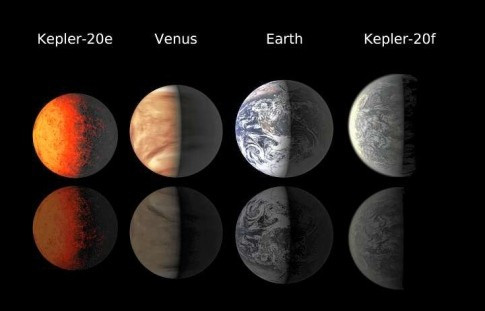
Faced with an ever‑growing catalogue of rocky exoplanets, they can now flag those above the rough 0.8 Earth‑size cut‑off as better bets for long‑lived atmospheres, and therefore better bets for life that might actually announce its presence through gases like oxygen, methane or other potential biosignatures.
'Maybe there's life on other planets under the ground, but we are never going to be able to see it because we can't send something to those exoplanets,' she said. 'The best chance we've got is looking for signs of life by analysing atmospheres from afar.'
If long‑lived, atmosphere‑bearing, Earth‑scale planets are rarer than the raw exoplanet numbers suggest, then truly habitable worlds might be thinly spread in space and time. Intelligent life could be even rarer. Hill's implied answer to the Fermi paradox, the long‑standing puzzle of 'where is everybody,' is cautious but quietly radical: maybe we have not heard from anyone else because there are not many someone‑elses around yet.
Nothing in the model proves that, of course. STEHM is a filter, not a revelation. It does not say whether life actually emerges on these worlds, only whether the stage stays set long enough for life to have a fighting chance. But it gives mission planners a harder‑edged tool as they draw up target lists for space observatories and ground‑based telescopes, which is what counts in the next decade.
The first real test will come when those observatories start piling up atmospheric spectra for a statistically meaningful number of small, rocky exoplanets. If the atmospheres cluster around that 0.8 Earth‑size threshold, Hill's work will look prescient. If not, astronomers will go back to the drawing board, as they usually do, and refine their models yet again.
Either way, the Stanford scientist's argument forces a subtle shift in how we talk about habitable planets. It is not enough to say a world is in the right place around its star. It has to be the right size and internally lively enough to keep the air in. And if that shrinks the club of potentially habitable planets, it also makes one awkward conclusion harder to dodge, that Earth could indeed be unusually early, or unusually lucky, in this part of the galaxy.
© Copyright IBTimes 2026. All rights reserved.
- Recommended For You