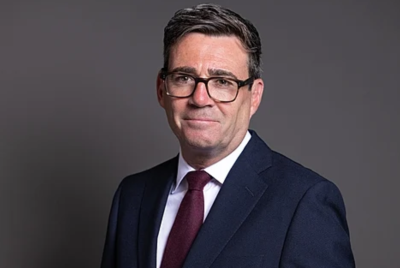
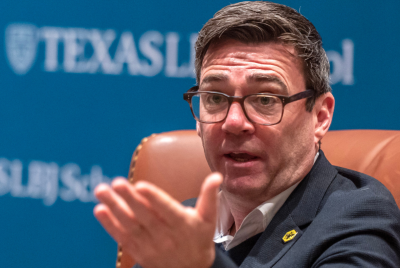
Donald Trump Mocks Keir Starmer As 'No Winston Churchill' After Iran Caving
Donald Trump's attack on Keir Starmer over Iran has exposed deep Cabinet tensions over backing US military plans.

Donald Trump has mocked Keir Starmer as 'no Winston Churchill' after the UK prime minister shifted position over US access to British bases as fighting involving Iran escalated, according to a Daily Express report and political briefings described by insiders.
For context, the row centres on a fast moving internal argument inside Starmer's Cabinet about whether Britain should facilitate American action by opening RAF facilities, and on what legal basis, before Downing Street ultimately cleared what it described as 'limited, defensive' operations. The same reporting says the Prime Minister's initial refusal lasted less than 48 hours, before the Government approved activity linked to Diego Garcia in the Chagos Islands.
The essential point is simple, even if the mechanics are not. Starmer initially said no to Washington's request for access. Within two days, he was saying yes to a narrower mission. Trump then decided to make it personal, and public.
Donald Trump, Keir Starmer And A 48-Hour Reversal
According to the account circulating in Westminster, the Prime Minister's first instinct was to keep British distance from any pre-emptive strikes, with ministers arguing the case was shaky in law and potentially ruinous in politics. Starmer, by this telling, initially sided with those urging caution and refused American access to RAF-linked assets in Gloucestershire and the Indian Ocean.
That did not hold. The reporting says B-2 stealth bombers were expected at Diego Garcia within days, cleared to conduct missions that Downing Street characterised as 'limited, defensive' action against Iranian targets. The Government also rejected suggestions that Starmer had been minded to go further, insisting the permission was tightly drawn and did not amount to a blank cheque.

Donald Trump, Keir Starmer And The Cabinet Fault Lines
Insiders point to a National Security Council meeting on the Friday as the turning point, originally convened to assess risks to British energy supplies but quickly consumed by a broader argument about legality and strategy. The Energy Secretary, Ed Miliband, is described as the organising force behind Cabinet resistance, pulling in the Chancellor Rachel Reeves and Home Secretary Yvette Cooper to stiffen opposition to UK support for strikes they regarded as legally indefensible.
Miliband's stance, as quoted in the reporting, was not exactly diplomatic. One insider characterised it as a 'petulant, pacifist, legalistic and very political' case, while another source framed it more bluntly, saying he 'fundamentally doesn't like Trump, and he doesn't like this Iran thing.' The legal scaffolding for that position was said to include advice from the Attorney General, Lord Hermer.

The split was not merely ideological. Defence Secretary John Healey was understood to be more open to facilitating operations designed to protect allies from Iranian fire, effectively arguing that refusing access could make Britain look like a spectator while partners took the hit. A fortnight of increasingly sharp exchanges with Washington was also cited, including a reported confrontation between Matt Collins, the UK's deputy national security adviser, and Elbridge Colby at the Pentagon.
The political price arrived quickly anyway. Trump told reporters he was 'very disappointed' in the Prime Minister, then escalated to the withering line that Starmer was 'not Winston Churchill' and that he 'ruins relationships.' In London, ministers could shrug off the theatrics in private, but the message was plain enough. In Trump's world, reluctance is treated as betrayal.
Pressure also came from closer to home. Cyprus's high commissioner to the UK, Kyriacos Kouros, told The Times that Britain's hesitation had been noticed, adding, 'The French are coming, the least we expect is the Britons to also be present since, as I said, we are not only defending Cypriots on the islands.'
The 2013 parallel hovered over the whole thing, with observers recalling the Commons moment when Miliband, then Labour's opposition leader, helped block action in Syria after allegations of chemical weapons use by the Assad government. Starmer has echoed similar phrasing in recent days, insisting that any British involvement would require a 'thought-through' approach before commitments are made.
And then there is the family footnote that Westminster never quite ignores. David Miliband, the Energy Secretary's brother and a former foreign secretary, urged a more careful balancing act, warning Britain 'should not divorce the US' while arguing the Government should 'strengthen our position in discussions' with the Trump administration, without explicitly endorsing the strikes themselves.
© Copyright IBTimes 2026. All rights reserved.
- MOST POPULAR IN National