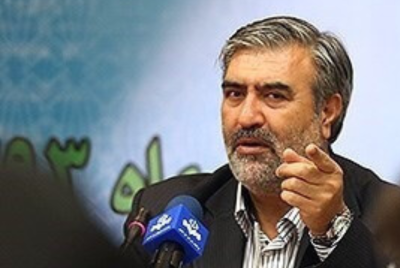
'Evacuate Now': Iran Issues Stark Warning to Workers at UAE Ports Amid Escalating Tensions
Iran's warning to workers at UAE ports has taken on new significance after a drone strike caused a large fire at Fujairah.
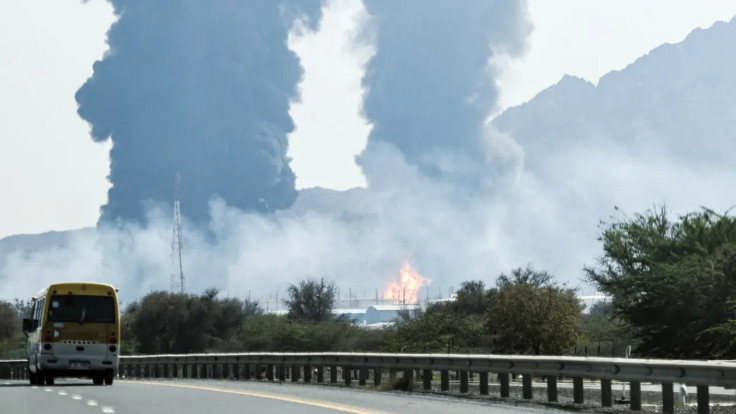
A drone strike at the United Arab Emirates' key oil trading hub of Fujairah sparked a large fire on Monday, authorities said, days after a similar attack in the same emirate, as Iran urged workers at several UAE ports to 'evacuate as soon as possible'.
The attacks are unfolding against the backdrop of an escalating confrontation between Iran on one side and the US and Israel on the other, with the Strait of Hormuz — already one of the world's most fragile energy choke points — now seeing traffic 'virtually ground to a halt' since US and Israeli strikes on Iran on 28 February.
Iran's Warning Over UAE Ports
Fujairah authorities said there were no injuries from Monday's incident. In a brief statement posted on social media, the Fujairah Media Office said, according to a Google translation, that 'Civil Defense teams in the Emirate immediately responded to the incident and are continuing their efforts to control it'.
Reuters, citing two unnamed sources, reported that oil loading operations at Fujairah had been suspended after the drone strike. The UAE's state oil company ADNOC had not responded to requests for comment at the time of reporting.
The Fujairah drone strike did not happen in isolation. Over the weekend, Iran's Islamic Revolutionary Guard Corps declared that US interests in the UAE — 'including ports, docks and military locations' — were now considered legitimate targets.
Iran's state media explicitly warning residents and workers in and around Fujairah, Jebel Ali and Khalifa ports to evacuate 'as soon as possible', claiming US military forces were present in those areas.
UAE Ports Matter So Much
Fujairah is one of the world's leading hubs for storing crude and refined fuels, sitting on the UAE's eastern coast and serving as a critical logistics point for the wider Gulf region. It is also the seaward terminus of the Abu Dhabi Crude Oil Pipeline, also known as the Habshan–Fujairah pipeline, which carries oil from onshore facilities at Habshan to the Gulf of Oman.
That pipeline stretches roughly 248 miles and is estimated to handle around 1.5 million barrels of oil per day, with a reported capacity closer to 1.8 million barrels per day.
Crucially, it allows the UAE to export crude without sending tankers through the Strait of Hormuz.
Fujairah Drone Strike, A Paralysed Strait And Rising Oil Prices
Shipping through Hormuz itself has slowed dramatically since late February. CNBC reported traffic through 'one of the world's most important energy choke points' has almost stopped after US and Israeli strikes on Iran on 28 February. Iranian forces have in turn targeted vessels trying to pass through the maritime corridor, with several incidents reported in recent days.

Layered on top of that, the Fujairah drone attacks land like a second blow. If Hormuz is squeezed from one side and the UAE's bypass route is repeatedly struck on the other, it is hardly surprising that oil markets are jittery.
By Friday morning, international benchmark Brent crude futures for May delivery were trading 3% higher at $106.18 (£79.79) a barrel, while US West Texas Intermediate for April delivery rose 2% to $100.66 (£75.64). Both benchmarks are said to have surged more than 50% over the past month, reaching their highest levels since 2022.
The UAE is feeling that pressure beyond the oil tanks and loading arms. Officials say the country has been subjected to sustained attacks from Iran during the current Middle East crisis, and that daily life has been affected far beyond the immediate blast sites.
Dubai International Airport Resumes A 'Limited' Flight Schedule
Dubai International Airport, the world's busiest hub for international passenger traffic, said on Monday it had only been able to resume a 'limited' flight schedule after a drone attack hit a fuel depot at the airport and caused a fire.
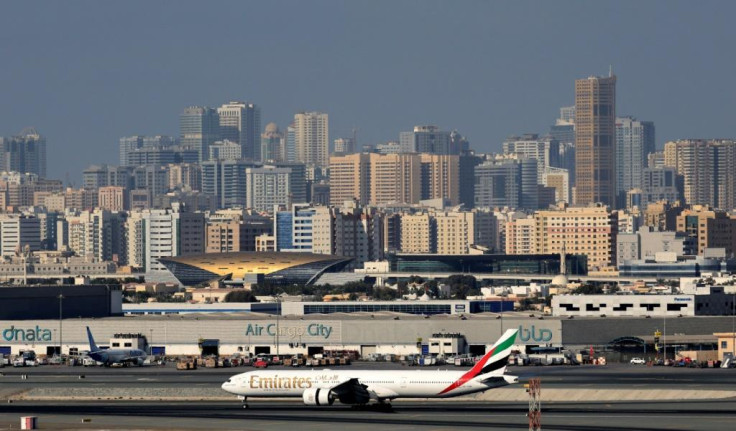
The airport usually handles more than 90 million passengers a year.
In a statement, Dubai Airports stated that passengers should not to proceed to DXB unless their airline confirms their departure time.
'We advise travellers not to head to Dubai International Airport unless they are directly contacted by their airline with confirmation of their departure time, as schedules remain subject to change,' they stated.
Following this, Emirates stated that they are operating on a 'limited' status as well with majority of flights still cancelled.
'Emirates expects to operate a limited schedule after 10:00hrs Dubai local time today. Unfortunately, some flights from today's schedule have been cancelled. Affected customers will receive a cancellation notice and will be advised on re-accommodation options,' the airline said.
© Copyright IBTimes 2026. All rights reserved.
- Recommended For You