OPEC Suffers Stunning Blow as UAE Abandons Oil Cartel Following Strategic Pivot Toward Independent Production
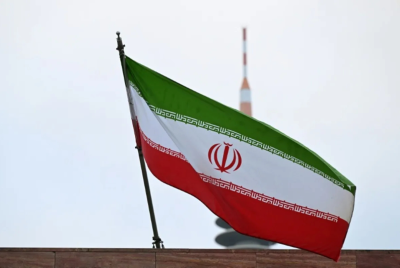
This move comes as Iran War rages on in the background.

In a massive move, the United Arab Emirates (UAE) pulled out of the Organisation of the Petroleum Exporting Countries (OPEC) a move that has some economists calling this 'the beginning of the end of OPEC.'
This all takes place in the background of the Iran War which has caused turmoil and uncertainty for the Oil Industry.
A Truly Stunning Move
In a statement from the UAE they said that, 'This decision reflects the UAE's long-term strategic and economic vision and evolving energy profile, including accelerated investment in domestic energy production, and reinforces its commitment to a responsible, reliable, and forward-looking role in global energy markets.'
'Following its exit, the UAE will continue to act responsibly, bringing additional production to market in a gradual and measured manner, aligned with demand and market conditions, the country added.'
'By leaving the Vienna-based OPEC cartels, the UAE will have the freedom to set its own production limits and be free of the influence exerted by OPEC's dominant member, Saudi Arabia,' according to Sky News.
What Does This Mean for the Region?
Yesterday crude oil topped ($110) for the first time in three weeks thanks to uncertainty surrounding the Strait of Hormuz and daily questions on whether its actually open or not.
Considering the chaos surrounding the Strait of Hormuz this move is not likely to have an immediate impact, but long term it could have a big sway.
Gulf countries might be looking for ways to control their own oil output considering OPEC is not the dominant force it was a few decades ago and the general uncertainty that has not engulfed that region.
'The Beginning of the End of OPEC'
'Jorge León, an analyst at Rystad, said: "The UAE withdrawal marks a significant shift for Opec. Alongside Saudi Arabia, it is one of the few members with meaningful spare capacity – the mechanism through which the group exerts market influence.'
'While near-term effects may be muted given ongoing disruptions in the strait of Hormuz, the longer-term implication is a structurally weaker Opec,' according to The Guardian.
'He added: "Outside the group, the UAE would have both the incentive and the ability to increase production, raising broader questions about the sustainability of Saudi Arabia's role as the market's central stabiliser – and pointing to a potentially more volatile oil market as Opec's capacity to smooth supply imbalances diminishes."'
'Saul Kavonic, head of energy research at MST Financial, said it was "the beginning of the end of Opec".'
US president Donald Trump is sure to be happy with this development as he has criticized OPEC in the past alleging that OPEC is 'ripping off the rest of the world.'
Opec was formed in 1960 by five countries - Iran, Iraq, Kuwait, Saudi Arabia and Venezuela - to defend the interests of major oil exporters by coordinating production to ensure steady revenue for its members.
The UAE joined in 1967 and its departure now leaves OPEC with 11 members along with the other 11members of OPEC+.
The OPEC members are: Algeria, Congo, Equatorial Guinea, Gabon, Iraq, Iran, Kuwait, Libya, Nigeria, Saudi Arabia, and Venezuela.
Some OPEC+ countries include Brazil, Russia, Malaysia, Mexico, South Sudan, and Sudan among others.
As of this articles release OPEC has not released a statement.
© Copyright IBTimes 2026. All rights reserved.
- Recommended For You