One Man vs. 165 Million Americans: The Terrifying Wealth Inequality Exposed by Elon Musk's Net Worth
Elon Musk's near-trillion-dollar fortune highlights the widening gap between America's richest and the rest, with new data exposing the scale of inequality.
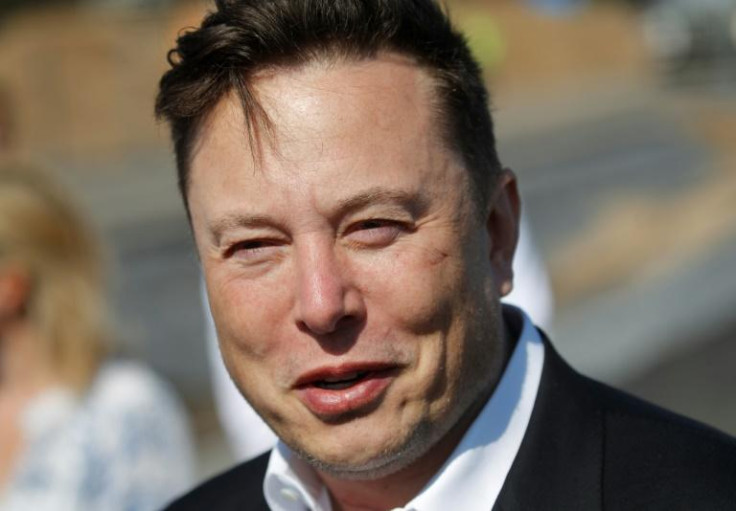
Elon Musk's net worth briefly crossing the trillion-dollar mark in June 2026 has sharpened focus on US wealth inequality, with the Tesla and SpaceX chief's fortune now comparable to what nearly half the American population owns combined. The milestone, reached as Musk turned 55 and as SpaceX began trading publicly, lasted only days before a sharp drop, but the scale of his wealth remains historically unprecedented.
Musk became the world's first trillionaire on 12 June 2026 when SpaceX stock opened at $150, pushing his fortune past $1 trillion. Within days, that figure slipped to around $957 billion after shares fell, a drop of roughly $120 billion, one of the steepest declines recorded. Even so, the broader trajectory is unmistakable. His wealth stood at $370 billion just a year earlier, underscoring a rate of accumulation rarely seen in modern finance.
Elon Musk Net Worth and the Scale of US Inequality
The numbers alone are disorienting. Federal Reserve data shows the bottom 50 percent of US households hold just 2.5 percent of national wealth, a share that has barely shifted in decades. At the other end, the richest 10 percent now control more than two-thirds of total wealth, while the top 1 percent holds about 31 percent, nearly matching the combined holdings of the bottom 90 percent.
Set against that backdrop, Musk's fortune becomes less a personal milestone and more a symbol. His wealth alone is equivalent to more than 3 percent of US GDP. More striking still, it is roughly equal to the combined wealth of around 165 million Americans.
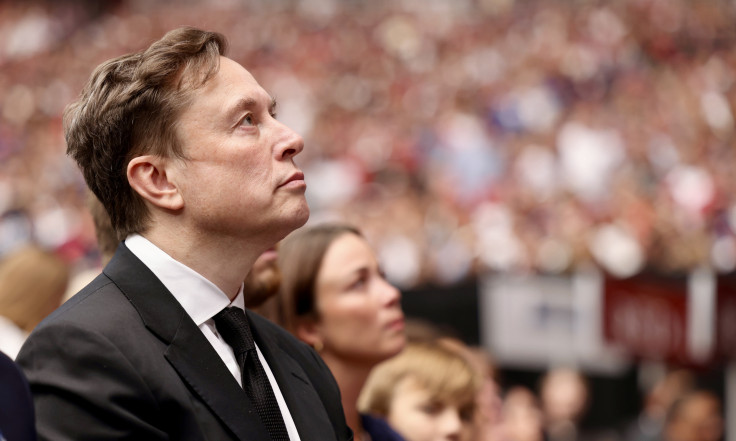
Steven Durlauf, director of the Stone Center for Research on Wealth Inequality and Mobility at the University of Chicago, put it bluntly, saying wealth inequality is expanding in ways 'we've never seen before.' Data from the National Bureau of Economic Research suggests that while the richest have continued to accumulate assets since the 1990s, many lower-income households have slipped into negative wealth, meaning debt outweighs what they own.
Even within financial markets, the shift is visible. Federal Reserve figures show the top 1 percent increased their share of stocks and mutual funds from 40 percent in 2002 to around half by 2026. Wealth concentration is not just growing, it is consolidating.
Elon Musk Net Worth in Human Terms
Trying to translate Musk's fortune into everyday terms leads to almost absurd comparisons. According to figures cited by the Wall Street Journal, accumulating his wealth over roughly three decades would require earnings of about $3.6 million per hour. That is every hour, continuously, since the mid-1990s.
By contrast, the average US household net worth was just under $200,000 in 2022, based on Federal Reserve data. That makes Musk's wealth roughly five million times greater than that of a typical American family. Numbers like that stop feeling like economics and start feeling like something else entirely. Fantasy, maybe. Or something broken.
There is also the persistent question of what such wealth could do. Estimates suggest a trillion dollars could fund large-scale efforts to reduce global poverty, address medical debt in the US, or invest heavily in climate resilience. These are theoretical comparisons, not spending plans, but they highlight the scale of resources concentrated in a single individual.
Musk's defenders argue that framing misses the point. His former college roommate, Adeo Ressi, told The New York Times that Musk is not a typical symbol of excess, describing him as someone driven less by lifestyle than by long-term ambitions such as making humanity multiplanetary. 'He's amassing resources to do things,' Ressi said, adding that Musk is unlikely to park his wealth in a traditional family fortune.
Critics are unconvinced. The concern is less about how Musk lives and more about what his financial power enables. During the 2024 US election cycle, Musk donated $288 million to support Donald Trump and other Republican candidates.
Following a later public dispute, Musk wrote that without his backing, 'Trump would have lost the election,' a remark that drew attention to the political influence tied to extreme wealth.
Durlauf warned that this is where the issue sharpens, arguing that economic inequality is increasingly spilling into the political sphere. When wealth reaches this scale, it does not sit quietly in markets. It moves, it shapes outcomes, it bends systems, sometimes subtly, sometimes not.
And that is the uncomfortable part. Not just that one man can accumulate so much, but that the system allows it to coexist with millions holding almost nothing. The contrast is not new, but it is getting harder to ignore. At some point, the numbers stop being abstract and start asking questions of their own.
© Copyright IBTimes 2026. All rights reserved.
- Recommended For You